Tuesday’s China developments point in one direction: pressure is building across several fronts at once.
On the security side, Beijing carried out a rare submarine-launched ballistic missile test into the South Pacific, triggering criticism across the region and renewed concern about the pace of China’s nuclear modernisation. Economically, the latest data continues to show a widening divide between a strong advanced manufacturing sector and a weak consumer economy. Politically, the new ethnic unity law has drawn international condemnation for deepening coercive assimilation. And inside the military, Xi Jinping’s anti-corruption campaign continues to reorder the top ranks of the People’s Liberation Army.
Individually, none of these stories is minor. Taken together, they sketch a system that is modernising rapidly, centralising power aggressively, and still showing clear signs of insecurity.
Table of Contents
- Security News: A rare submarine-launched missile test in the South Pacific
- Economic News: China’s economy is splitting into two different stories
- Policy News: The new ethnic unity law and the politics of assimilation
- Military Politics: Xi promotes two generals as the purge continues
- What ties these stories together
- FAQ
Security News: A rare submarine-launched missile test in the South Pacific
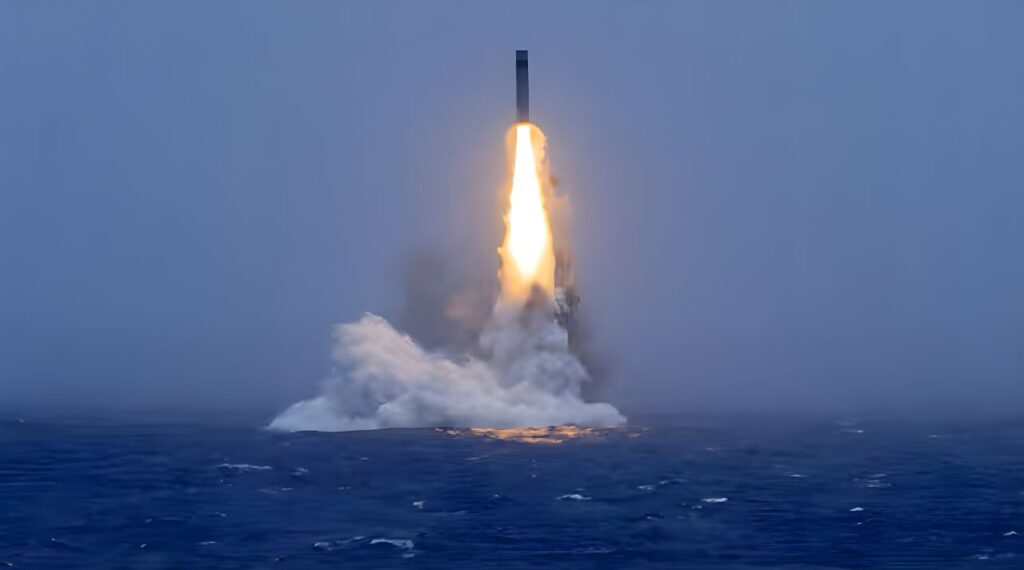
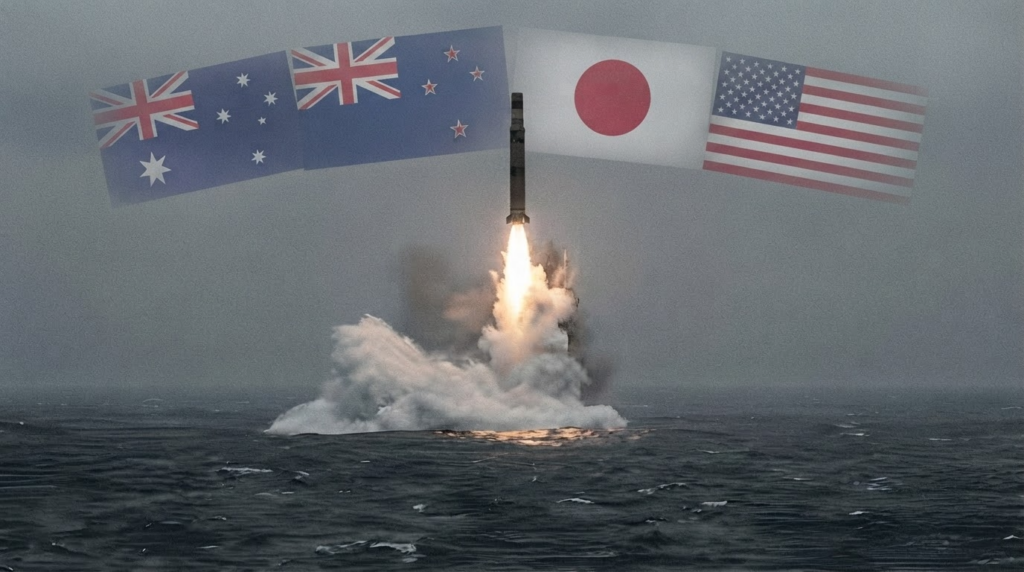
China has carried out a rare test of a submarine-launched ballistic missile, or SLBM, into the South Pacific. Beijing described it as a routine military training exercise, but that framing has not softened the regional response.
State media said a PLA Navy strategic nuclear submarine launched the missile at 12:01 p.m. Beijing time on Monday, with the payload landing accurately in a designated area of the high seas in the South Pacific. Authorities did not identify the missile type, though outside analysts believe it was likely either the JL-2 or the newer JL-3.
That distinction matters. The JL-3 would significantly extend China’s sea-based nuclear reach. In practical terms, it would improve Beijing’s ability to threaten targets at much greater distance while operating from waters much closer to the Chinese mainland.
This is why the launch stands out. It is not just another test. It is one of the clearest demonstrations yet of the sea-based leg of China’s nuclear triad, meaning land-based, sea-based and air delivered nuclear capabilities working together to create a more survivable deterrent.
China has been building toward this for years. The launch follows the first publicly acknowledged Chinese intercontinental ballistic missile test into the Pacific in roughly four decades, conducted in 2024. It also highlights the expanding role of the Type 094 nuclear powered ballistic missile submarine fleet.
Why the regional backlash was immediate
Australia and New Zealand said they received only about two hours of warning. That is a long way from the kind of nuclear power that would reassure neighbouring states. Australian Foreign Minister Penny Wong called the launch destabilising and inconsistent with the Pacific’s stated vision as an ocean of peace. New Zealand’s foreign minister described it as unwelcome and concerning.
Japan also lodged formal protests, and the United States used the moment to again criticise China’s rapid and opaque nuclear buildup. Washington renewed calls for more meaningful arms control engagement and more transparent notification procedures for future long-range missile tests.
Reports indicate the missile flew over the exclusive economic zones of several Pacific Island nations before landing northeast of the Solomon Islands. That adds another layer to the controversy. Even if Beijing classifies the test as routine, the practical message received by the region is that China is increasingly willing to project strategic force deep into the Indo-Pacific.
The timing also drew attention. The launch came just after a Beijing peace forum, as China and Russia were beginning their Joint Sea 2026 naval exercises and as Australia and Fiji signed a new defence treaty aimed at strengthening regional security cooperation. In other words, the test landed in an already tense strategic environment.
It fits a broader pattern. China’s nuclear arsenal is expanding quickly, with Pentagon estimates putting the stockpile above 600 warheads and on track to exceed 1,000 by 2030. New missile silos, more capable submarines, and longer-range systems all point to the same trajectory.
For a wider look at how strategic pressure and economic fragility are converging, see this related China Update News analysis.
Economic News: China’s economy is splitting into two different stories
The second major development is economic, and the picture is increasingly divided.
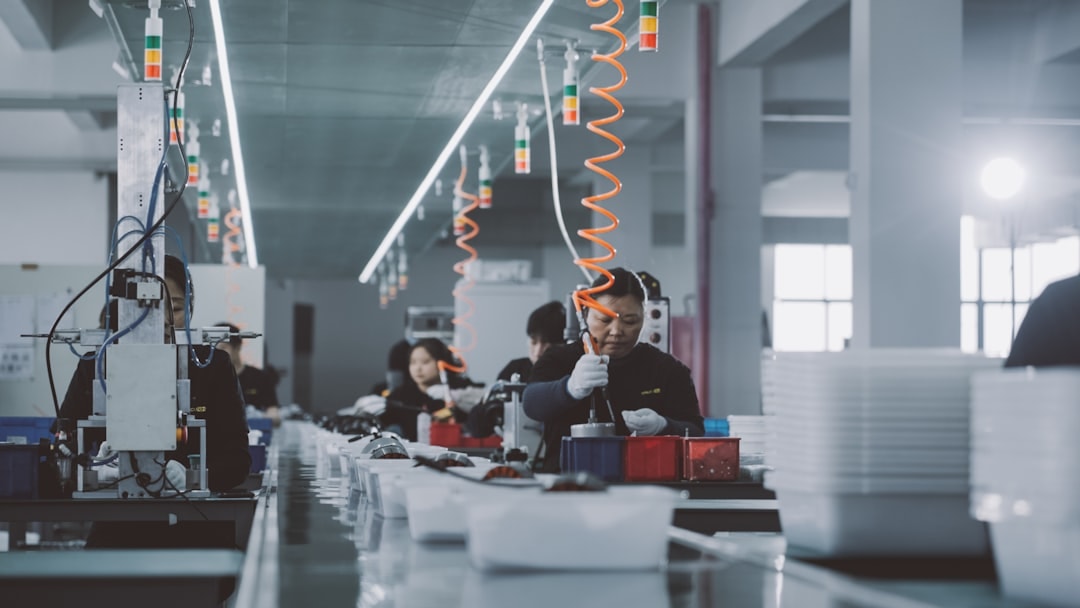
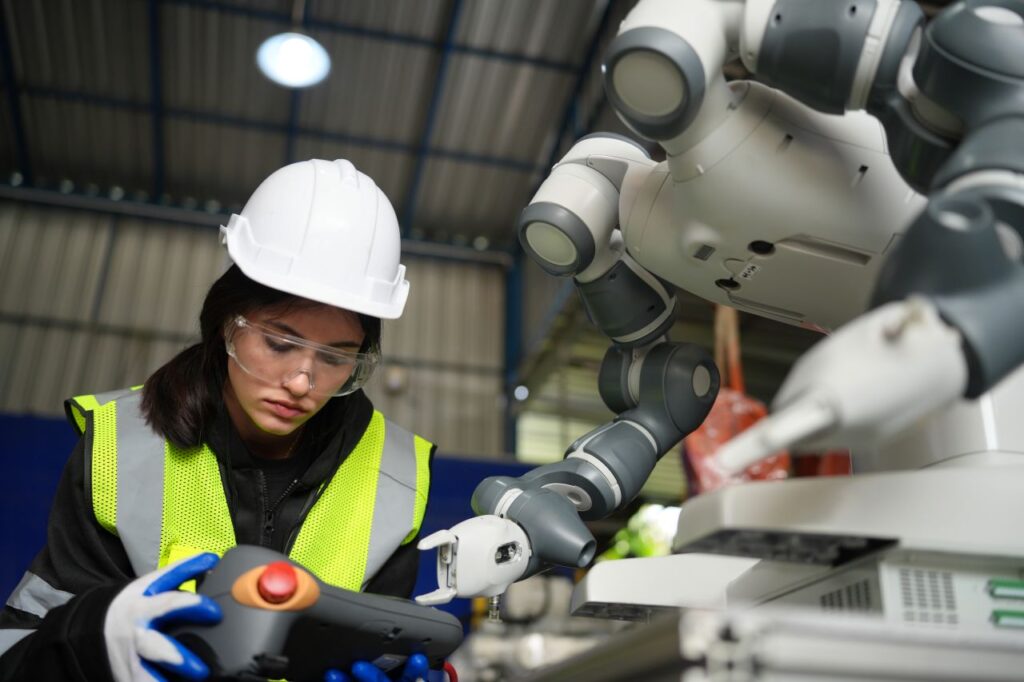
On one side, advanced manufacturing is booming. Artificial intelligence, semiconductors, robotics, and other strategic industries continue to grow quickly, supported by industrial policy and external demand. On the other side, domestic consumption remains weak, property remains under heavy strain, and household confidence looks fragile.
This split is visible in markets. China’s stock market has seen strong gains in AI and chip-related firms, while consumer-facing companies have underperformed sharply. Semiconductor names and hardware linked to the AI buildout have helped push Shanghai’s STAR Market significantly higher this year. Meanwhile, major consumer bellwethers have fallen, and the consumer segment of the CSI 300 has dropped heavily.
That divergence is not random. It reflects two very different economies developing at the same time.
The sectors that are growing
High-tech manufacturing continues to outperform by a wide margin. Semiconductor production rose 23 percent year on year in May, while industrial robot output climbed 28 percent. These are not trivial numbers. They show where policy energy and capital are being directed.
Beijing continues to prioritise sectors it sees as strategically essential to long-term competitiveness:
- Semiconductors
- Robotics
- Artificial intelligence
- Electric vehicles
- Advanced manufacturing more broadly
Those sectors benefit from government backing and from a national development model that still leans heavily toward production, export capability, and technological upgrading.
The sectors that are struggling
At the same time, the broader domestic economy remains soft. Retail sales contracted 0.6 percent from a year earlier, the first decline since the end of the zero COVID period. Fixed asset investment fell 4.1 percent in the first five months of the year. Property investment plunged 16 percent as the prolonged real estate downturn continued.
That matters because the consumer side of the economy is large, socially important, and difficult to replace with a narrow band of high-productivity strategic industries. A boom in semiconductors cannot simply offset weak household demand across a vast economy.

Economists surveyed by Nikkei and Nikkei Quick News expect growth to slow to 4.6 percent in the second quarter, down from 5 percent in the first quarter. The reason is straightforward: weak domestic demand, weak investment, and continued pressure from property.
There is also a structural problem here. Policymakers appear reluctant to launch large-scale stimulus directed squarely at households. Instead, they continue to channel support toward strategic production sectors. That may strengthen future industrial capacity, but it does little to solve weak consumption in the present.
And there is an added complication. Many of the sectors receiving the strongest backing are also facing serious overcapacity concerns. So the policy answer to a slowdown is reinforcing the very parts of the economy that are already expanding fastest, while offering less direct relief to the larger but weaker consumer side.
This is one reason the recovery narrative remains uneven. Exports and AI-linked investment are helping. But the gap between the thriving high-tech segment and the struggling mass-consumer economy is still widening. That imbalance is becoming one of the central features of the current cycle.
For more context on the uneven recovery and technology constraints, this analysis on China’s fragile recovery and AI chip bottlenecks is worth reading.
Policy News: The new ethnic unity law and the politics of assimilation
Another major story this week is Beijing’s forceful defence of its new ethnic unity law, which has already drawn criticism from human rights groups, Western governments, and minority activists.
The law came into effect this week and gives authorities broad powers to punish acts deemed to undermine ethnic unity or incite ethnic division. Importantly, its reach is not framed only in domestic terms. Critics argue that the law’s language creates room for pressure on diaspora communities and activists living abroad as well.
Its provisions are sweeping. It mandates the use of Mandarin in schools and official communication, requires families to educate children to love the Chinese Communist Party, and assigns responsibility for promoting ethnic integration not just to the state, but also to businesses and families.

Beijing’s position is that the law is legitimate, lawful, and necessary for protecting all 56 officially recognised ethnic groups and maintaining national cohesion. Chinese officials have accused the United States and the European Union of maliciously distorting China’s ethnic policies, while state media has portrayed outside criticism as politically motivated.
Why critics are alarmed
The concern is not simply about rhetoric. Critics argue that the law effectively codifies Xi Jinping’s long running drive to build a single national identity centered on party loyalty and culturally anchored in Han Chinese norms.
The vagueness of terms like ethnic unity and ethnic division creates space for broad enforcement. Human rights commentators warn that peaceful cultural, religious, linguistic, or political expression could be criminalized under such language.
This criticism lands against a deeply controversial background. Over the past decade, Beijing has faced allegations of mass detention and severe rights violations in Xinjiang. In Tibet, controls over religion, language, and political life have tightened steadily. Inner Mongolia has also seen moves against minority language education, prompting rare protests.
That history is why many analysts view the new law not as a neutral administrative measure, but as a further legal consolidation of assimilationist policy.
There have already been protests abroad by Tibetan and Uyghur activists, and Taiwan has also expressed concern that the law could be used to target Taiwanese citizens, something Beijing denies.
The basic tension here is clear. Supporters in Beijing frame the law as necessary for stability and anti separatism. Critics see it as a mechanism for coercive integration and ideological control. In practical terms, it strengthens the party’s ability to define loyalty, identity, education, and acceptable speech in minority regions and beyond.
This issue also sits within a larger pattern of political tightening. A related China Update News article on political pressure and PLA uncertainty explores the same underlying trend from another angle.
Military Politics: Xi promotes two generals as the purge continues
The final major development is inside the armed forces themselves.
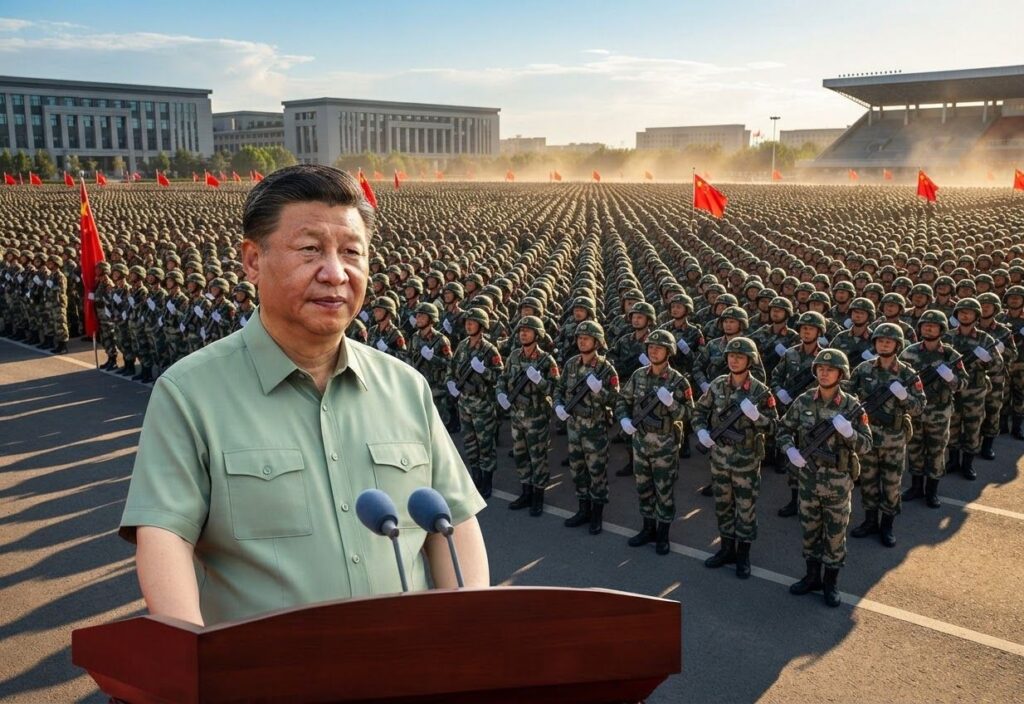
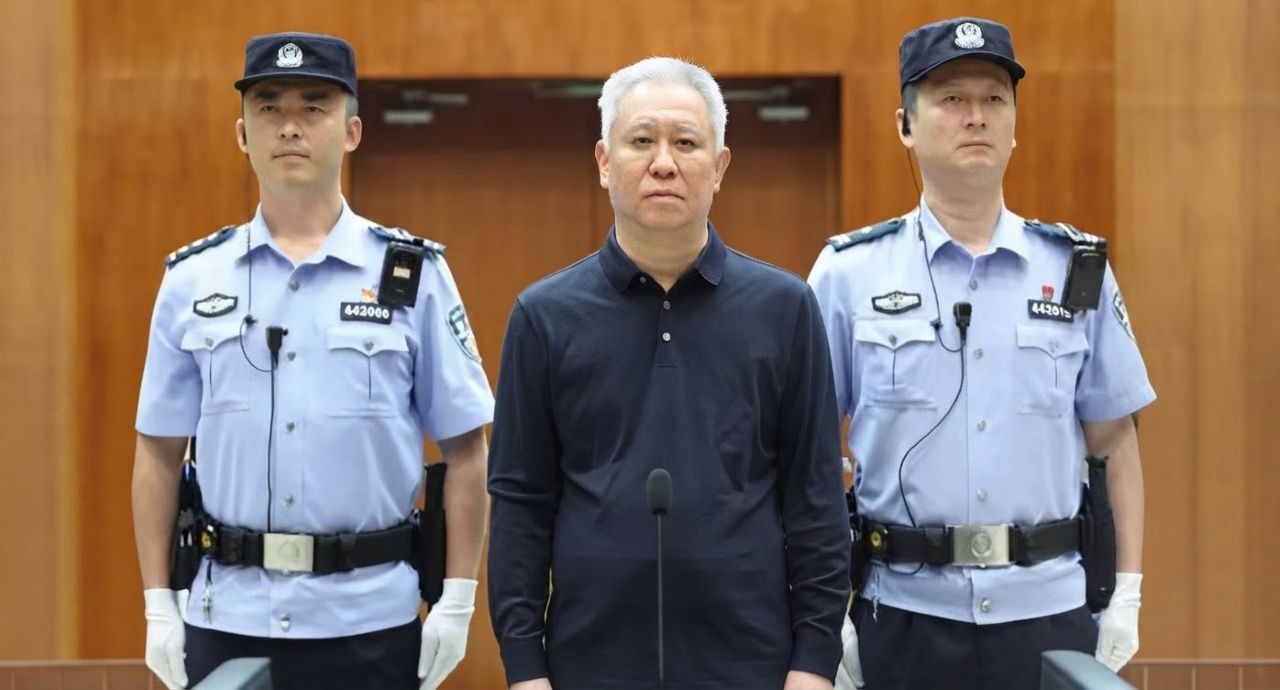
Xi Jinping has promoted two senior officers, Zhang Shuguang and Wang Gang, to the rank of general. Zhang has been appointed secretary of the Central Military Commission’s Discipline Inspection Commission, making him the military’s top anti-corruption official. Wang Gang has become commander of the PLA Air Force.
On the surface, these are routine elite appointments. In context, they are anything but routine.
They come amid the largest military purge China has seen in decades. Since mid-2023, authorities have removed two vice chairmen of the Central Military Commission, three CMC members, a former defence minister, and numerous senior generals. Even long-standing and well-connected figures have not been spared.
The obvious interpretation is that Xi is tightening party control, rooting out corruption, and enforcing loyalty across the military chain of command. That is certainly part of the story.
But the scale of the campaign has also raised a more uncomfortable question: how deep are the internal problems inside the PLA?
Control, loyalty, and uncertainty
When so many senior officers are removed, investigated, or demoted in a short period, the result is not only discipline. It is also uncertainty. Analysts increasingly point to the possibility of serious internal divisions, weak trust within the upper ranks, or systemic corruption more entrenched than publicly acknowledged.
This matters because the purge is unfolding at the same time as China continues rapid military modernisation and more assertive regional behaviour. A military can expand in capability while still suffering from internal political fragility. Those two facts are not contradictory.
A revealing sign came in a military newspaper article titled Carry the Rectification of Thought Through to the End. The piece invoked the collapse of the Soviet Union as a warning. Its argument was that ideological degradation among senior cadres, weakened political belief, and admiration for Western political models helped destroy Soviet power from within.
That Soviet lesson has haunted Xi’s political worldview for years. It helps explain why anti corruption in the PLA is never just about corruption. It is also about ideological discipline, political obedience, and making sure that no part of the armed forces drifts from party control.
In that sense, the promotions and the purge belong to the same logic. Elevate trusted figures, remove compromised ones, and keep pushing rectification until uncertainty is replaced by fear or compliance.
What ties these stories together
The missile test, the split economy, the ethnic unity law, and the PLA purge may appear unrelated. They are not.
All four developments point to a state trying to solve vulnerability with centralisation and force projection.
- Externally, it is signalling strategic power farther from home.
- Economically, it is doubling down on state-backed industrial priorities even as household demand weakens.
- Politically, it is tightening control over identity and expression.
- Institutionally, it is purging and reshaping the military leadership in the name of loyalty.
That is not the profile of a relaxed system. It is the profile of one that sees danger in drift, diversity, and dependence.
And that is why these developments matter beyond their immediate headlines. A state that feels secure can often tolerate more ambiguity. A state that feels insecure tends to centralise harder, react more sharply, and signal strength more often.
This latest China News Update, therefore, is not just a collection of separate events. It is a snapshot of a broader pattern: strategic ambition rising alongside structural stress.
FAQ
Why is China’s submarine-launched missile test such a significant event?
Because tests of this kind are rare and strategically meaningful. The launch demonstrated the sea-based leg of China’s nuclear triad and highlighted the growing reach of its submarine force, especially if the missile were the JL-3.
How did regional governments respond to the South Pacific missile test?
Australia, New Zealand, Japan, and the United States all criticised the launch. Concerns focused on limited advance warning, regional stability, and China’s broader opaque nuclear buildup.
What does the latest economic data say about China’s recovery?
The data points to a divided economy. High tech manufacturing, semiconductorHigh-techbotics are growing strongly, while retail sales, property investment, and consumer confidence remain weak.
Why is the ethnic unity law controversial?
Critics say the law broadens the state’s power to suppress cultural, linguistic, religious, and political expression among minorities. Supporters in Beijing say it is necessary to maintain unity and prevent separatism.
What do the latest PLA promotions suggest about Xi Jinping’s military campaign?
The promotions show that Xi is still reshaping the military leadership while pressing ahead with a sweeping anti corruption and loyalty campaign. The appointments reinforce party control, but they also highlight ongoing instability inside the senior ranks.
What is the bigger takeaway from this China news update?
The main takeaway is that China is projecting greater power abroad while facing real stresses at home. Military signaling, economic imbalance, ideological tightening, and institutional purges all point to a leadership that is assertive, but not fully at ease.