
The 2028 Taiwan Flashpoint: Why the West is Miscalculating Xi Jinping’s Next Move
Geopolitical stability in the Indo-Pacific is rapidly approaching a critical inflection point. While Western commentators obsess over China's domestic economic struggles, a far more dangerous clock is ticking toward 2028.
For the past few years, a comforting narrative has taken hold in Washington, Canberra, and European capitals: China is slowing down. Between a popping real estate bubble, a severe demographic contraction, and sweeping purges within the People’s Liberation Army (PLA), conventional wisdom suggests that Beijing is too structurally fragile to risk a global war.
But conventional wisdom is frequently wrong.
The 2028 Democratic Trigger in Taipei
Why 2028? The calendar itself is the trigger.
In January 2028, Taiwan (officially the Republic of China) will hold its next pivotal presidential election. If the ruling Democratic Progressive Party (DPP) secures another victory, it will mark a historic fourth consecutive term in power. For the Chinese Communist Party (CCP) in Beijing, this is an existential nightmare.
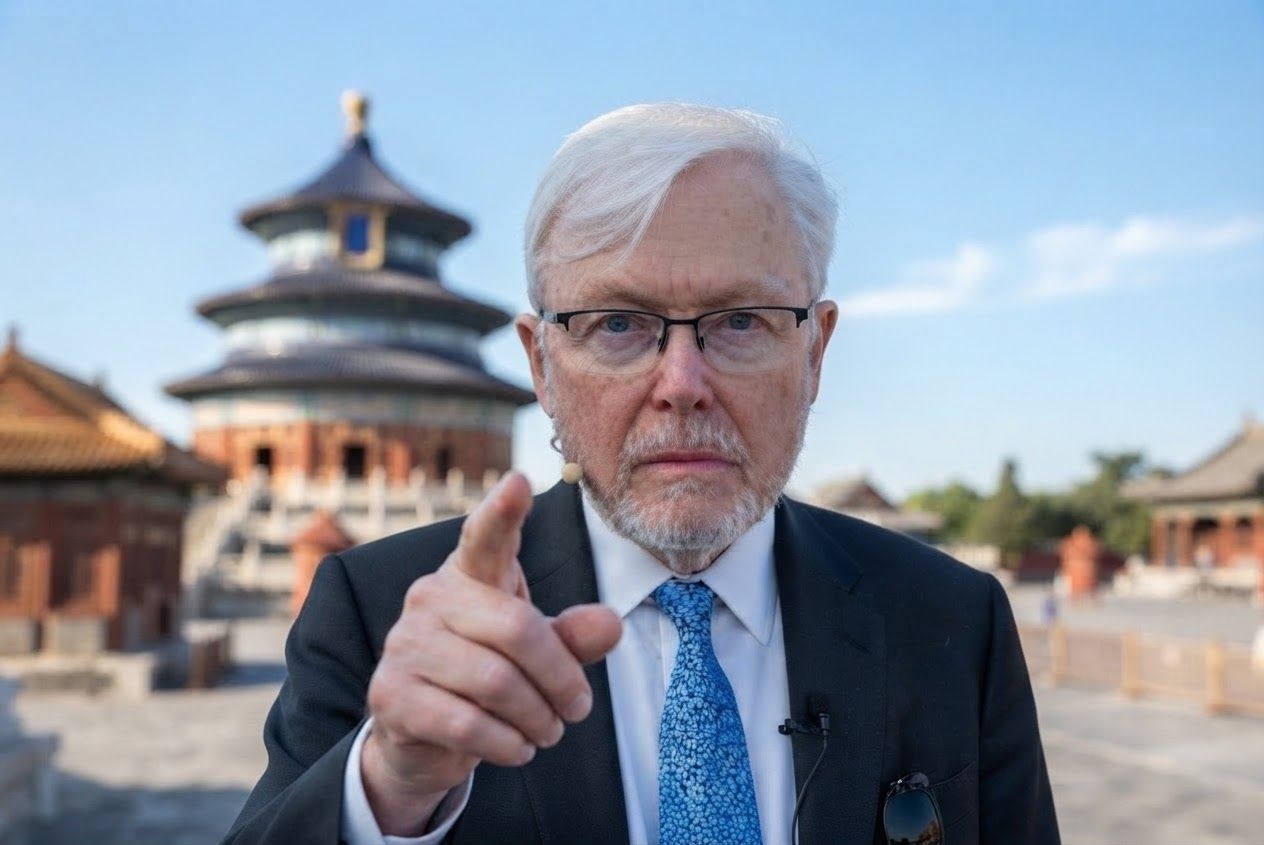
The CCP views the DPP not merely as a political opponent but as an illegitimate, independence-leaning faction that permanently fractures the illusion of "One China". Rudd places the odds of another DPP victory at a volatile 50-50. If the Taiwanese electorate doubles down on their sovereign identity, Beijing may finally conclude that peaceful unification is a dead letter.
When a highly centralised authoritarian regime realises that time is running out to achieve its ultimate historical legacy, its behaviour shifts from risk-averse to radically risk-tolerant.
The Dangerous Illusion of Western Deterrence
The most alarming aspect of the 2028 scenario is how Beijing might calculate the United States’ willingness—and physical capability—to intervene.
Authoritarian regimes do not think like Western democracies. They look at strategic openings. If the U.S. and its allies find themselves heavily bogged down or depleted by ongoing systemic confrontations in the Middle East—particularly involving Iran—Beijing’s calculus changes instantly.
According to the analysis popularised by Fiddis and Rudd, a major cross-strait crisis in 2028 would force Beijing to weigh two critical American vectors:
-
Political Resolve: Will American leadership, exhausted by years of managing secondary conflicts and deeply polarised at home, possess the stomach to deploy U.S. forces into a high-intensity conflict with a nuclear-armed peer state over Taipei?
-
Military Capacity: This is the hard math. Years of global tensions have severely strained Western defence industrial bases. Beijing will look closely at whether U.S. precision munitions stockpiles, naval assets, and overall regional logistics hubs have been dangerously depleted.
If the spreadsheet tells Xi Jinping that Washington lacks the physical depth to fight a two-front logistics war, the deterrent wall vanishes.
The Myth of the "Weakened" PLA
Many Western defence analysts have looked at Xi Jinping’s aggressive purges of top generals within the PLA Rocket Force and defence ministries as proof that China is unready for war. The logic goes: If your military hierarchy is riddled with corruption and instability, you don’t launch an invasion.
This is a profound misreading of authoritarian power dynamics.
The PLA is an absolute leviathan. Purging a dozen high-ranking officials does not degrade the industrial output of China’s shipyards, which are currently churning out warships at a rate that completely eclipses the United States. Replacing compromised officials simply installs leaders whose personal survival depends entirely on absolute loyalty to Xi Jinping’s directives. The structural capacity, the raw hardware, and—crucially—the political ambition remain fully intact.
Furthermore, we cannot assume that China’s domestic headwind—such as its rapid demographic ageing or its sluggish GDP growth—will force Beijing to look inward. Historically, when hyper-centralised regimes face stagnating domestic futures, they often turn to external nationalism to maintain legitimacy. Xi Jinping has consolidated absolute power, backed by the most sophisticated digital surveillance apparatus in human history. He is not subject to the whims of public opinion or economic anxiety in the way Western leaders are.
What Happens Next?
If Beijing senses a unique strategic opening in 2028, the Indo-Pacific security architecture could dissolve overnight.
The danger is excessive confidence. If Xi Jinping believes the West is hollowed out, he may take a gamble that cannot be undone. However, as Rudd points out, this calculation ignores the volatile nature of American politics. Facing off against a leader like Donald Trump—who is famously averse to appearing weak on the global stage—means an act of Chinese aggression could trigger an immediate, overwhelming U.S. kinetic response, regardless of stockpile depth.
The window to prevent a 2028 miscalculation is closing fast. The West cannot afford to treat China's internal stresses as a geopolitical get-out-of-jail-free card. If Washington, Taipei, and their regional allies do not aggressively rebuild their industrial military capacity and solidify their deterrent posture today, the year 2028 will not just be another election cycle—it will be the year the world changes forever.
Editorial Note: The core analytical framework of this report originated from reporting by the China Update channel and was first aggregated on ChinaNewsUpdate.com by regional China analyst Tony Fiddis.