See the Tony Fiddis full video analysis on YouTube; click here
Several important China developments have converged at once, and taken together, they say a great deal about where policy, technology, and geopolitics are heading. On one side, Nvidia is finding that even specially designed China-compliant products are no longer guaranteed a place in the market. On another note, Tesla has finally rolled out its supervised full self-driving system in China, but into an EV landscape that is already crowded with strong domestic challengers.
Beyond tech, there are growing signs of strategic hardening across the board. Reports suggest Xi Jinping may be preparing for a rare visit to North Korea. Trade relations between China and the European Union are becoming more confrontational. And a renewed debate is underway among security analysts over how so many observers underestimated the scale of China’s nuclear weapons expansion.
This is one of those moments when separate stories are best understood as part of a larger pattern. China is pushing harder for self-reliance in advanced technology, taking a sharper line against foreign scrutiny, and operating in a global environment where commercial access is now inseparable from political risk.
Table of Contents
- Nvidia’s China problem is getting worse, not better
- Xi Jinping and North Korea: a possible revival of a strategic relationship
- EU-China trade tensions are moving toward something more serious
- Why so many analysts missed China’s nuclear buildup
- Tesla enters China’s advanced driving race, but the field is already crowded
- What these stories say about China’s direction
- FAQ
Nvidia’s China problem is getting worse, not better
Nvidia’s difficulties in China are becoming a useful case study in how the AI race is now being shaped by politics as much as by engineering.
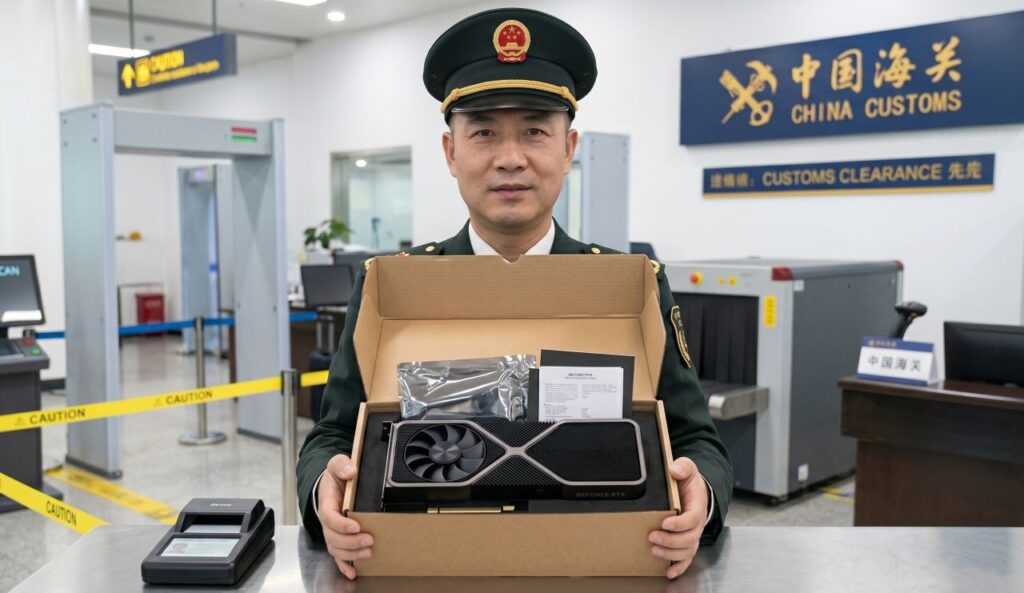
The latest sign came with reports that Beijing quietly banned Nvidia’s RTX 5090 DV2 gaming chip at Chinese customs checkpoints. What makes this especially notable is that this was not one of Nvidia’s top-end AI products. It had been designed specifically to comply with US export controls and aimed at Chinese gamers and 3D animators, though in practice it was also being used by AI developers who could not access Nvidia’s most advanced chips.
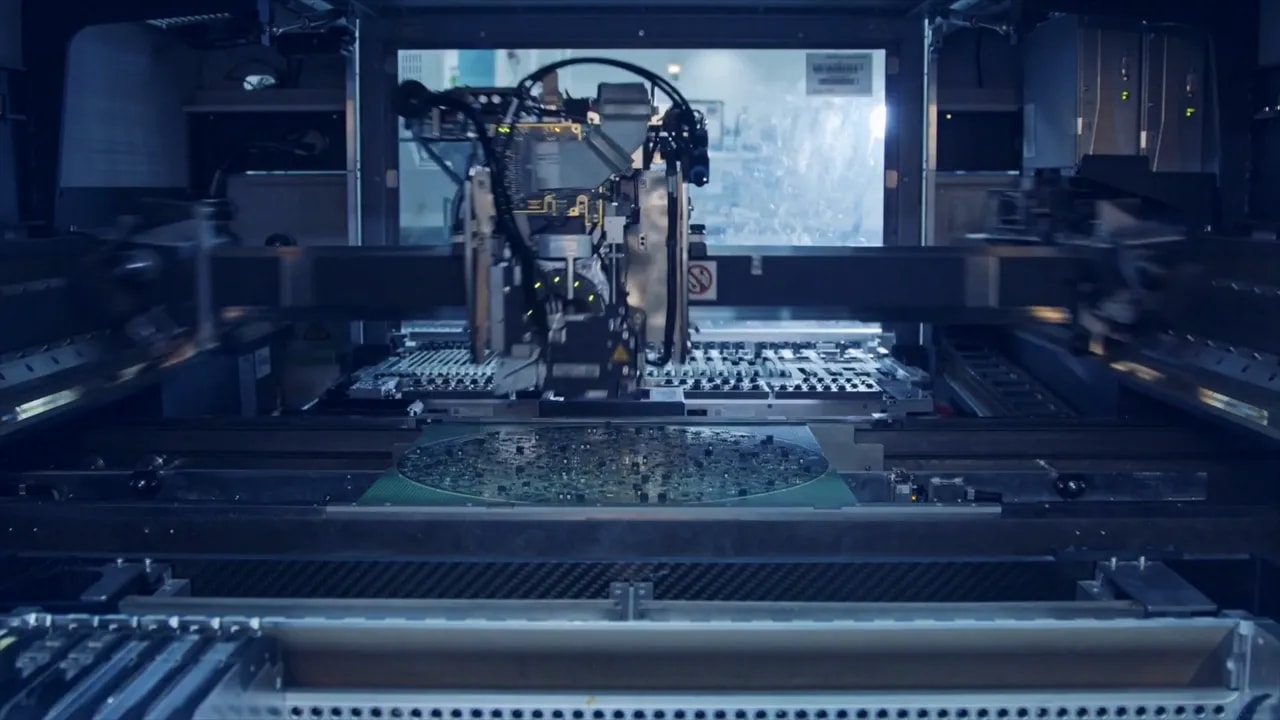
That matters because it suggests the issue is no longer just whether a chip meets Washington’s restrictions. The question now is whether Beijing still wants those products in the market at all.
The timing was striking. Jensen Huang visited China as part of a delegation accompanying US President Donald Trump and publicly expressed some optimism that the market could eventually reopen. But Nvidia’s own guidance tells a much more sober story. In its latest earnings outlook, the company said it is not assuming any data centre compute revenue from China. Huang later reinforced that message, effectively telling investors not to expect approvals for future advanced chip sales into the country.
Financially, Nvidia remains extraordinarily strong. Quarterly revenue surged 85 per cent year on year to US$81.6 billion, and the company announced a US$80 billion share buyback programme. So this is not a story about a company in decline. It is a story about a company that can still post remarkable growth while conceding that one of the world’s most important AI markets is slipping away.
China used to account for at least one fifth of Nvidia’s data centre revenue, much of it through China-specific chips such as the H20. That business is now under severe pressure. Huang himself acknowledged that US export restrictions have largely handed the market to local competitors, especially Huawei.
“We are really largely conceded that market to them… Huawei is very, very strong.”
That is the strategic point. The restrictions may have limited China’s access to leading-edge US technology, but they have also accelerated demand for domestic substitutes. Beijing appears increasingly willing to bear short-term costs in order to reduce long-term dependence on American semiconductors.
Morgan Stanley forecasts that China’s AI chip market could reach US$67 billion by 2030, with 86 per cent supplied by Chinese firms. If that happens, the world will be looking at a much deeper technological split between the two largest economies.
There is a real debate here. One side argues that US restrictions are preserving America’s technological lead and preventing China from gaining access to the very best systems. The other argues that these controls are speeding up Beijing’s semiconductor self-sufficiency drive and helping create powerful Chinese competitors that might not otherwise have emerged as quickly. Both arguments have merit, and the Nvidia story sits right at the centre of that debate.
This broader AI competition has been building for some time. For related context on how chip constraints are feeding Beijing’s wider AI strategy, see this analysis on China’s electricity-driven AI push.
Xi Jinping and North Korea: a possible revival of a strategic relationship
Another significant development is the report that Xi Jinping may visit North Korea as early as next week. If confirmed, it would be Xi’s first trip to Pyongyang in seven years.
That would not be a routine diplomatic event. A visit of that kind would signal renewed efforts to strengthen Beijing-Pyongyang ties at a time when regional security concerns are already elevated.
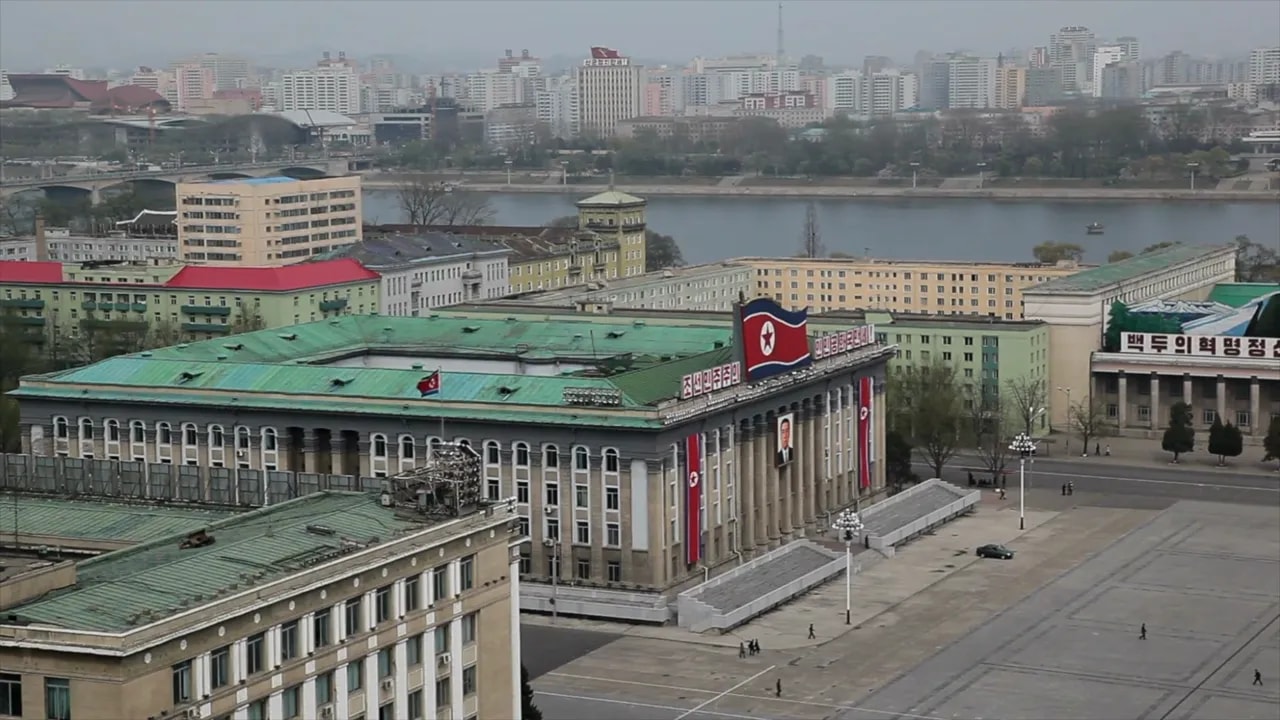
South Korean media reports suggest Chinese security and protocol teams have already visited Pyongyang, although Beijing has not commented publicly. The possible trip follows Kim Jong Un’s visit to Beijing for a military parade last September and comes after several signs that the relationship is warming again. These include the resumption of train and flight services between Beijing and Pyongyang, as well as Chinese Foreign Minister Wang Yi’s April visit to North Korea.
South Korea is monitoring the situation closely and has urged that any Chinese engagement with North Korea contribute to peace and stability on the Korean Peninsula. That is diplomatic language, but the message is straightforward. Seoul does not want closer China-North Korea coordination to further destabilise the regional security environment.
What appears to be emerging is not just ceremonial diplomacy but a broader effort to reinforce an old communist alliance in response to regional and global pressures. Even if the visit does not happen on the suggested timetable, the direction of travel is worth noting.
EU-China trade tensions are moving toward something more serious
Trade relations between the European Union and China are looking increasingly brittle, and the latest dispute shows how fast regulatory disagreements can turn into broader political confrontation.
At the centre of the current row is the EU’s use of its Foreign Subsidies Regulation, or FSR, on Chinese companies, including airport scanner manufacturer Nuctech. China’s Ministry of Commerce and Ministry of Justice have now declared that the EU’s cross-border investigative measures under the FSR amount to improper extraterritorial jurisdiction. Beijing also warned that no individual or organisation may implement or support such actions.
That is not routine complaint language. It marks a formal escalation.
The clash comes on top of deeper European frustrations about the overall trade relationship. Many in Europe increasingly see the economic relationship as structurally unbalanced. One particularly vivid description from the EU Chamber of Commerce in China compared the trade flow to a 400-metre container ship loaded with 24,000 containers sailing to Europe and returning almost empty.
That image stuck because it captures the complaint succinctly: Europe believes it is absorbing vast quantities of Chinese exports while struggling to achieve comparable access or reciprocity in return.
Recent exchanges have reportedly become heated. Chinese officials have accused Europe of bullying and protectionism, while European participants argue that long-standing concerns about trade imbalances and market distortions are still not being addressed in any meaningful way.
The tension is not limited to the FSR. Beijing is also unhappy with other EU measures, including the Industrial Accelerator Act and the Cyber Security Act, as well as sanctions imposed on European firms supplying dual-use technology to Taiwan. One French diplomat reportedly described Chinese communications as “very harsh", suggesting that Beijing believes some European capitals may be more susceptible to pressure than Washington has been.
There is also a summit issue brewing. Premier Li Qiang is reportedly willing to attend an EU-China summit, but Brussels is insisting on Xi Jinping’s participation. For the Europeans, the reasoning is simple enough: if Europe sends its top leaders to China, it expects China to send its top leader to Europe. But in diplomatic terms, protocol disputes often double as signals of political intent. What looks like a scheduling disagreement can quickly become a proxy battle over status, leverage, and seriousness.
If all this sounds familiar, it is because the structural issues have been building for years. A related look at Beijing’s increasingly securitised worldview helps explain why China is responding more forcefully to foreign regulatory pressure across multiple fronts.
The danger now is that regulatory disputes, trade deficits, and political mistrust begin reinforcing one another. Once that happens, both sides can slide from friction into a broader trade conflict almost by inertia.
Why so many analysts missed China’s nuclear build-up
One of the more important strategic discussions underway right now concerns a failure of analysis rather than a new policy announcement. Security experts are revisiting how much of the international policy community failed to anticipate the scale of China’s nuclear weapons expansion.
The renewed debate has been driven in part by analyst Decker Eveleth, who helped uncover vast new Chinese missile silo fields through satellite imagery in 2021. In a recent essay, he argues that the problem was not just a lack of data. It was also a deeper failure in how experts analyse authoritarian systems like China.
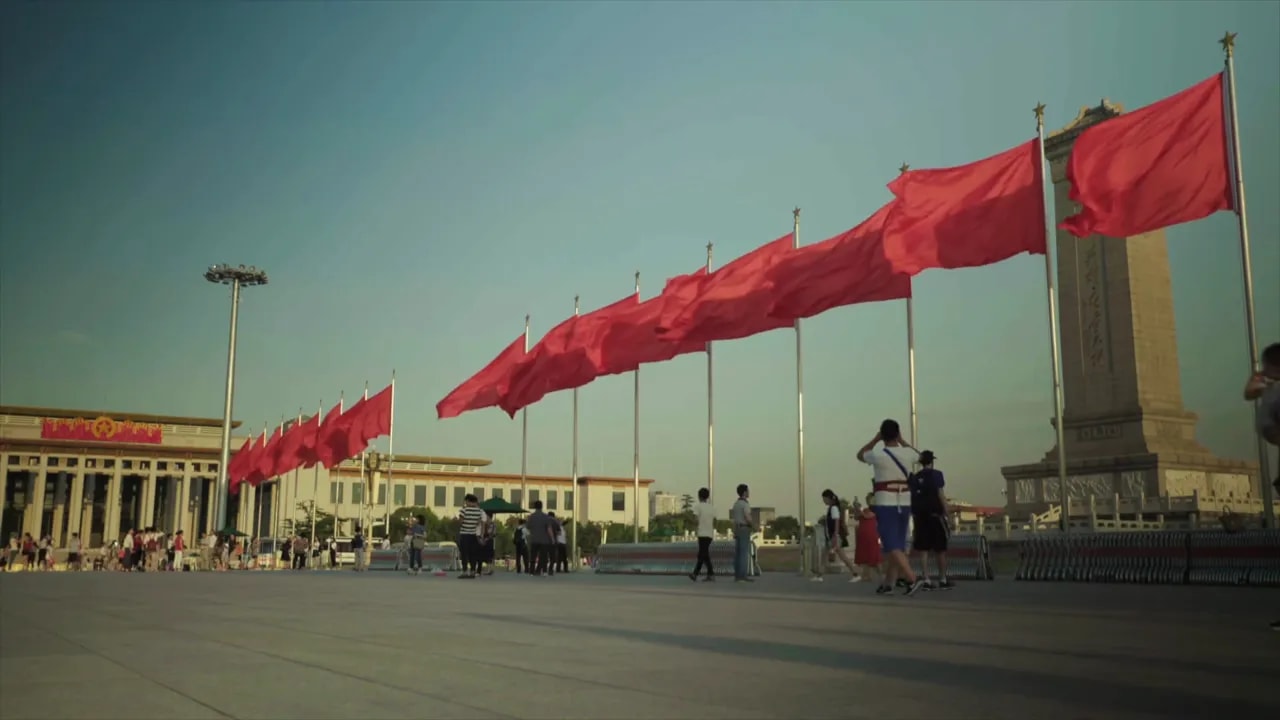
setting rather than focusing on individual faces.
The scale of the discovery was extraordinary. Researchers identified about 120 missile silos under construction near Yumen, then another 110 near Hami, and roughly 90 more at Hanggin Banner in Inner Mongolia. Altogether, more than 320 new silos were uncovered. The findings were later confirmed by US Strategic Command and incorporated into Pentagon assessments.
So why did so many people miss it?
The core argument is that many analysts assumed China’s historically smaller nuclear posture would remain relatively stable, even as broader military modernisation accelerated. There was an overreliance on past patterns, a tendency to treat Chinese opacity as evidence of continuity, and perhaps too much confidence that major strategic shifts would generate clearer warning signs.
In reality, highly compartmentalised authoritarian systems can conceal enormous changes until the physical evidence becomes impossible to ignore.
The episode also showed how quickly information warfare can shape early narratives. Some pro-Beijing social media accounts claimed the newly identified silo fields were merely wind farms, based on misinterpreted satellite images that also showed nearby renewable energy facilities. That explanation spread through Chinese state-linked media, including the Global Times, and through diplomatic channels that dismissed the reporting as anti-China propaganda.
For analysts, the lesson is not simply “use more satellite imagery", though open-source intelligence clearly mattered. The larger lesson is that studying China requires a willingness to challenge entrenched assumptions, especially when the state is becoming more ambitious, more secretive, and more strategically assertive.
This issue also fits into a wider pattern of concern about how external observers assess Chinese security behaviour. There are parallels with broader debates over strategic warning and preparedness in the region, including recent discussions around AI competition and Taiwan deterrence.
Tesla enters China’s advanced driving race, but the field is already crowded
Finally, Tesla has officially rolled out its “FSD Supervised” driver assistance system in China. This is a meaningful step for the company in one of the world’s most important and most competitive electric vehicle markets.
The launch came shortly after Elon Musk’s visit to China as part of a business delegation accompanying President Trump. Tesla says the system enables vehicles to navigate city streets, intersections, lane changes, and traffic conditions under active driver supervision. But the company is also emphasising that the feature does not make the cars fully autonomous. Drivers must remain attentive and ready to take over at all times.
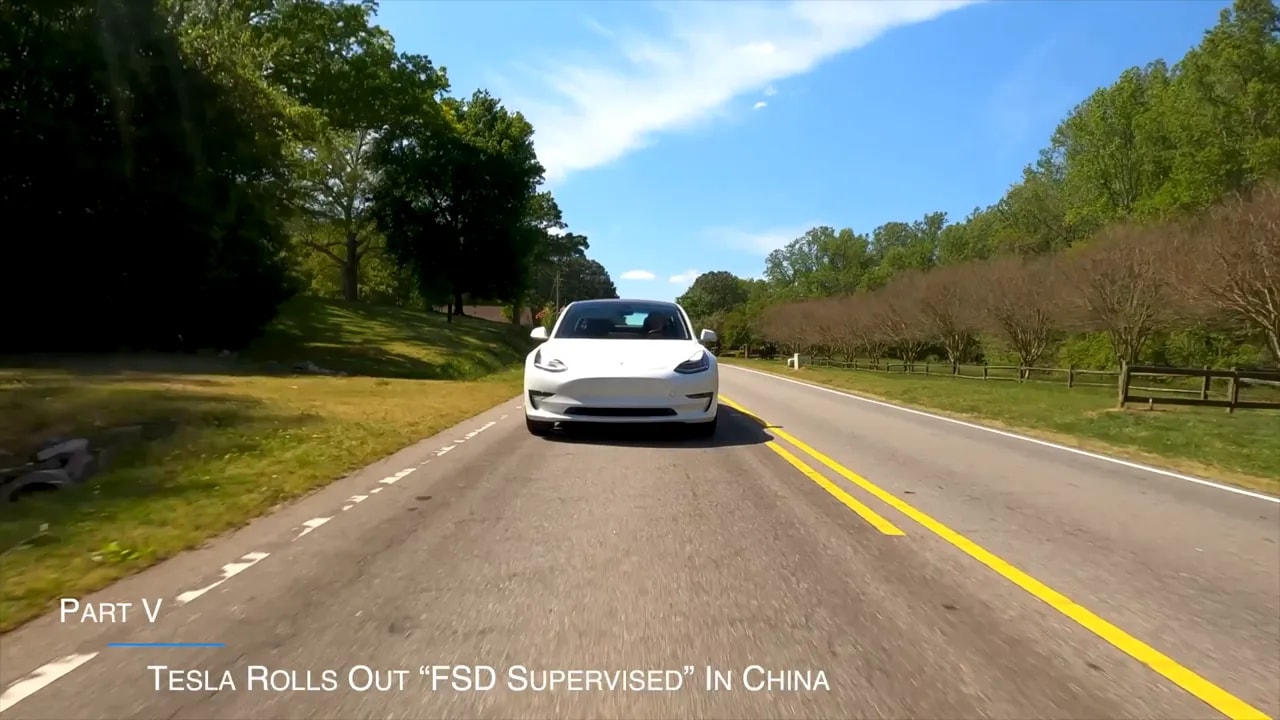
approach rather than full autonomy.
That distinction matters, especially in China, where dense traffic conditions, complex urban layouts, and unpredictable road behaviour create a demanding test environment for advanced driver assistance systems.
Tesla is not entering an empty field. It is stepping into a market where domestic competitors such as Huawei, BYD, Xiaomi, and XPeng have already made rapid progress. Chinese automakers are increasingly viewed as highly capable in autonomous driving and, in some environments, better adapted than Tesla to local road conditions.
The competition is also spreading into robotaxis. XPeng has begun mass production of autonomous taxis powered by its in-house Turing AI chips. The company says these vehicles will offer Level 4 autonomous driving capabilities in designated areas, allowing operation without human intervention under specific conditions. XPeng plans pilot robotaxi operations later this year and hopes to achieve fully autonomous services without on-site safety drivers by early 2027.
That puts Tesla and XPeng on what could become one of the defining rivalries in AI-driven mobility.
Tesla appears to understand the stakes. It is reportedly expanding its China operations and urgently recruiting autopilot engineers, data labellers, and testing operators across major cities. Advanced driving software is not just a product feature for Tesla. It is central to the company’s long-term growth model, especially as EV price wars continue to squeeze hardware margins. Subscription-based software revenue could become increasingly important if the technology gains acceptance and regulatory backing.
Still, Tesla’s timing is interesting. The company has finally launched, but it is doing so in a market where local firms have been moving quickly, investing heavily, and tailoring systems to Chinese roads and user expectations. So while the rollout is significant, it does not mean Tesla arrives as the unquestioned leader.
What these stories say about China’s direction
These developments may seem unrelated at first glance, but they point in a common direction.
- In technology, China is hardening around self-reliance and reducing dependence on US suppliers, even where foreign products have traditionally dominated.
- In diplomacy, Beijing appears willing to reinforce ties with politically sensitive partners such as North Korea when it suits its strategic interests.
- In trade, Chinese authorities are reacting more sharply to foreign regulatory pressure and showing less patience for what they see as external constraints.
- In security, the gap between outside assumptions and China’s actual strategic behaviour remains a serious problem.
- In industrial competition, foreign firms can still operate in China, but increasingly on terms shaped by local champions, local regulation, and political risk.
That is the broader picture emerging from this China news update. Access to China’s market is no longer just a business question. It is tied to export controls, national champions, strategic signalling, and state priorities. The environment is becoming more competitive, more politicised, and less predictable.
FAQ
Why is Nvidia struggling in China even with modified chips?
Nvidia designed certain products specifically to comply with US export controls, but Beijing appears increasingly determined to reduce dependence on American semiconductor technology altogether. That means even downgraded or China-specific Nvidia products may now face political and regulatory resistance inside China.
What does the reported ban on Nvidia’s RTX 5090 DV2 indicate?
It suggests that the issue is no longer only about US restrictions on advanced AI chips. China may be moving toward a broader preference for domestic alternatives, especially as companies like Huawei and Cambricon expand their presence in the local AI chip market.
Why would a Xi Jinping visit to North Korea matter?
It would be Xi’s first trip there in seven years and would signal a renewed strengthening of Beijing-Pyongyang ties. Given current regional tensions, such a visit would carry strategic significance well beyond symbolism.
What is driving the current EU-China trade dispute?
The immediate trigger is the EU’s use of its Foreign Subsidies Regulation to investigate Chinese companies. More broadly, however, the dispute reflects long-running European complaints about trade imbalances, market access, industrial policy, and what many in Europe see as an increasingly uneven economic relationship.
Why was China’s nuclear buildup such a surprise to many analysts?
Many experts assumed China would maintain a relatively limited nuclear posture based on historical patterns. That assumption proved misleading as China’s military modernisation accelerated under highly secretive and compartmentalised conditions. The later discovery of more than 320 new missile silos exposed how flawed some of those assumptions were.
Is Tesla leading the autonomous driving market in China?
Tesla remains a major player, but it is entering a very competitive field. Chinese firms such as Huawei, BYD, Xiaomi, and XPeng have all made strong advances, and some are seen as especially capable in handling China’s dense and complex urban driving environments.
What is the main takeaway from this China news update?
The main takeaway is that China’s commercial, diplomatic, and strategic behaviour is becoming more tightly integrated. Technology policy, trade friction, regional diplomacy, and security planning are increasingly moving in the same direction: toward greater self-reliance, stronger state control, and sharper geopolitical competition.