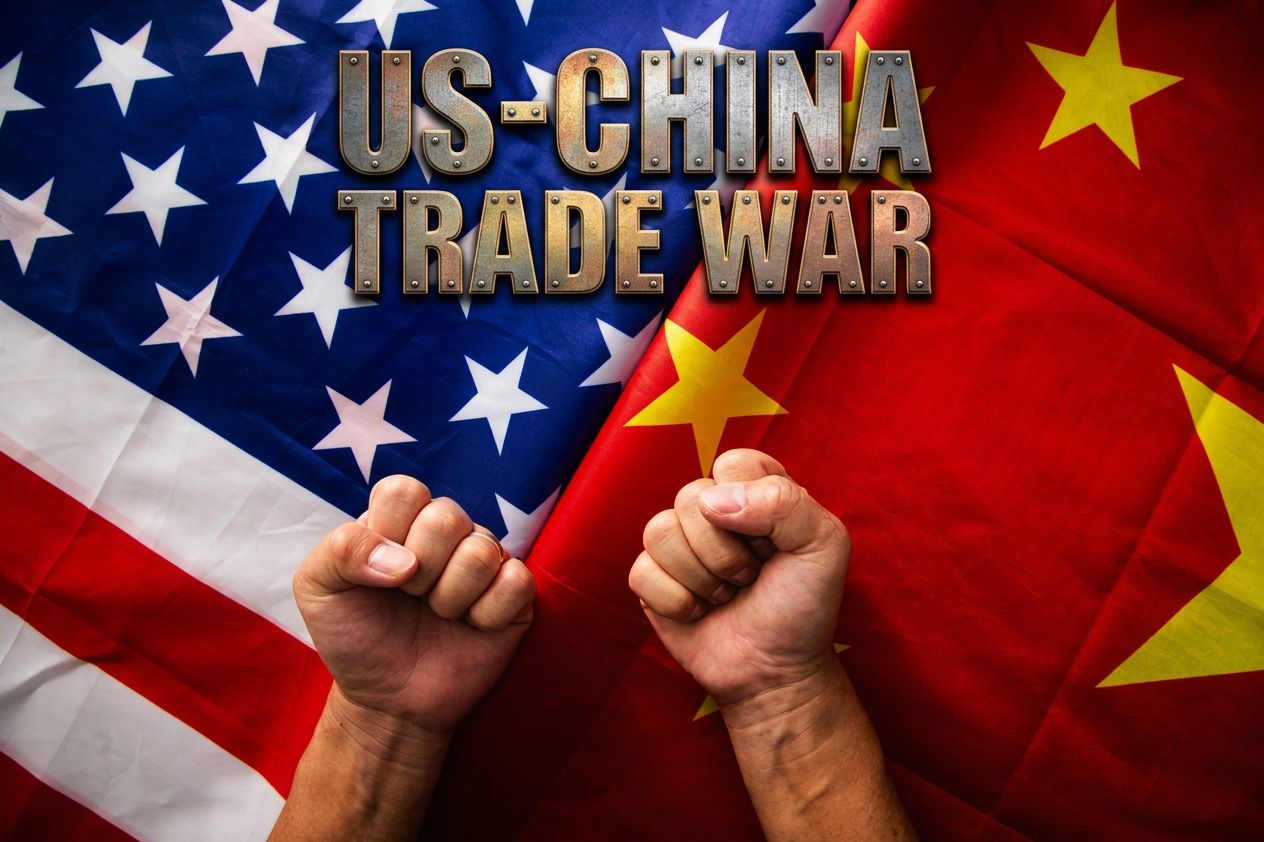

Geopolitical Trade Dynamics: China’s Calibrated Countermeasures Against US Entities
Beijing’s latest trade restrictions against dozens of American firms represent a significant shift in its approach to global trade disputes. Rather than relying on broad, blunt economic retaliation designed for maximum operational disruption, Chinese authorities have deployed a calibrated, strategic, and highly selective framework.
Announced on the first working day following the June 2026 Dragon Boat Festival holiday, these coordinated actions by the Ministry of Commerce (MOFCOM) and the Ministry of Finance (MOF) targeted more than 50 US companies. The enforcement actions came as a direct response to Washington expanding its own blacklist of Chinese enterprises under Section 1260H of the National Defence Authorisation Act (NDAA), which accuses major commercial tech firms—including Alibaba, Baidu, BYD, and NIO—of maintaining links to the Chinese military.
The Anatomy of China’s Two-Pronged Retaliation
The regulatory actions implemented by Beijing are divided into two distinct legal mechanisms, each carrying precise economic and political implications for the trans-Pacific trade relationship.
Beijing Countermeasures Framework (June 2026)
├── MOFCOM Export Control List: 10 US Entities (Dual-use items completely banned)
└── MOF Procurement Restrictions: 46 US Companies (Barred from state supply chains)
1. Dual-Use Export Bans on Ten Selected Entities
Under the first mechanism, MOFCOM added 10 United States entities to China’s formal Export Control List for dual-use items—goods and technologies that can be utilised for both civilian commercial applications and military hardware development.
Furthermore, the mandate extends globally, prohibiting individuals or organisations in third-party countries from transferring or supplying Chinese-origin dual-use materials to the designated entities.
-
Unmanned Systems & Robotics: Drone and aviation developers like Aveox Inc., Red Cat Holdings, Teal Drones, and Jaia Robotics.
-
Defence Electronics & Aerospace: Tactical radar and surveillance specialists including IMSAR, L3Harris Maritime Services, and Ball Aerospace & Technologies Corp.
-
Specialised Logistics: Heavy tactical vehicle platform providers such as Oshkosh Defence.
-
Critical Mineral Processors: Rare earth supply chain anchors, specifically MP Materials Corp and USA Rare Earth, Inc.
2. Exclusion of 46 Firms From Public Procurement
Simultaneously, the Ministry of Finance embedded restrictive measures against 46 American defence and aerospace contractors within government procurement streams.
Strategic Carve-Outs and the Preservation of Domestic Supply Chains
While the political messaging aimed at Washington is clear, the most illuminating detail of this trade policy is what Beijing explicitly chose not to do. The Ministry of Finance’s procurement notice intentionally includes a critical regulatory carve-out: the purchase prohibition does not apply to products manufactured by US-funded, American-invested enterprises operating physically within mainland China.
Procurement Rule Enforcement
├── US-Manufactured Goods (Imported):  ❌ Strictly Banned
└── US-Invested Local Production:      |-- Exempted (Allowed)
This structural distinction confirms that policymakers are carefully avoiding self-inflicted industrial damage to domestic manufacturing clusters and internal supply lines. It reflects an underlying pragmatic reality: foreign direct investment (FDI), multinational industrial integration, and joint-venture capital participation remain fundamentally important to the broader Chinese economy.
Rather than executing a blunt decoupling manoeuvre that might spook global capital markets or disrupt domestic factory operations, Beijing has constructed a controlled retaliation framework.
Critical Minerals and the Battle for the Tech Supply Chain
The inclusion of foundational critical mineral firms on the dual-use restriction list highlights the strategic heart of this escalation.
Targeting the Mine-to-Magnet Supply Chain
Rare earths and specialised heavy metals are highly essential for the production of permanent magnets, high-efficiency electric vehicle motors, advanced semiconductor nodes, next-generation telecommunications infrastructure, and precision defence technology like the F-35 fighter jet programme.
Industrial Impact: Blacklisting these entities does not halt raw mining operations in the US, but it legally blocks them from accessing Chinese separation equipment, technical components, and processed magnet materials.
Advanced Hardware Material Hurdles
├── Permanent Magnets: High dependence on Chinese processing tech
└── Indium Coatings:   Subject to tighter customs and export scrutiny
The Indium and Gallium Pressure Points
Compounding the rare earth restrictions are reports from industry supply chain managers highlighting tighter, more exhaustive scrutiny on the export of indium-related products and speciality chemical compounds. Indium is vital for producing flat-panel displays, high-efficiency solar cells, and specific thin-film coatings required in advanced microchip manufacturing and artificial intelligence hardware infrastructure.
While longer bureaucratic approval timelines, multi-layered licensing protocols, and extended customs inspections appear technical and administrative on paper, they function as high-yield friction points. In a globalised industrial framework operating on just-in-time logistics, minor delays in chemical and material shipments can create compounding operational bottlenecks for downstream Western manufacturers.
The Era of Selective Escalation
The broader macroeconomic pattern governing the US-China economic relationship has evolved past generalised tariff barriers into a highly calculated, structural standoff:
-
Expanding Western Scrutiny: Washington continues to broaden its national security parameters, utilising entity lists and investment bans to restrict Chinese technology and manufacturing giants.
-
Measured Countermeasures: Beijing answers with targeted, asymmetric restrictions tailored to impose costs on specific defence, aerospace, and critical mineral supply chains.
-
Resource Weaponisation: Upstream industrial assets, rare earth precursors, and dual-use component channels have transformed into the primary levers of strategic economic pressure.
-
Controlled Isolation: Both capitals deliberately attempt to apply pointed geopolitical friction while actively working to avoid severing highly lucrative, mutually beneficial commercial trade channels.
This systematic approach defines the modern paradigm of selective escalation. The trade conflict is no longer an all-out race toward total economic decoupling; instead, it is a highly technical, multi-layered chess match where both powers seek to maximise structural leverage over tomorrow's strategic technologies without destabilising their own industrial foundations.