The latest set of developments out of China spans four very different fronts, but together they say something important about the country’s direction. On one side, leaked documents are raising fresh questions about how far Beijing’s partnership with Moscow really goes. On another, China’s state banking system continues to tower over the global financial rankings, though size and strength are not the same thing.
At the same time, China’s space sector has notched a notable technical milestone with a reusable rocket recovery attempt that points to bigger strategic ambitions. And at the domestic level, a painful series of child custody disputes is exposing the limits of legal reform when court orders are difficult to enforce.
This China news update breaks those stories into clear sections and focuses on what matters most in each case.
Table of Contents
- China-Russia military leak points to deeper strategic coordination
- China’s biggest banks are still number one by size, but that does not settle the real question
- Space race update: China recovers a Long March 10B booster with a net-based system
- Child custody disputes reveal the limits of legal reform
- Why these four stories matter together
- FAQ
- Final note
China-Russia military leak points to deeper strategic coordination
One of the most striking stories concerns leaked documents that reportedly detail extensive military cooperation between China and Russia. The core issue is not simply whether Beijing and Moscow talk regularly. That is already well understood. The issue is whether their cooperation now stretches into areas that directly undermine China’s long-standing claims of neutrality over the war in Ukraine.
According to the reporting around the leak, the partnership described in the documents goes well beyond diplomatic coordination. It includes work on missile defence, AI-enabled drones, electronic warfare, military exchanges, and planning related to space conflict.
That last part is especially important.
The documents reportedly outline thinking on how to counter Starlink, the satellite internet network that has become central to Ukrainian battlefield communications. Chinese researchers are said to describe Starlink as a kind of space-based bottleneck, one that dominates low Earth orbit and radio frequencies in ways they see as strategically dangerous.
The alleged strategy unfolds in three stages:
- Diplomatic and legal pressure through international institutions to slow Starlink’s expansion by emphasizing orbital congestion and collision risks.
- Coordinated electronic warfare involving orbital competition, radio frequency pressure, and integrated jamming capabilities.
- Escalatory cyber and physical options, including attacks through user terminals and, eventually, anti-satellite strikes meant to overwhelm the network’s scale.
Even if some of these ideas remain conceptual, the significance is obvious. This is not the language of a loose political friendship. It is the language of joint planning for strategic competition with the West across multiple domains.
That includes cyberspace, the electromagnetic spectrum, and outer space, all of which are becoming central to modern warfare.
The leak also reportedly points to growing military training exchanges. Ukrainian intelligence has claimed that hundreds of Chinese military personnel have trained at Russian institutions, while Russian soldiers have also participated in exchange activity in China. If accurate, that suggests a relationship that is becoming increasingly normalised at the operational level, not just the political level.
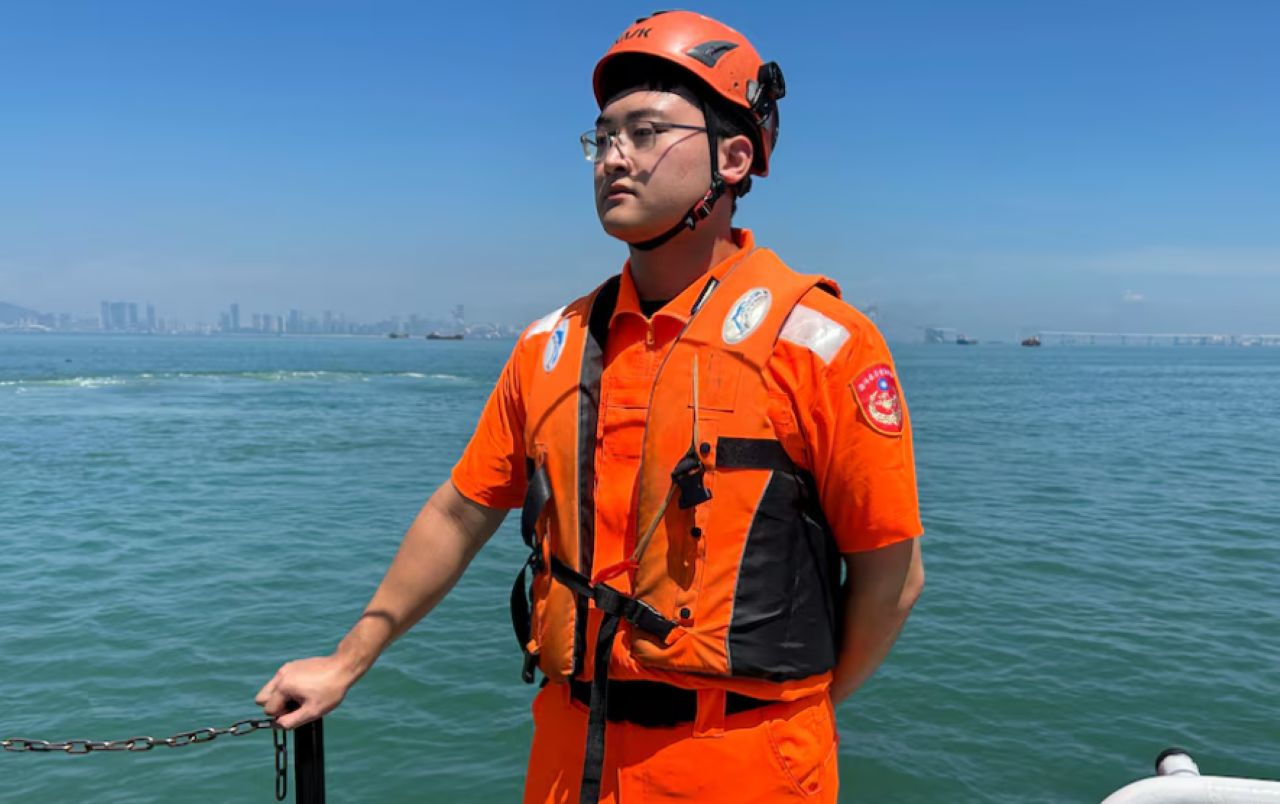
Publicly, both countries continue to deepen military ties. Joint exercises near Qingdao recently included reconnaissance, air defense, anti-missile operations, and submarine search and rescue. Those are not symbolic box-ticking exercises. They are the kind of activities that build familiarity, interoperability, and long-term trust between military systems.
The broader geopolitical implication is that Western governments are likely to see this as more evidence that China and Russia are coordinating across strategic domains rather than merely aligning rhetorically. That will feed into a harder security conversation in Europe, Washington, and across allied capitals.
Beijing still maintains that it does not supply lethal weapons to Russia and that it supports dialogue over the war in Ukraine. But stories like this make that diplomatic line harder to sustain credibly.
For more on how wider geopolitical tensions are complicating Beijing’s strategic environment, see this related analysis on security pressures, Hormuz, and the U.S.-China lunar race.
China’s biggest banks are still number one by size, but that does not settle the real question
China’s state-owned banking giants once again dominate the global rankings by Tier 1 capital. The Big Four, Industrial and Commercial Bank of China, China Construction Bank, Agricultural Bank of China, and Bank of China, held the top four positions. Seven Chinese lenders made the global top ten, and Postal Savings Bank of China entered that top tier for the first time.
By asset size, the numbers are enormous. Chinese banks collectively hold far more assets than their American counterparts. On paper, that reinforces Beijing’s long-running ambition to build itself into a global financial power with broader yuan use, stronger overseas banking operations, and alternatives to Western-led financial plumbing.
But the rankings need to be read carefully.
Size is not the same as financial vitality. American banks still outperform on profitability, and that matters. A banking system can grow huge because it sits atop a vast domestic credit machine, because it is heavily policy-driven, or because it channels investment in ways that support state priorities. None of that automatically means it is healthier, more innovative, or better positioned for sustainable long-term returns.
That is why the historical comparison raised by economist Michael Pettis is worth taking seriously. The last major precedent for this kind of banking dominance came from Japan in the late 1980s and early 1990s, just before a long period of financial and economic stagnation.
The warning is not that China must follow Japan’s path exactly. History never copies itself that neatly. The warning is that outsized bank rankings can coincide with structural imbalances, credit distortions, and an economy leaning too heavily on debt-fueled expansion.
In China’s case, those questions are unavoidable:
- How much of the banking system’s scale reflects genuinely productive capital allocation?
- How much is tied to state direction, local government stress, and legacy property exposure?
- Can bank expansion continue without stronger household demand and better returns on investment?
Those questions matter even more because China’s broader economic model remains under pressure. Export performance, domestic demand weakness, and industrial overcapacity are all part of the same conversation. A giant banking system can help absorb shocks for a while, but it can also mask them.
A useful companion piece is this article on why export-led growth is becoming harder to sustain, especially as policymakers try to balance growth, debt, and external pressure.
Space race update: China recovers a Long March 10B booster with a net-based system
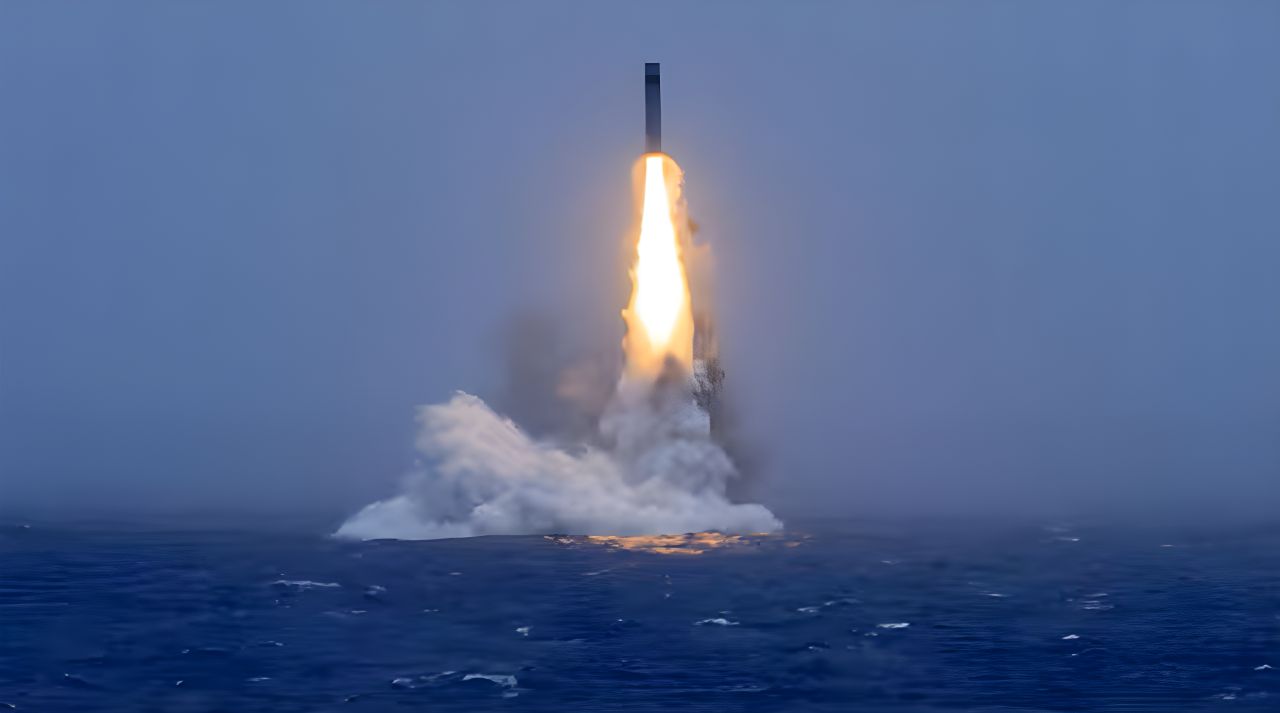
China also recorded a notable milestone in space technology with the successful launch of the Long March 10B and the recovery of its first-stage booster using a wire-net capture system at sea.
That detail matters because reusable launch capability changes the economics of spaceflight. For decades, rockets were largely single-use machines. That made access to orbit expensive and limited launch frequency. SpaceX changed that equation by proving repeated booster recovery and reuse at scale.
China is now trying to close that gap.
After liftoff from Hainan, the Long March 10B’s booster descended toward a floating platform in the South China Sea. Instead of relying on standard landing legs, the booster reportedly hovered and was captured by a large wire net. Chinese engineers argue that this approach reduces weight and simplifies design.

If the system proves reliable, it could become an important part of China’s broader push to increase launch efficiency. State aerospace developers say they hope to refurbish and reuse the recovered booster within the year, which would be a meaningful next step beyond a one-off demonstration.
Still, perspective is important here.
This does not put China ahead of SpaceX. Not even close. SpaceX has already completed hundreds of Falcon 9 booster recoveries and is now developing a fully reusable heavy-lift architecture with Starship. In that sense, China’s latest advance is best understood as catching up, not overtaking.
But catching up in space can still be strategically significant.
Reusable rockets are critical for several reasons:
- Satellite constellations become cheaper to deploy at scale.
- Commercial launch markets become more competitive.
- Military space capacity improves through faster deployment of communications, surveillance, and navigation systems.
- Lunar ambitions become more achievable as launch costs fall and mission cadence rises.
China’s space industry has also changed structurally over the last decade. Reforms encouraging private investment have helped produce a growing commercial ecosystem alongside the big state firms. Beijing appears to be pursuing a hybrid model that combines central planning, state backing, and private experimentation.
That fits the larger pattern in strategic sectors across China. Where the leadership sees long-term geopolitical value, it is willing to support broad industrial buildup, use state coordination, and encourage limited market competition inside carefully defined boundaries.
The timing is especially important because the moon is back at the centre of major power competition. Beijing wants Chinese astronauts on the lunar surface before 2030. Delays in the U.S. Artemis programme have raised a real, if still uncertain, possibility that China could gain momentum in this new phase of the lunar race.
That would carry symbolic prestige, of course, but the deeper issue is that space is no longer just about prestige. It is a strategic infrastructure domain. Launch systems, orbital networks, and lunar capabilities all increasingly overlap with national security, industrial policy, and long-term technological competition.
For a broader look at how weak economic data and strategic tech priorities are intersecting, see this piece on China’s data slowdown and Beijing’s electricity-driven AI push.
Child custody disputes reveal the limits of legal reform
The final story is domestic, and in human terms it may be the most painful of the four.
A growing number of child custody disputes in China are drawing attention to a problem that recent legal reforms have not solved. In some divorce and separation cases, children are allegedly hidden, removed, or withheld by one parent or by that parent’s relatives, leaving the other parent in a prolonged legal and emotional limbo.
One of the most closely followed cases involves a mother whose young son was allegedly taken by people acting on behalf of her husband in Beijing last year. Police later confirmed the husband had orchestrated the incident, according to court records. Yet even after court injunctions ordering the child’s return, and even after a short detention of the father for refusing to comply, custody was still not restored in practice.
That gap between court rulings and actual enforcement is the core problem.
On paper, the legal system has moved. Judicial rules introduced last year allow parents to seek injunctions when children are hidden or taken by relatives. That is a meaningful development. But many parents say obtaining those orders is only part of the battle. Enforcing them can be inconsistent, slow, and deeply frustrating.
A symbolic movement has emerged around these cases, often referred to as the Purple Ribbon Group. The purple ribbon, long associated internationally with anti-violence campaigns, has become a sign of solidarity for parents separated from their children during prolonged legal disputes.
The numbers being cited by the Beijing High People’s Court are troubling. Most cases involving hidden or taken children stem from adult conflict. More than 70 percent of affected children are under eight years old, which raises obvious concerns about long-term emotional and psychological harm.

There are also cases stretching on for years. Some parents have spent half a decade or more trying to locate or regain contact with a child during unresolved custody battles. That kind of delay can permanently reshape family bonds.
Legal scholars and advocates have proposed several responses:
- Stronger penalties for parents who ignore court orders, including wider use of fines and detention.
- Specialised family courts with more targeted expertise in high-conflict custody cases.
- Clearer police authority to assist in locating hidden children and enforcing rulings promptly.
At a deeper level, the issue exposes a recurring challenge in China’s legal and administrative system. Reform often arrives first as a rule, directive, or judicial interpretation. But the practical results depend on local enforcement capacity, bureaucratic coordination, and incentives. When those elements lag, formal progress does not always translate into lived reality.
And when the subject is child custody, that gap becomes especially costly.
Why these four stories matter together
These headlines may seem unrelated at first glance, but they sit inside the same broader picture.
The China-Russia leak highlights how strategic competition is expanding into space, cyber systems, and advanced military coordination. The bank rankings show the immense scale of China’s state-backed financial architecture, while also hinting at the distortions that can come with it. The reusable rocket milestone underscores Beijing’s determination to build capability in sectors that carry both commercial and military value. And the custody dispute cases reveal that even as China projects technological and institutional power, basic legal enforcement in deeply personal matters can remain uneven.
Put differently, modern China is simultaneously a geopolitical actor, a financial heavyweight, a technology competitor, and a society wrestling with the practical limits of governance.
That is why it is useful to read these stories side by side rather than in isolation.
FAQ
What do the leaked China-Russia documents reportedly reveal?
They reportedly describe cooperation in missile defence, AI drones, electronic warfare, military training exchanges, and planning to counter Starlink. If authentic, they suggest a much deeper strategic relationship than Beijing publicly acknowledges.
Why is Starlink central to the military leak story?
Starlink has been a critical communications system for Ukrainian operations. The reported planning around jamming, regulating, cyber targeting, or even physically attacking such a network shows how seriously satellite infrastructure is now treated in military strategy.
Do China’s top-ranked banks mean its financial system is stronger than America’s?
Not necessarily. Chinese banks lead by size and assets, but U.S. banks still outperform on profitability. Large scale can reflect policy-driven credit expansion as much as financial efficiency or resilience.
How important is the Long March 10B booster recovery?
It is an important milestone for China’s reusable rocket efforts. It could help lower launch costs and support larger satellite constellations and lunar missions. But it still leaves China behind SpaceX, which has years of operational reuse experience.
What is the main problem in China’s child custody disputes?
The central problem is enforcement. Courts may issue injunctions or custody-related orders, but parents often struggle to get those rulings carried out quickly and effectively when a child has been hidden or taken by the other side.
Why are these domestic custody cases receiving wider attention?
Because they involve young children, long separations, and emotionally intense disputes that expose broader weaknesses in how legal reforms are implemented. The cases have become a public test of whether the system can protect children when family conflict escalates.
Final note
This set of stories captures the breadth of what makes China difficult to assess with a single lens. It is possible for the country to advance quickly in strategic technologies, dominate global rankings in state banking, tighten military partnerships abroad, and still struggle with enforcement failures at home. A serious China News Update has to hold all of those realities together at once.