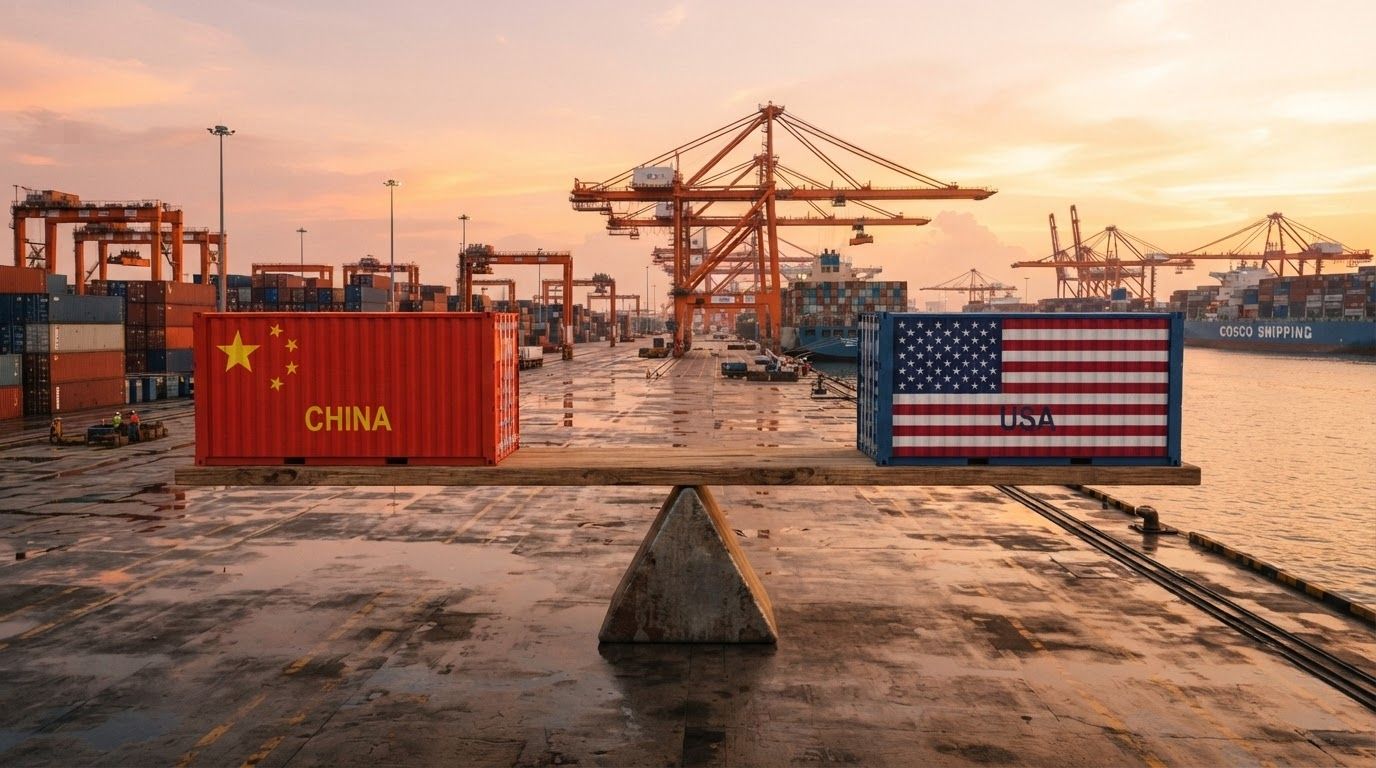
There is a comforting story about the US–China technology rivalry. Washington restricts the most powerful chips. Beijing complains, invests in alternatives, and buys whatever remains available. Business continues, diplomats shake hands, and everyone pretends the arrangement is sustainable.
But that story has a rather large hole in it. Artificial intelligence does not care whether its computing power arrives in a shipping container or through a connection to a data centre overseas. And the political compromise holding this system together may depend more heavily on a handful of people than either government would like to admit.
Consider the consequences of Nvidia losing Jensen Huang just as Washington moves to close those alternative routes to computing power. The leadership departure and associated misconduct and espionage allegations underlying this scenario have not been independently established here. They should not be treated as confirmed news. But the policy dilemma it illustrates is worth unpacking: what happens when America’s most persuasive advocate for selling chips to China is no longer making the argument?
The answer extends well beyond Nvidia’s share price. It reaches into Chinese AI development, American industrial strategy, and a diplomatic relationship in which even a trade truce leaves the central technological dispute unresolved.
Key Takeaways
- The leadership departure and associated allegations discussed here are unverified and should not be treated as established events.
- Overseas computing access complicates export controls focused primarily on physical chip shipments.
- Tighter restrictions could constrain Chinese AI development while increasing incentives to build domestic alternatives.
- Trade diplomacy cannot by itself resolve the strategic competition over advanced computing.
Table of Contents
- First, Separate the Allegations From the Policy Problem
- The Supply Chain Is More Complicated Than a Shipping Label
- The Real Loophole Is Access, Not Just Ownership
- Why Huang’s Absence Would Matter
- Washington’s Next Target Would Be Remote Computing
- For Chinese AI, the Immediate Problem Is Capacity
- Replacing Nvidia Requires More Than a Chinese Chip
- A Trade Truce Cannot Settle the Computing Dispute
- The Bottom Line: Computing Is the Strategic Prize
First, separate the allegations from the policy problem.
The scenario centres on Huang stepping down during a board investigation into personal relationships, with Nvidia’s chief financial officer taking over temporarily. It also involves allegations surrounding a businesswoman associated with Singapore-based computing company MegaSpeed, including suspected intelligence connections and possible links to restricted chip supplies.
Those are several different issues. Bundling them together produces an explosive story. It does not produce proof.
A corporate investigation into personal conduct does not establish espionage. A commercial relationship does not establish knowledge of smuggling. And an allegation that a company supplied restricted computing power does not, by itself, demonstrate that Nvidia’s leadership knowingly enabled an illegal transfer.
The account describes American authorities as investigating intelligence-related suspicions without having concluded that the businesswoman was a Chinese agent. Beijing denies that allegation. It also describes reporting about prosecutors examining whether connected entities participated in efforts to divert Supermicro products to China.
Separately, it references a prosecution involving Supermicro co-founder Yih-Shyan “Wally” Liaw and two other people over an alleged server-diversion scheme. Criminal charges, where brought, remain allegations requiring proof in court. A connection between separate investigations cannot simply be assumed.
This distinction matters because the political consequences of a scandal can arrive long before its factual boundaries become clear. Legislators do not need a completed prosecution to argue that an existing system is too permissive.
The Supply Chain Is More Complicated Than a Shipping Label
The commercial allegations extend beyond straightforward sales. The account attributes reporting to The Information that businesses connected to the businesswoman and her family participated indirectly in DeepSeek’s fundraising through investment vehicles. It also describes claims that those businesses supplied black-market Nvidia chips.
A separate report attributed to CNBC concerns connections to supplying Nvidia computing power to Huawei, itself a major competitor in AI processors and related infrastructure.
Again, these are claims requiring verification, not interchangeable pieces of a proven conspiracy. Their policy significance lies in the questions they raise about intermediaries, beneficial ownership and the identity of the ultimate customer.
A transaction can look perfectly ordinary at one point in the chain while becoming considerably less ordinary several companies later.
MegaSpeed’s stated position is that compliance is a fundamental priority. The account says it cooperated with American inspections and hired an American law firm to inventory its graphics processors and review export-control practices. Singaporean authorities, meanwhile, reportedly found insufficient evidence of relevant offences involving the company and complained about limited American information-sharing.
That is hardly a neat enforcement picture. Transactions span jurisdictions, companies can have opaque ownership structures, and investigators may not possess the same evidence. Suspicion in one country does not automatically become a prosecutable case in another.
The Real Loophole Is Access, Not Just Ownership

Now we get to the bigger problem. Restricting a shipment of advanced processors is one thing. Preventing a foreign AI laboratory from using comparable processors located somewhere else is another.
A Chinese developer does not necessarily need to import a chip to benefit from it. Access to an overseas computing cluster may provide an alternative. That means a policy focused on physical exports can leave an important route open even when customs enforcement works exactly as intended.
This is the distinction between controlling hardware and controlling the services that hardware provides.
The scenario includes a technical analysis attributed to researchers at Unemployment Labs. They reportedly identified numerical patterns in six publicly released models from DeepSeek, Moonshot AI, MiniMax and Ant Group that were consistent with Nvidia’s Blackwell hardware. Earlier models reportedly showed patterns associated with the older Hopper generation.
Interesting? Certainly. A complete account of what happened? Not remotely.
Even if such findings are sound, a hardware fingerprint cannot independently establish where the processors were located, who provided access, or whether a particular transaction breached export restrictions. Those are separate questions requiring separate evidence.
But the policy implication is clear enough: if restricted developers can still obtain the computing capability Washington wants to deny them, stopping boxes at the border is only part of the job.
Why Huang’s Absence Would Matter
Huang’s argument for continued sales to China is more sophisticated than “Nvidia would like more revenue”, although Nvidia would, unsurprisingly, like more revenue.
The strategic case is that Chinese dependence on American technology gives the United States leverage. Keep Chinese customers inside an American ecosystem, the argument goes, and American suppliers retain influence, revenue for research, and an advantage over domestic Chinese competitors.
Cut those customers off, and they have a powerful reason to move towards Huawei and other alternatives. Washington could end up surrendering a vast market while helping to create competitors it can neither influence nor constrain as easily.
There is a coherent argument there. There is also a fairly obvious objection.
The same processors that sustain American commercial influence can give Chinese developers the resources to build capabilities Washington is trying to restrict. Market dependence is valuable leverage only if the benefits outweigh the capabilities transferred along the way.
Huang’s particular importance is political. A founder with direct access to the president can make that case differently from a compliance team submitting comments on proposed regulations. Nvidia could retain the argument without him. Replacing his personal influence would be harder.
A scandal would make that harder still. Even unproven allegations could turn a debate about strategic interdependence into a much simpler political accusation: the safeguards failed, so tighten the rules.
Washington’s Next Target Would Be Remote Computing
The policy direction described in the account follows that logic. It includes reporting that the Commerce Department was preparing restrictions on Chinese AI companies’ remote access to advanced American processors in overseas data centres.
It also identifies three bipartisan proposals—the AI Overwatch Act, Chip Security Act and MATCH Act—as measures lawmakers wanted attached to year-end defence legislation. Their status and precise provisions would need checking against current legislative records. They should not be confused with enacted restrictions.
Nevertheless, the underlying objective is straightforward: strengthen oversight and close routes around existing controls. For authoritative regulatory material, the relevant starting point is the US Bureau of Industry and Security, rather than assumptions drawn from a political announcement.
The shift would be significant. Instead of asking only where a processor is shipped, regulators would increasingly need to ask who ultimately uses it.
That is a more ambitious enforcement problem. It also brings the commercial structure of overseas computing services much more directly into the technology rivalry.
For Chinese AI, the Immediate Problem Is Capacity
For Chinese developers, tighter enforcement would not be an abstract argument about grand strategy. It could mean less computing power, higher costs and more difficulty expanding training infrastructure.
The account cites an earlier Institute for Progress estimate suggesting that overseas computing rentals and smuggling together could account for at least 30% of China’s advanced AI computing capacity by the end of 2027. That is a projection, not a measurement of present capacity, and it combines lawful and unlawful routes that should not be casually conflated.
Still, it indicates why closing alternative channels could matter. If a substantial portion of expected capacity depends on access outside the domestic supply chain, restrictions could disrupt expansion plans.
The account also attributes reporting to Reuters that Chinese AI companies were seeking overseas Nvidia capacity because they feared further restrictions. The incentive is obvious: secure access before the rules become less forgiving.
This fits the broader issue explored in China’s advanced-chip bottleneck and its wider economic implications. Ambition is not the same thing as available infrastructure. A laboratory can have talented researchers and substantial funding while still facing a hard limit on the equipment it can actually use.
Replacing Nvidia Requires More Than a Chinese Chip
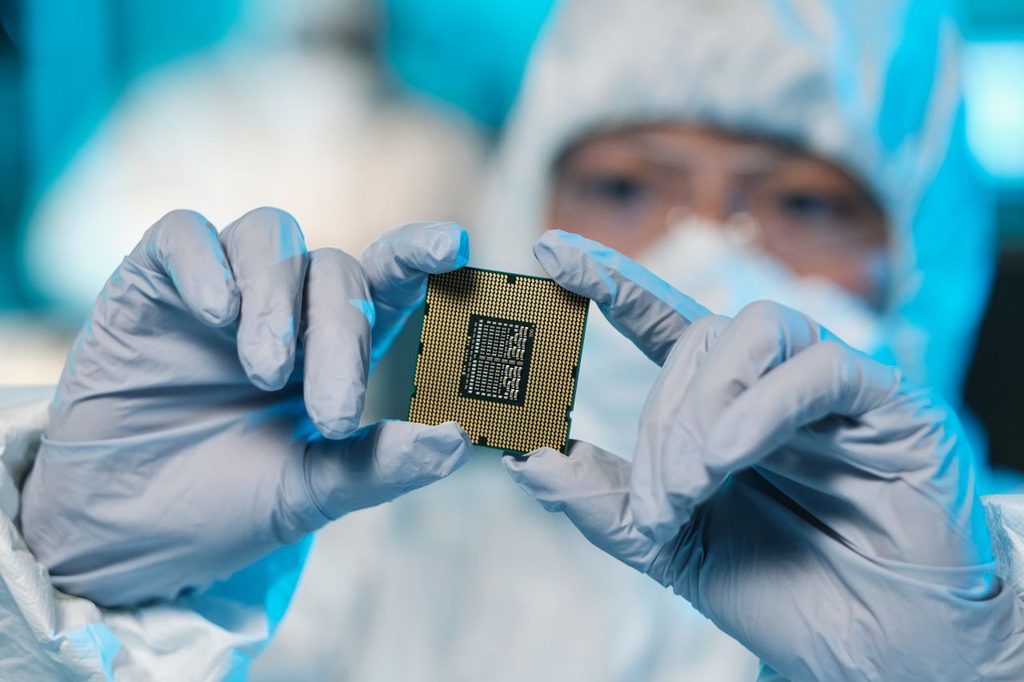
At this point, someone usually announces that China will simply build its own processors. Over time, domestic alternatives could reduce dependence. But “build a chip” is doing an enormous amount of work in that sentence.
Competitive AI infrastructure requires more than a processor with impressive specifications. It needs:
- Reliable manufacturing at sufficient scale.
- Adequate supplies of suitable memory.
- Networking equipment that allows processors to work together efficiently.
- Mature software that developers can use productively.
- The ability to operate large computing clusters reliably.
Weakness in any of these areas can limit the usefulness of progress elsewhere. A capable processor is not automatically a capable replacement for an established computing ecosystem.
Restrictions on leading semiconductor-manufacturing equipment complicate the transition further. Limited access to advanced lithography tools constrains the economics and scale of sophisticated chip production.
Yet this is where Washington’s strategy becomes uncomfortable. Stronger controls could slow Chinese AI development now while strengthening Beijing’s determination to eliminate American dependencies later.
More money could flow towards domestic processors, software adaptation and manufacturing equipment. Success would not be guaranteed, nor would it necessarily arrive quickly. But the incentive would become stronger.
Both outcomes can be true. A policy can impose meaningful short-term costs and encourage a more independent competitor over the longer term.
A Trade Truce Cannot Settle the Computing Dispute
The diplomatic setting makes the scenario more combustible. It places the crisis ahead of a proposed Trump–Xi meeting in Shenzhen, with a trade truce approaching a stated 10 January expiry. These timing details should be understood as part of the account, not independently confirmed scheduling information.
The broader tension is less dependent on any particular summit date.
Diplomatic contact can continue while the underlying disagreement remains almost untouched. The account describes a Wang Yi–Marco Rubio telephone conversation presented positively by Beijing, while Washington’s summary included additional subjects absent from China’s version.
That is engagement. It is not evidence that the two governments have settled what each considers an acceptable balance of technological power.
Rare earths create another potential pressure point. The account describes American dissatisfaction with the volume and pace of Chinese supplies under an existing arrangement. Further chip restrictions could therefore invite tighter Chinese exports of materials important to American defence and technology manufacturing.
The result could be another cycle of restrictions, retaliation and negotiations. As the broader discussion of US–China trade friction and technological rivalry illustrates, stabilising commercial relations does not eliminate the strategic contest beneath them.
The Bottom Line: Computing Is the Strategic Prize
The most consequential part of this scenario is not the corporate drama. It is what that drama could expose.
Washington wants to preserve American technological leadership without unnecessarily strengthening Chinese alternatives. Beijing wants access to leading computing resources without remaining vulnerable to American restrictions. Nvidia wants to sell into an enormous market while navigating rules designed to limit what that market can obtain.
Those interests overlap only so far.
Remove a powerful advocate for accommodation, add a politically explosive investigation, and the remaining space for compromise could shrink quickly. But allegations still need evidence, technical clues still need interpretation, and proposed rules still need to be distinguished from law.
A summit might manage the immediate confrontation. It cannot make the central question disappear: who gets access to the computing power that will shape the next generation of AI?
Frequently Asked Questions
Why would losing Jensen Huang affect Nvidia’s China policy?
Huang has advanced the argument that continued sales preserve American influence and discourage Chinese customers from adopting domestic alternatives. His absence could weaken the political reach of that argument without changing its underlying commercial logic.
Can Chinese AI companies benefit from chips located outside China?
Overseas computing services can provide access without a physical chip import. Whether a particular arrangement is permitted depends on the applicable restrictions and transaction details.
Would tighter controls stop Chinese AI development?
They could raise costs and constrain access to advanced computing, but stopping development is a much stronger claim. Domestic substitution also depends on manufacturing, memory, networking, software and efficient cluster operation.