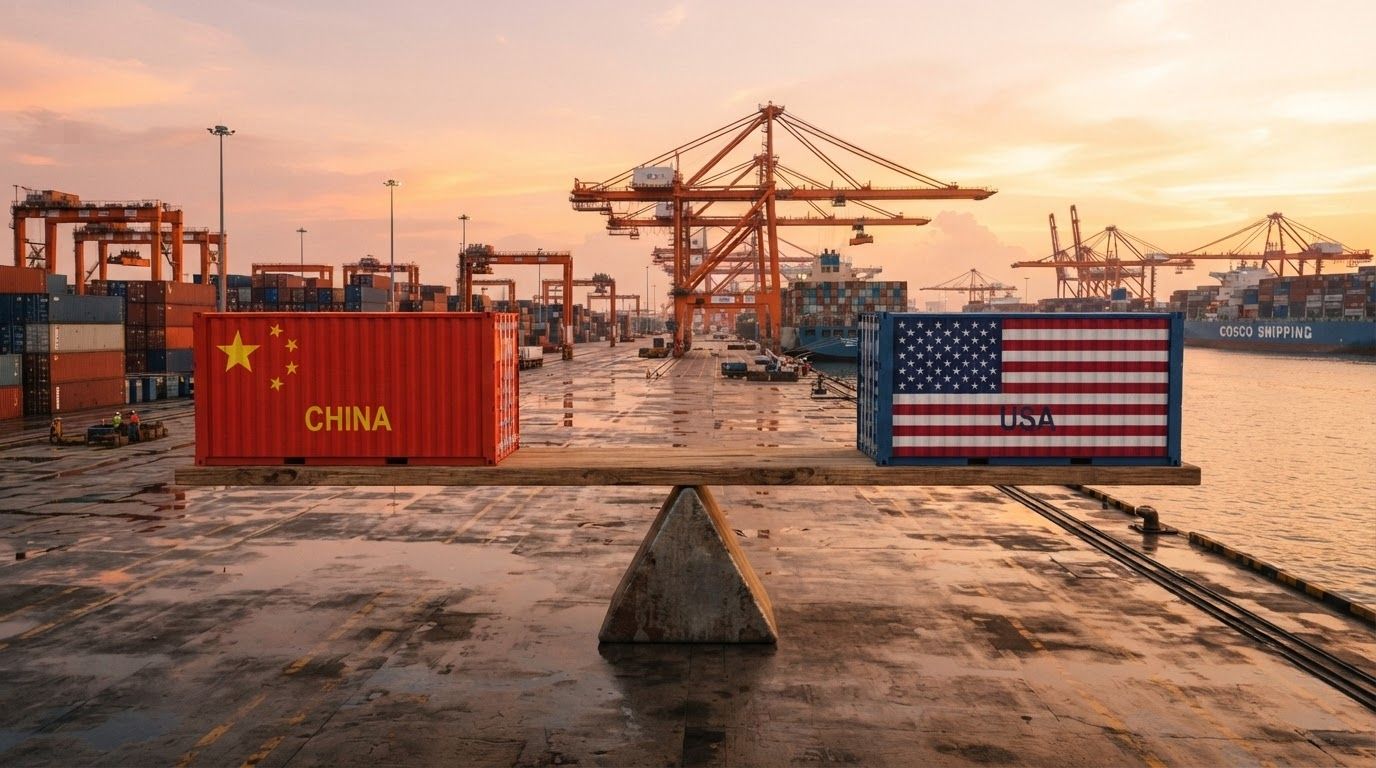
A semiconductor company becomes entangled in questions of national security. A diplomatic handshake becomes a test of whether Asia’s two largest economies can tolerate each other. An anti-corruption campaign becomes so extensive that the machinery of government risks seizing up.
These might look like separate stories. They aren’t.
Each exposes the same uncomfortable problem: concentrating power can make it easier to demand obedience but much harder to establish trust. Companies become dependent on individual executives. Governments turn trade into leverage. Officials learn that telling their superiors what they want to hear is considerably safer than telling them what is happening.
China sits at the centre of all three tensions. And the consequences reach well beyond Beijing.
One qualification matters before going further. The sensational allegations concerning Nvidia’s leadership, along with several specific diplomatic and political developments discussed here, are not independently established by the material available for this article. They must be distinguished from confirmed facts. That is especially important where accusations concern private conduct, espionage or criminal wrongdoing.
Table of Contents
- Nvidia’s Real Vulnerability Is Bigger Than One Allegation
- When the Founder Becomes the System
- Why a Handshake Between China and Japan Matters
- Economic Pressure Does Not Stay Inside National Borders
- Xi’s Anti-Corruption Campaign Has a Feedback Problem
- Purging the Military Can Weaken It Before It Strengthens It
- The Safest Decision Can Become No Decision
- Power Still Needs Unwelcome Information
Nvidia’s Real Vulnerability Is Bigger Than One Allegation

Huang of Megaspeed AI allegedly had an affair with the chip boss.
Those are serious claims. Without authenticated company disclosures or independently verified underlying reporting, they should not be treated as established facts. Nor would evidence of a personal relationship, by itself, establish espionage, compromised technology or influence over government policy.
That distinction is not a technicality. It is the difference between scrutiny and insinuation.
But the broader governance question does not depend on accepting the allegations. Nvidia occupies an extraordinary position in the competition between the United States and China. Its hardware underpins much of the AI industry, while access to that hardware has become a matter of industrial strategy and national security.
That leaves its leadership operating across three competing priorities:
- Selling chips into an enormous and commercially important market.
- Complying with American restrictions on advanced technology exports.
- Persuading policymakers that the company’s commercial interests align with wider strategic interests.
There is nothing inherently improper about a company arguing its case in Washington. But when one business becomes this strategically important, its lobbying deserves examination rather than automatic acceptance.
Huang’s argument is straightforward: restrict Nvidia too aggressively, and Chinese developers will move towards domestic alternatives such as Huawei. American companies could lose revenue, while American hardware and software lose influence.
That is a serious argument. It is not, however, the only serious argument.
The opposing concern is that supplying powerful computing hardware could strengthen capabilities that export controls are intended to constrain. Commercial access and strategic restraint are not necessarily compatible. Sometimes policymakers have to choose between them.
The US Bureau of Industry and Security provides official information on export controls. That is the appropriate starting point for understanding the rules, rather than assuming that either a company’s lobbying position or a political slogan adequately describes them.
When the Founder Becomes the System
There is another vulnerability here, and it is considerably less sensational than an intelligence allegation.
Nvidia is closely identified with Huang. He co-founded the business in 1993, helped transform it from a graphics-chip supplier into an AI powerhouse, and remains central to its strategy and salesmanship.
That continuity has obvious advantages. A founder who understands the technology and can make decisions quickly is useful in an industry moving at this speed.
But there is a catch. If too much of a company’s authority, institutional knowledge and external credibility resides in one person, a question about that person can become a question about the entire business.
The account describes a flat management structure with dozens of direct reports and no publicly announced succession plan. Such arrangements may support rapid decisions. They also make it important to ask what happens when the central decision-maker is unavailable, distracted or under scrutiny.
This is not an argument against founder-led companies. It is an argument against confusing an exceptional founder with an adequate governance system.
Investors already have a substantial commercial question to answer: can the extraordinary pace of AI infrastructure spending continue? Governance uncertainty would add another layer, not replace the first one.
For confirmed financial results and corporate announcements, the relevant reference is Nvidia’s investor relations website. Market rumours cannot substitute for disclosures, particularly when the allegations are this consequential.
Why a Handshake Between China and Japan Matters
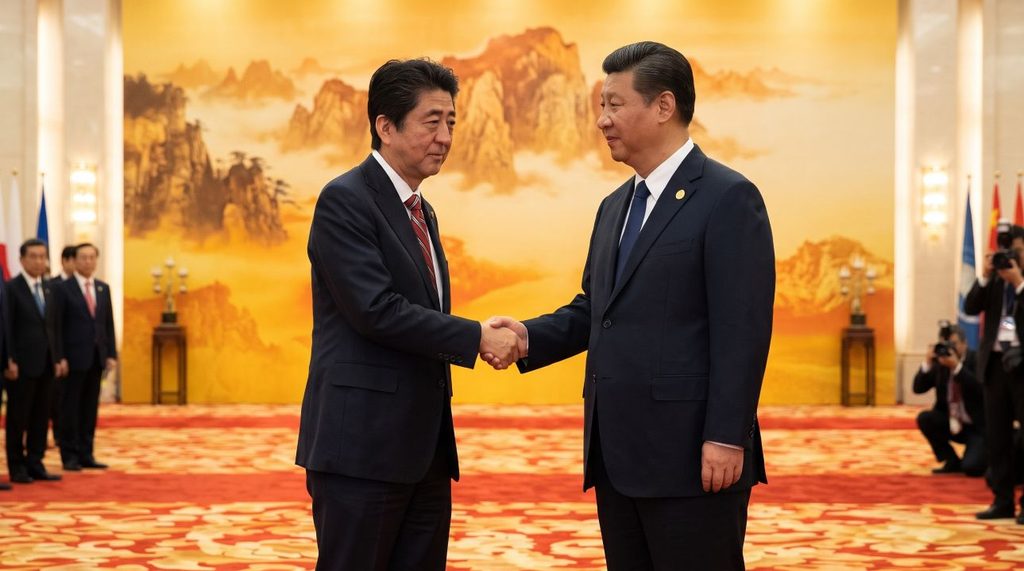
APEC in 2014, Xi Jinping, and then Japanese Prime Minister Shinzo Abe
Now move from chips to diplomacy, where the stakes are substantial and the immediate argument can appear almost absurdly small. A handshake. A seat at dinner. A position in the official photograph.
These are not normally the things that determine economic security. But when relations deteriorate, protocol becomes a way to communicate hostility without issuing another threatening statement.
The diplomatic scenario described involves Japan seeking equal treatment for Prime Minister Sanae Takaichi at a China-hosted Asia-Pacific Economic Cooperation summit. The specific arrangements and anticipated encounters require confirmation. The underlying issue is easier to understand: Tokyo does not want its leader publicly singled out for humiliation.
The dispute centres on Taiwan and the circumstances under which a conflict there could constitute an existential threat to Japan. Such a determination could have implications for Japan’s participation in a collective military response with the United States.
For Beijing, this touches one of its most sensitive political and security issues. For Tokyo, it concerns the potential consequences of a regional conflict. Neither government can easily retreat without appearing to concede something important.
That is why a customary greeting matters. A handshake would not resolve the disagreement. But refusing one could make an already difficult relationship harder to manage.
There is a precedent for a strained encounter serving a practical purpose. When China hosted APEC in 2014, Xi Jinping and then Japanese Prime Minister Shinzo Abe met after officials worked towards easing tensions over a territorial dispute.
The important part was not simply the photograph. It was the preparation behind it.
Without comparable groundwork, expecting ceremonial contact to produce a breakthrough is optimistic. Diplomacy needs more than the absence of a public snub.
Economic Pressure Does Not Stay Inside National Borders
The reported measures against Japan include restrictions involving rare earths, seafood, tourism and access to some goods with military applications. Individual measures and their timing need verification, but the strategic logic described is clear: use economic relationships to impose political costs.
Rare earths are especially significant because Japanese semiconductor and automotive businesses depend on relevant materials and components. The account also describes consequences for American manufacturers relying on Japanese magnets.
And there is the problem with imagining economic coercion as a neatly targeted weapon. Supply chains do not politely stop at the border of the country being punished.
Pressure on a Japanese supplier can become a problem for an American customer. Restrictions designed to influence Tokyo can create another issue in Washington. A bilateral dispute starts producing multilateral consequences.
This does not mean economic pressure is ineffective. It means its costs and political effects can spread beyond the intended target.
APEC exists to support regional economic cooperation. Its official overview offers useful context for why these meetings matter. But the existence of a cooperative forum does not eliminate the rivalries its members bring into the room.
The useful test is therefore not whether leaders manage a photograph together. It is whether contact leads to sustained talks, fewer restrictions and a more predictable relationship.
Xi’s Anti-Corruption Campaign Has a Feedback Problem
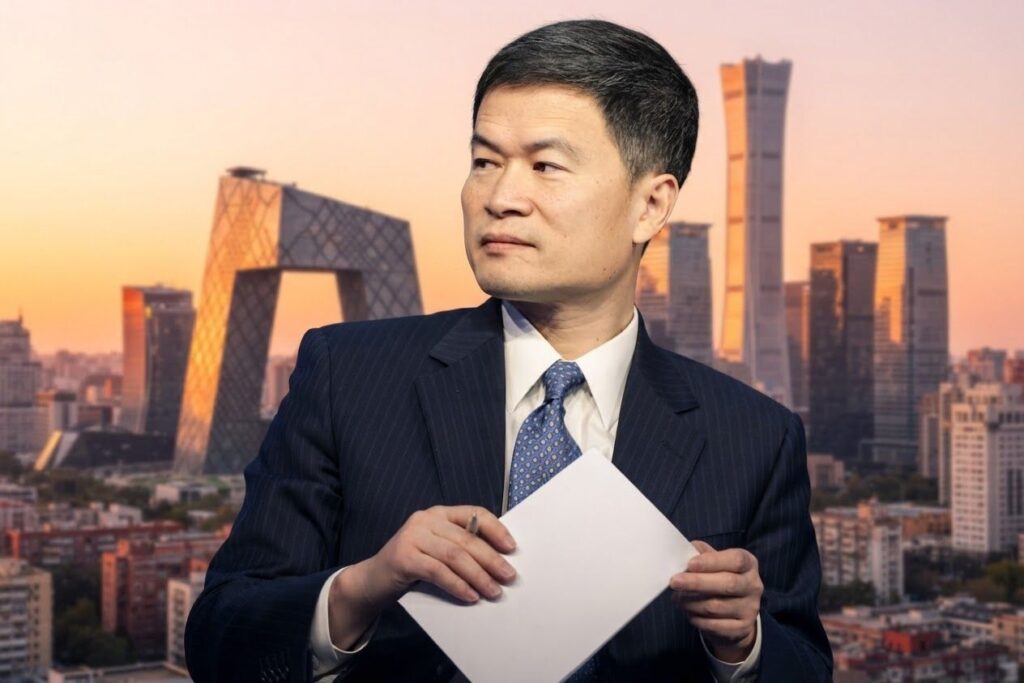
The third story moves inside China’s political system. It begins with an empty seat at a Peking University seminar. Fang Xinghai, a former market regulator familiar to foreign investors, was reportedly expected to attend but did not appear.
The account subsequently describes an official announcement that he was under investigation for suspected serious violations of party discipline and the law.
The individual case and the wider purge figures require confirmation. But the central analytical question is worth taking seriously: what happens when a disciplinary campaign becomes a permanent feature of government?
Xi’s anti-corruption campaign began after he took power in 2012, against a background of corruption that threatened the Communist Party’s credibility. Tackling corruption has an obvious justification. Public resources should not become private income streams for officials.
Yet the scale of punishment does not, by itself, establish that a system is becoming cleaner or more effective.
The account cites estimates of millions of Party members facing punishment and extensive disciplinary action against senior officials. Those figures should be checked against the underlying research and official releases before being used as settled measurements.
Even if accepted, they leave a difficult question unanswered. Does repeated punishment demonstrate successful enforcement, persistent misconduct, expanding definitions of wrongdoing—or some combination of all three?
The Corruption Perceptions Index offers a separate perspective on perceived public-sector corruption. It is not a count of offences or convictions, and it should not be treated as one. But it helps illustrate why disciplinary totals alone cannot settle the question of institutional improvement.
Purging the Military Can Weaken It Before It Strengthens It
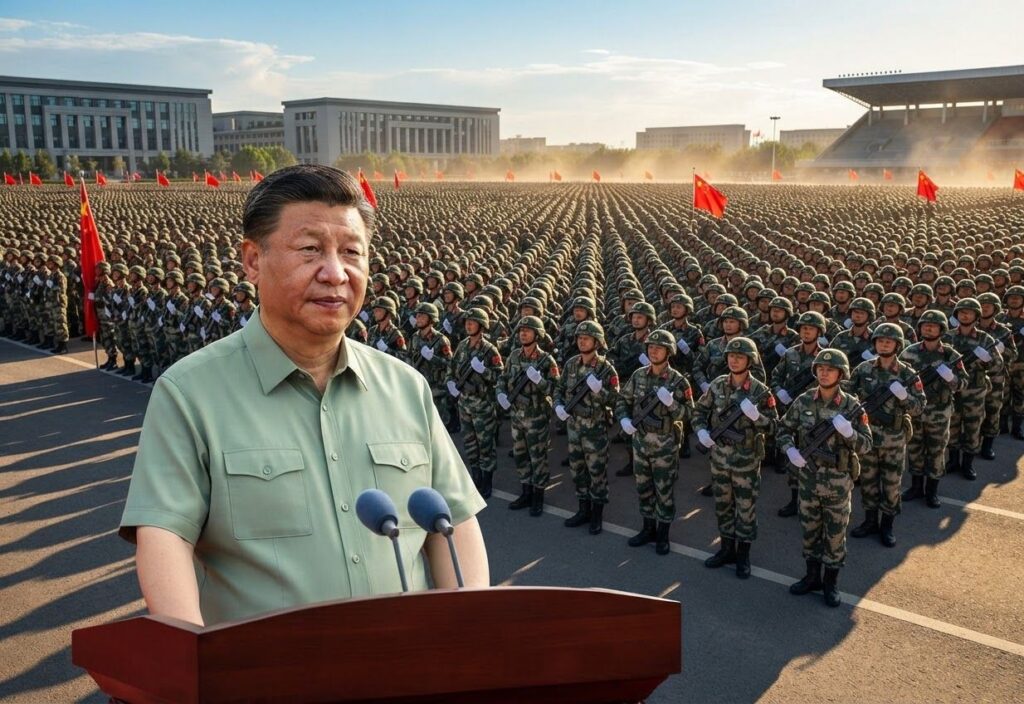
The military presents a particularly sharp version of this dilemma.Removing corrupt commanders could improve procurement, discipline and professional standards. It could also create opportunities for younger, better-educated officers.
But removing experienced leaders has immediate costs. Complex military operations require coordination, institutional knowledge and confidence across the chain of command. An organisation preoccupied with investigations and personnel upheaval may struggle to preserve all three.
The assessment attributed to US National Defense University specialist Philip Saunders captures this distinction: disruption could complicate a major operation, including an invasion of Taiwan, in the near term while potentially improving capability over a longer period.
Those possibilities are not contradictory. They operate on different timescales.
What would be misleading is to assume that every purge proves either imminent military collapse or inevitable military improvement. Personnel upheaval changes an institution. It does not tell us, on its own, exactly how well that institution will perform.
The Safest Decision Can Become No Decision
For China’s economy, the more immediate concern may be the behaviour of local officials.
The property downturn has eroded revenues from land-use sales. At the same time, officials face a broad range of performance demands, from development goals to Party-building responsibilities. They are being asked to deliver more with less financial room.
That is already a difficult assignment. Add the possibility that an unsuccessful project could attract disciplinary attention, and caution becomes a career strategy.
The account offers a striking example: a county in Shandong reportedly spent more than RMB700 million on an agricultural training centre. State media reporters allegedly found a hotel, gym and rooms for chess and cards, but no facilities for teaching crop cultivation or livestock breeding.
If substantiated, that is precisely the sort of spending that scrutiny should expose.
But scrutiny can produce a second effect. Officials may become reluctant to approve large contracts or attempt policies whose outcomes are uncertain. A project that never begins cannot fail in quite the same visible way as one that does.
Political economist Victor Shih is cited warning that allegations of wrongdoing can also become weapons in promotion contests. An Oxford Economics assessment raises the related concern that risk aversion could delay projects and weaken fiscal stimulus.
This is where disciplinary policy becomes an economic issue. Announcing expenditure is not the same as getting useful work done. Someone still has to approve, organise and implement it.
Power Still Needs Unwelcome Information
Xi argues that fighting corruption protects fair competition and supports enterprise. That objective is not inherently at odds with economic development.
The danger lies in incentives. If officials conclude that disagreement is disloyalty, experimentation is recklessness and bad news is personally dangerous, the reporting system starts producing reassurance rather than information.
Beijing may hear that policies are working precisely when it most needs to learn why they are not.
This is the thread connecting the three stories. Nvidia needs governance that can function beyond its founder. China and Japan need diplomatic channels that survive political disagreement. China’s leadership needs officials who can report failure without assuming they are volunteering for punishment.
None of those problems can be solved by demanding more confidence in the person at the top.
Power can secure compliance. It cannot automatically produce accurate information, resilient institutions or trust. And without those things, even an apparently formidable system can become remarkably bad at correcting its own mistakes.
Nvidia’s Real Vulnerability Is Bigger Than One Allegation
Q: What is Nvidia’s primary governance vulnerability beyond personal allegations?
A: Nvidia’s greatest risk lies in its heavy reliance on founder Jensen Huang’s personal authority amid competing pressures of U.S. export controls and Chinese market demand. A flat management structure with no public succession plan means any threat to its central decision-maker directly exposes the entire enterprise.
Why a Handshake Between China and Japan Matters
Q: Why does basic diplomatic protocol like a handshake carry critical weight between China and Japan?
A: With both nations deadlocked over Taiwan and unable to retreat without appearing weak, symbolic protocols communicate intent and prevent accidental escalation. Refusing customary courtesies worsens bilateral friction, which quickly spills into global supply chains when retaliatory trade curbs impact downstream international partners.
Xi’s Anti-Corruption Campaign Has a Feedback Problem
Q: How does China's continuous anti-corruption campaign undermine effective economic and state governance?
A: Fear of scrutiny causes local officials to adopt paralysis and inaction to protect their careers, blunting the impact of fiscal stimulus. Crucially, it suppresses unwelcome news, leaving top leadership with flattering reports rather than the honest ground-level feedback required to self-correct flawed policies.