A state-owned company is supposed to be the safe bet. That is the comforting assumption underpinning a huge amount of lending in China: businesses can stumble, property markets can collapse, but surely the government will stop its own companies from leaving creditors empty-handed.
Well, that assumption is looking rather expensive.
Financial trouble at Zhuhai Huafa Group has helped trigger China’s sharpest two-day corporate bond sell-off in two years. Meanwhile, chemical factories are producing their way into a profitability crisis, another stock market support package has failed to generate much enthusiasm, and Beijing’s political answer is tighter discipline.
These are different problems. But they expose the same awkward gap between what the authorities can direct and what they can actually deliver. Beijing can encourage lending, subsidise production, cheapen funding and demand obedience. Restoring confidence is considerably harder.
Key Takeaways
- Huafa’s repayment troubles are testing assumptions that state ownership guarantees creditor protection.
- China’s chemical output is expanding rapidly, but overcapacity and falling prices are hurting domestic producers.
- Renewed stock market support makes share purchases cheaper without resolving concerns about demand and earnings.
- Beijing is tightening political discipline while trying to reward officials capable of tackling structural problems.
Table of Contents
- The State-Owned Safety Net Is Being Tested
- China’s Chemicals Boom Has an Uncomfortable Catch
- Cheaper Money Cannot Manufacture Stock Market Confidence
- Beijing’s Political Answer Is More Discipline
- The Common Problem Is Credibility
The State-Owned Safety Net Is Being Tested

Huafa is not some obscure private developer that investors always knew was taking enormous risks. It is a state-owned conglomerate based in Guangdong, China’s largest provincial economy. If government ownership and regional wealth were enough to guarantee financial security, this ought to be reassuring territory.
Instead, the company reportedly missed payments on two trust products and sought extensions on some bank loans. Over the two trading days through Monday, benchmark corporate bond yields rose 10.3 basis points, their biggest increase since October 2024.
That sounds small until you remember what bond yields represent: the return investors demand to hold debt. When yields rise, borrowing becomes more expensive and existing bond prices fall. A problem at one borrower can therefore become a financing problem for others.
Huafa’s offshore bonds fell to roughly 54% of face value before some recovered to around 63%. Those are hardly prices that suggest investors consider repayment a formality.
The company carries 413 billion yuan in interest-bearing liabilities, approximately $62 billion. Property development and urban operations generated roughly half its revenue last year, while its property subsidiary reported a 6.44 billion yuan loss during the first nine months of the year.
In other words, the property crisis has not politely confined itself to private developers. It is working through businesses whose ownership once appeared to offer protection.
A Liquidity Squeeze—or Something More Serious?
There have been encouraging developments. Huafa repaid one overdue trust product, and its property subsidiary met a bond payment due on Monday. Those payments matter. They also do not make the underlying debt burden disappear.
Fitch placed Huafa’s BBB rating on negative watch, citing weakening debt-service coverage and approaching maturities. The immediate question is whether the company needs temporary breathing room or faces a deeper repayment problem.
The bigger question is what investors learn from the experience.
If further delays convince creditors that state ownership is not dependable protection, they may demand higher returns from other government-linked borrowers. That would turn a company-specific crisis into a broader reassessment of risk.
This is also why the wider debate over China’s banking risks and delayed recognition of bad debt matters. Extending repayment schedules can buy time. It cannot, by itself, establish that the underlying investment will generate enough money to repay everyone.
China’s Chemicals Boom Has an Uncomfortable Catch
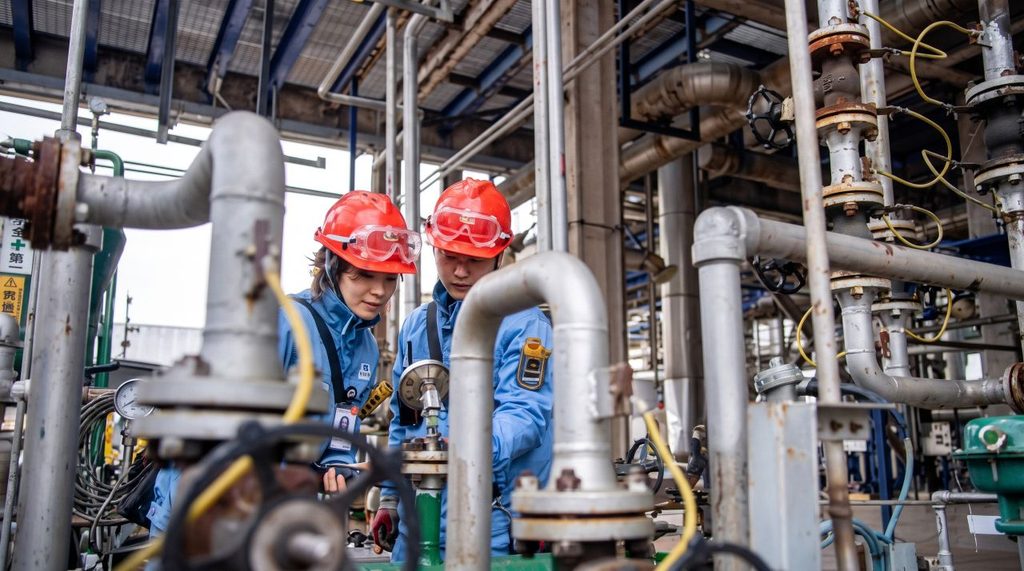
Now consider an industry where China’s problem looks, superficially, like the opposite: extraordinary productive strength. A Rhodium Group report commissioned by the U.S. Chamber of Commerce describes Chinese chemical producers advancing into higher-value products previously dominated by international companies. They are replacing foreign suppliers at home, competing more aggressively in advanced economies and capturing business in emerging markets.
The production increases between 2020 and 2025 are enormous:
- Styrene output increased by 97%.
- Ethylene output rose by 80%.
- Polyethylene production climbed by 75%.
- Polypropylene output increased by 71%.
China now accounts for roughly half of global output in certain products. Exports still represent less than 10% of its chemical production, but that relatively small share should not be mistaken for a small international impact.
Over the five-year period, exports of four major petrochemical products grew at an average annual rate exceeding 40%.
India offers a particularly stark example. China supplied 3% of Indian PVC imports in 2020. By 2025, that share had reached 45%, while the combined share supplied by Japan, South Korea and Taiwan fell sharply.
That is not merely extra competition at the margins. It is a substantial reshaping of who supplies an important industrial material.
Winning Market Share While Losing Money
Here is the catch: producing more does not necessarily mean earning more.
Profits in China’s chemicals industry have declined for four consecutive years, and as many as 31% of producers are losing money. Inventories have risen, adding downward pressure on prices.
So the industry can look formidable from abroad and financially miserable from within. Foreign competitors see rapidly expanding Chinese supply. Chinese manufacturers see crowded markets, falling prices and strained margins.
Rhodium identifies industrial subsidies and policies encouraging manufacturing investment after the property downturn as contributing factors. Beijing’s campaign against destructive competition has slowed investment, but it has largely restrained new projects rather than removed capacity already operating.
That distinction is crucial. Preventing another factory from being built does not remove the output of factories that already exist.
Europe, meanwhile, faces its own serious disadvantage: high energy costs. China points to those costs as part of the explanation for its competitiveness. European chemicals capacity earmarked for closure increased from 2.9 million tons in 2022 to 17.2 million tonnes in 2025, doubling in the final year.
Brussels opened three anti-dumping investigations into Chinese imports in September. Beijing responded with an investigation into a European chemical used in dyes and pharmaceuticals. The European Commission’s explanation of anti-dumping measures provides useful background on the mechanism now becoming part of this confrontation.
For Europe, the concern extends beyond protecting individual factories. Losing upstream chemical production could weaken downstream manufacturers and deepen dependence on foreign supplies. But keeping that production competitive becomes much harder when energy costs remain elevated.
There is no painless answer here. China’s excess production creates pressure abroad without guaranteeing prosperity at home.
Cheaper Money Cannot Manufacture Stock Market Confidence
Beijing’s stock market response reveals another version of the same problem: authorities can provide financial machinery, but they cannot make investors enthusiastic about using it.
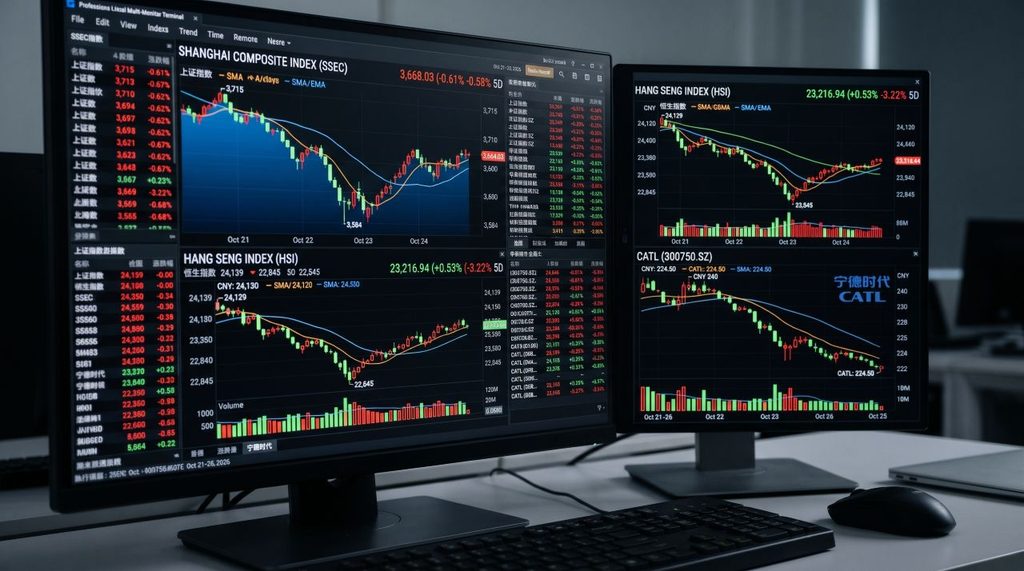
The People’s Bank of China announced adjustments to two support facilities after meeting financial institutions on Monday. The subsequent market reaction was distinctly underwhelming. The CSI 300 fell as much as 1%, erasing the previous session’s gains, while the technology-heavy STAR 50 dropped nearly 3%.
This followed a punishing stretch. The CSI 300 had lost 8.5% in October, its worst monthly performance in more than a decade, and recorded an unprecedented 12 consecutive weekly declines through Friday.
Against that backdrop, officials are revisiting tools first deployed during the 2024 sell-off.
What the Support Measures Actually Do
The first tool is a securities swap facility. Eligible institutions can exchange assets for more liquid instruments, helping them finance stock purchases. Authorities plan to broaden participation and moderately reduce fees.
Thirty-one securities and fund companies had been approved, with applications for quotas exceeding 100 billion yuan. Operations were expected to begin within days.
The second tool supports corporate share buybacks and purchases by major shareholders. The central bank is reducing its relending rate from 1.25% to 1% and making the program permanent. Banks receive inexpensive funding that can support loans for those purchases.
Regulators also intend to ease buyback rules and examine margin-financing changes that could permit greater leverage.
None of this is meaningless. Lower funding costs can make purchases easier, and buybacks can support demand for shares. But these are mechanisms for financing transactions, not a substitute for convincing earnings prospects.
Around 440 billion yuan in buyback-related loans had already been contracted, with more than 280 billion yuan disbursed. The machinery is not entirely new. Investors have had time to consider what it can—and cannot—achieve.
The surprise intervention in 2024 offered novelty. Reusing similar mechanisms against entrenched concerns about growth and corporate profits is a different proposition.
A durable recovery likely requires stronger household demand, greater property market stability and evidence that earnings, particularly in technology, can justify valuations. Cheap borrowing can help someone buy a share. It cannot guarantee the business behind that share becomes more profitable.
Beijing’s Political Answer Is More Discipline
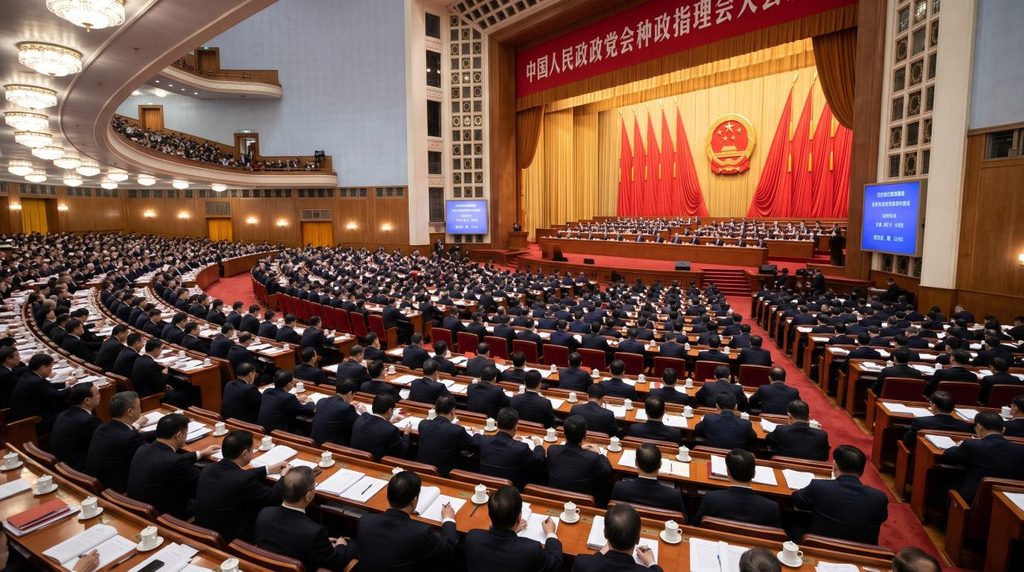
With financial and industrial pressures mounting, some might expect an effort to loosen political control and encourage greater administrative freedom. The latest party plenum resolution points in another direction.
It prioritizes stricter party governance, tougher screening of officials and the promotion of administrators with experience handling difficult problems. Ahead of the 21st Party Congress, provincial and ministerial appointments are becoming an important test of how those priorities work in practice.
The message is not that economic difficulty requires a retreat from Xi Jinping’s anti-corruption campaign. It is that discipline and development should reinforce each other.
There is a practical argument within these reforms. Officials should be assessed on their performance during critical moments, rather than primarily on age, academic credentials or seniority. The resolution warns against filling demographic quotas at the expense of competence and promoting people whose qualifications exceed their practical abilities.
It also calls for stricter enforcement of terms of office, deeper background checks and a role for anti-corruption investigators in approving promotions. Family connections, personal wealth, disciplinary records and public complaints are all part of the proposed scrutiny.
The Problem With Rewarding Visible Success
Tsinghua University researcher Xie Maosong identifies a particularly damaging incentive: excessively rapid rotations can encourage officials to pursue debt-financed prestige projects rather than difficult structural reforms.
The attraction is obvious. A visible project can demonstrate activity during an official’s tenure. The debt and unfinished problems can become a successor’s responsibility.
Addressing that incentive would be valuable. Local debt, property distress and weak confidence require sustained administrative work, not simply another impressive project announcement.
But competence remains embedded in demands for ideological conformity and centralized authority. Xi personally led the drafting team, alongside senior figures including Wang Huning, Cai Qi and anti-corruption chief Li Xi.
Premier Li Qiang’s State Council Party Leadership Group has called for discipline requirements throughout government work and stronger monitoring of central decisions. Party committees are expected to strengthen oversight, with secretaries bearing primary responsibility. Routine meetings are also being tied more closely to study of Xi’s ideas.
This fits the broader pattern of economic policy and political security becoming increasingly intertwined.
The tension is difficult to escape. Officials are being told to take responsibility and solve entrenched problems while facing more scrutiny and stronger demands for obedience. Whether that produces capable initiative or deeper caution remains an open question.
The Common Problem Is Credibility
Huafa’s creditors need confidence that debts will be repaid. Chemical manufacturers need a route from production growth to sustainable profits. Equity investors need credible earnings. Officials need incentives that reward lasting solutions rather than visible activity.
These problems cannot all be fixed with the same instrument. Yet Beijing’s responses repeatedly emphasize additional support, tighter coordination and stronger control.
Those measures may contain immediate damage. The harder task is demonstrating that they resolve the underlying weaknesses rather than postpone their consequences.
That is the distinction to keep in mind: stabilizing a payment, a share price or an appointment process is not the same thing as repairing the system behind it.
Frequently Asked Questions
Why does Huafa’s financial distress matter beyond the company?
Huafa is state-owned and based in wealthy Guangdong. Further repayment problems could encourage investors to reassess the protection offered by government ownership, potentially raising financing costs for other state-linked borrowers.
Why are Chinese chemical producers struggling despite expanding output?
Rapid capacity expansion and rising inventories have put downward pressure on prices. Growing production and overseas market share therefore coexist with declining industry profits and losses at many producers.
What are China’s stock market support measures designed to achieve?
They provide more accessible funding for institutional share purchases, corporate buybacks and purchases by major shareholders. They can support market demand, but do not directly resolve weak household spending or uncertain corporate earnings.
What is changing in the promotion of Chinese officials?
The party is emphasizing performance under difficult conditions, practical competence, more stable terms of office and tougher background checks. These changes remain closely tied to political discipline and ideological loyalty.