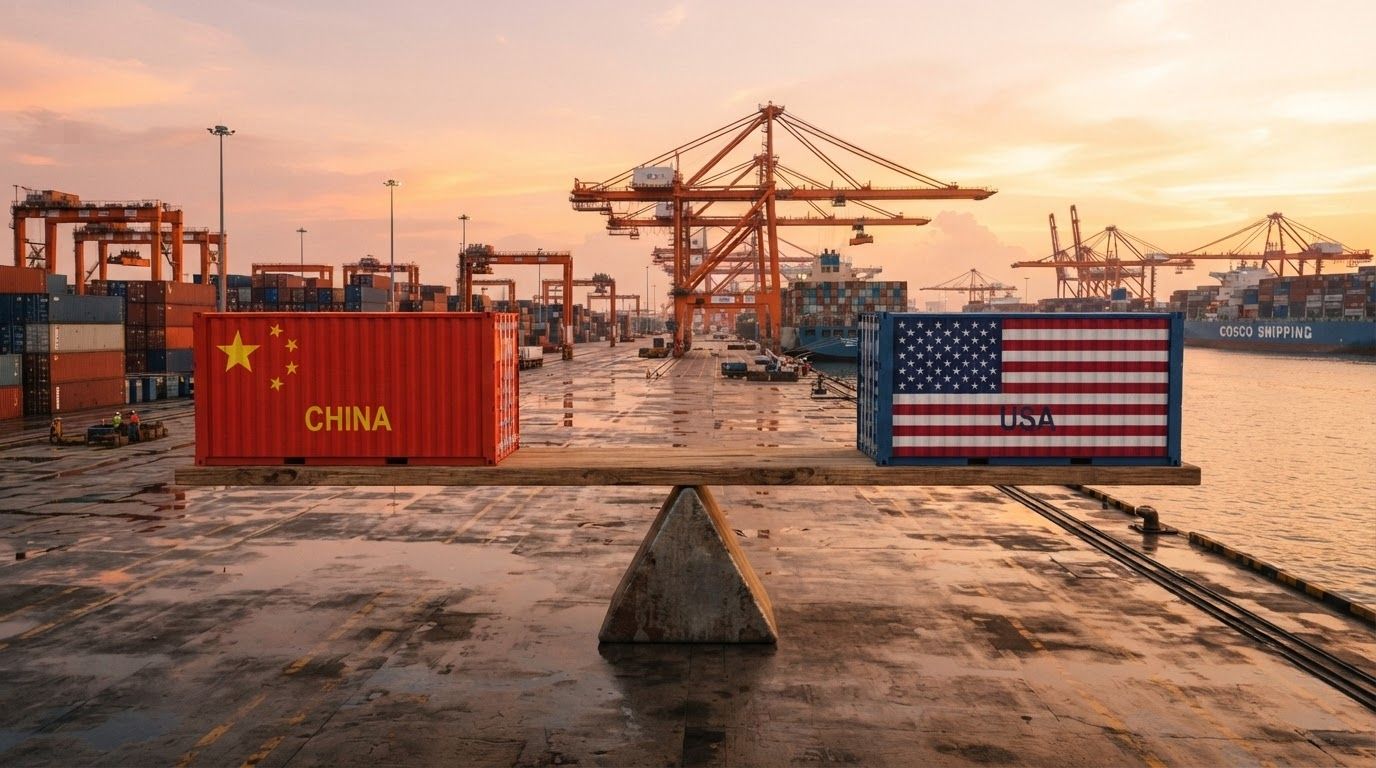
American investment restrictions, a battered Chinese stock market, and Hello Kitty might not sound like parts of the same story. But they expose an increasingly uncomfortable reality for businesses operating in China: the boundary between commerce and national security is becoming remarkably difficult to find.
Washington wants to stop American capital from strengthening Chinese technological and military capabilities. Beijing wants to arrest a stock market slide that enormous state-backed purchases have failed to reverse. Meanwhile, a confrontation with Japan is spilling into airline schedules, manufacturing support, and, somewhat improbably, cartoon merchandise.
These are different problems. They do, however, share a nasty characteristic. Governments can announce that they want commercial stability while pursuing policies that make ordinary business considerably less stable.
And the companies caught in the middle cannot pay their bills with diplomatic assurances.
Key Takeaways
- Proposed US investment restrictions could reach further into Chinese commercial AI, biotechnology, semiconductors, and quantum applications.
- China’s shipbuilding scale illustrates why Washington sees civilian industrial strength as a military concern.
- Heavy state-backed stock purchases have not overcome concerns about Chinese demand, earnings, and AI returns.
- China-Japan tensions are affecting consumer brands, flight capacity, tourism, and industrial travel.
Table of Contents
- Washington’s Technology Restrictions Are Getting Much Wider
- The Shipbuilding Numbers Explain Washington’s Anxiety
- Beijing Can Buy Shares. It Cannot Simply Buy Confidence.
- How Hello Kitty Became a Diplomatic Casualty
- The Commercial Damage Goes Beyond Merchandise
- The Common Thread: Political Risk Is Becoming a Business Cost
Washington’s Technology Restrictions Are Getting Much Wider
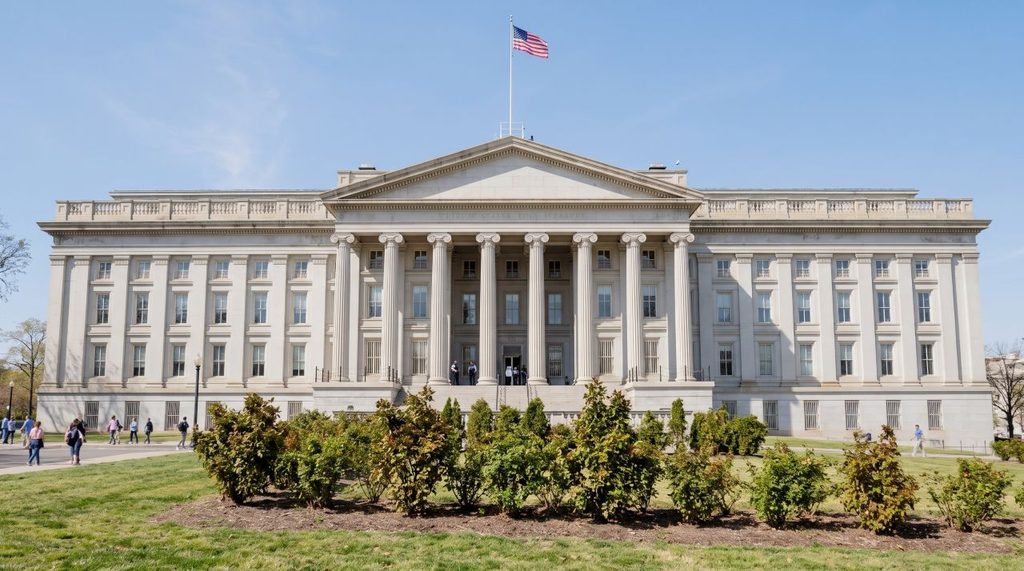
First, the investment rules. The US Treasury Department has proposed a sweeping expansion of its outbound investment security program, extending restrictions beyond its existing focus on semiconductors, artificial intelligence, and quantum technologies.
The proposals would add high-performance computing, supercomputing, hypersonic systems, and biotechnology. They implement the Comprehensive Outbound Investment National Security Act, passed through fiscal 2026 defence legislation, and remain subject to public consultation, with comments due December 7.
That distinction matters. These are proposed rules, not a final, settled prohibition covering every business in those sectors. But the direction is clear: Washington wants a much larger perimeter around technologies it considers strategically sensitive.
The Treasury’s outbound investment programme provides the broader regulatory context. The central concern is not simply where American money goes. It is whether that investment helps develop capabilities that could eventually strengthen a strategic competitor.
AI Is Where the Uncertainty Becomes Particularly Awkward

The proposed AI changes would remove existing distinctions based on training-compute thresholds and specified military, intelligence, or surveillance applications. That could bring a much wider range of Chinese AI developers within the prohibited investment category.
Commercial machine learning, autonomous agents, and robotics could fall within the expanded definitions. Businesses enhancing or extending Chinese-developed models could also face restrictions.
In other words, the question may no longer be simply whether a company builds technology for the military. Investors could have to assess whether a commercial product uses Chinese AI in a way that brings the transaction within the rules.
That is a considerably messier exercise. A business incorporating an existing model is not necessarily developing that model itself. Yet the proposed reach creates uncertainty around both activities.
For investors, uncertainty has consequences before a regulator blocks anything. It means more diligence, more legal analysis, and potentially more transactions abandoned because nobody wants to discover the boundary after crossing it.
Biotechnology Makes the Trade-Off Harder to Ignore
Biotechnology is another contentious expansion. Proposed prohibitions would cover specified applications of biological systems in drug development and manufacturing, without a general exemption for civilian medicine or public health.
That does not mean every medical investment would be banned. It does mean that calling something healthcare would not automatically place it outside the restrictions.
Treasury has acknowledged potential commercial and public health costs and requested feedback on narrowing the provisions. Pharmaceutical companies and investors therefore have an opportunity to seek changes. They have an obvious financial incentive to use it.
Other proposed expansions are technically specific but commercially significant:
- Semiconductor restrictions would encompass radiation-hardened integrated circuits, photonic chips, high-bandwidth memory, and additional advanced integrated circuits.
- Quantum restrictions would extend to developing computing algorithms and applications.
- Investor assessments would place additional weight on whether companies properly considered information supplied by Treasury before completing transactions.
The last point is easy to overlook. It could increase compliance costs even when investors remain unsure whether a prospective investment is covered. The burden is not just understanding a technology. It is demonstrating that the decision-making process was reasonable.
China’s Commerce Ministry condemned the proposal, accusing Washington of stretching national security beyond legitimate limits, disrupting normal commerce, and undermining understandings between the two countries’ leaders. Beijing reserved the right to respond.
So much for the idea that diplomatic engagement necessarily means an easing of economic competition.
The Shipbuilding Numbers Explain Washington’s Anxiety.
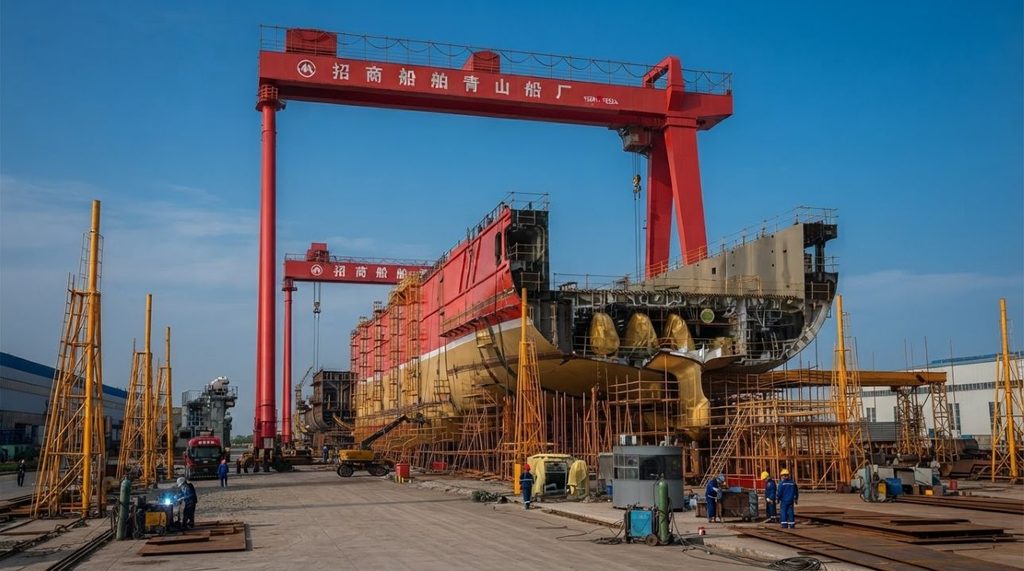
There is a reason this argument keeps returning to civilian technology. Commercial industrial strength can support military power. China’s shipbuilding industry makes that relationship unusually visible.
According to US figures cited in a Wall Street Journal report, China operates more than 400 naval ships and submarines, roughly 35% more than the American fleet by vessel count.
Before turning that into a simplistic declaration of naval superiority, there is an important qualification: the United States retains an advantage in total tonnage. Ship numbers alone do not establish combat superiority.
The industrial figures are nevertheless striking. Chinese shipyards produced approximately 52.6% of global commercial shipping tonnage in 2025, compared with just 0.01% for the United States, according to figures cited in the report.
Commercial orders help sustain shipyards, suppliers, and skilled workers. Those same industrial resources can also support warship construction. The distinction between a civilian order book and military capacity is therefore much less reassuring than it might initially appear.
China is also extending carrier operations, expanding submarine production, and maintaining persistent naval and coast guard activity around Taiwan and disputed regional waters.
From Washington’s perspective, restricting investment is an attempt to stop American resources from reinforcing capabilities like these. From Beijing’s perspective, it demonstrates that talks and commercial engagement have not displaced American efforts to constrain China’s rise.
This is the structural problem. Both governments can genuinely want stability while preparing for more intense competition. Businesses then have to operate inside both realities at once. The same tension runs through the wider pressure on China’s recovery and access to advanced technology.
Beijing Can Buy Shares. It Cannot Simply Buy Confidence.
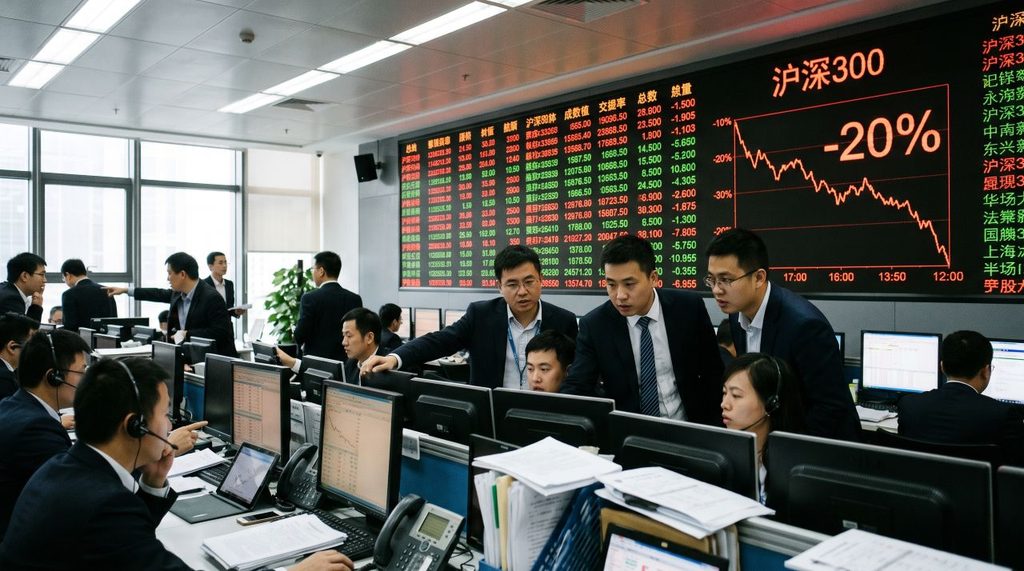
Meanwhile, China’s financial authorities are confronting a more immediate problem: investors keep selling.
The CSI 300 fell 8.5% in October, its worst monthly performance since the aftermath of the 2015 stock market crash. It also recorded an unprecedented 12 consecutive weekly declines, pushing the benchmark into bear-market territory.
This was not happening because the state had forgotten to intervene. Goldman Sachs estimated that state-backed investors bought at least 170 billion yuan of exchange-traded funds during October.
That is substantial financial support. It still failed to prevent a brutal slide.
Authorities are now considering additional measures. The People’s Bank of China, the China Securities Regulatory Commission, and the National Financial Regulatory Administration were expected to meet banks and securities firms on Monday to discuss improving lending programmes supporting share buybacks.
Chinese media also reported that a major state-owned bank could extend up to 200 billion yuan in additional lending quotas to China Reform Holdings and China Chengtong Holdings Group. Both belong to the market-supporting institutions commonly called the “national team.”
But a lending quota is not a stock purchase. Additional capacity does not establish when money will enter the market, how much will actually be deployed, or whether private investors will follow.
The initial response was hardly euphoric. The CSI 300 edged higher early Monday, while an early rally in technology shares lost momentum.
The Problem Is Bigger Than Market Liquidity
The difficulty is that the sell-off reflects more than a shortage of available funding. Weak domestic demand, fragile corporate earnings, and doubts about returns on AI investment have undermined confidence.
Both the official manufacturing and non-manufacturing purchasing managers’ indices slipped into contraction in October. That gives investors a reason to worry about the underlying economy, not merely the next trading session.
State-backed buying can create demand for shares. It cannot, by itself, create stronger demand for the products those companies sell. Nor does it establish that expensive AI investments will generate attractive returns.
This is why the distinction between a market rescue and an economic recovery matters. Beijing can encourage banks to lend and public institutions to buy. Sustained private investment requires a more convincing case that companies will earn more money.
That concern also appears in the broader discussion of weak domestic indicators and Beijing’s AI investment strategy. Policy ambition and financial support are important. Neither is the same thing as demonstrated profitability.
How Hello Kitty Became a Diplomatic Casualty
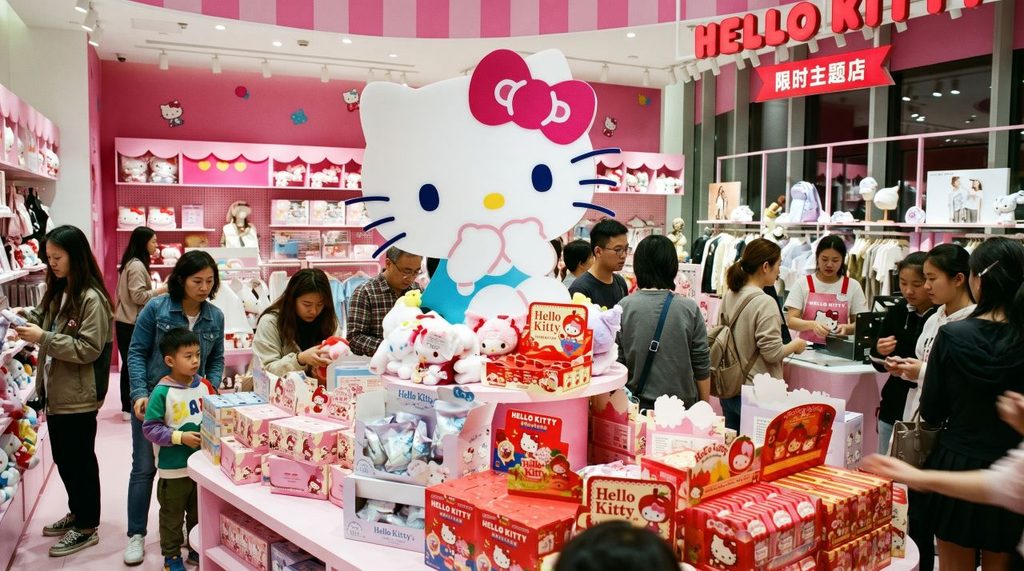
Then there is Japan. Here, the collision between politics and commerce has reached a particularly strange destination: Sanrio’s Hello Kitty merchandise.
Sanrio announced that it would end its collaboration with the Japanese television drama Vivant following criticism in China. The merchandise featured Hello Kitty wearing costumes inspired by the spy series.
In a social media apology, the company said the program contained expressions inconsistent with its corporate philosophy. China’s nationalist state-run Global Times supplied a less corporate formulation, warning that “Hello Kitty should not dance with China’s right wing.”
The underlying criticism concerns the drama’s portrayal of Chinese intelligence organizations torturing Japanese operatives. Chinese state media argued that the methods depicted resembled atrocities committed by Japan’s invading military.
What might otherwise have remained an entertainment controversy has landed inside a much larger diplomatic confrontation.
Relations deteriorated after Japanese Prime Minister Sanae Takaichi suggested in parliament the previous year that Japan could become militarily involved in a conflict over Taiwan. Beijing strongly condemned the remarks. Takaichi’s refusal to withdraw them has reinforced her support among domestic voters.
That leaves both governments with limited room to compromise. A concession intended to repair relations could be presented at home as weakness.
Diplomats and analysts have suggested that a handshake between Takaichi and Xi Jinping at the Asia-Pacific Economic Cooperation summit in Shenzhen could provide a symbolic opening. A recent symposium involving a state-linked Chinese think tank and the Japan External Trade Organization also explored ways to ease friction.
Those are possible channels for engagement, not evidence that the dispute has been resolved.
The Commercial Damage Goes Beyond Merchandise
The airline figures show how much more is at stake than a canceled branding deal.
According to aviation data provider OAG, airlines scheduled approximately 2.87 million seats between China and Japan for the winter season running from October 25 to March 27. That compares with 3.55 million a year earlier.
The reduction is nearly 683,000 seats, or around 19%. Scheduled flights fell by 5,433 to 12,613.
Chinese airlines account for most of the cuts:
- China Eastern removed approximately 111,000 seats.
- China Southern cut approximately 82,000 seats.
- Air China reduced capacity by approximately 60,000 seats.
Japanese airlines made comparatively limited changes. The reductions followed Beijing’s warning the previous November urging citizens to avoid Japan.
Lost tourism revenue is the obvious consequence. The less obvious one is the effect on industrial cooperation. Fewer flights could raise fares and make travel more difficult for Japanese engineers servicing manufacturing equipment in China.
That is how a diplomatic dispute becomes an operational headache. A disagreement about Taiwan and wartime history can eventually affect the cost and convenience of getting technical staff to a factory.
The Common Thread: Political Risk Is Becoming a Business Cost
None of these developments means commerce has stopped. American investment rules remain subject to consultation. Beijing still has financial tools available. China and Japan still have channels through which to repair relations.
But the direction is uncomfortable. More civilian technologies are being assessed through a national-security lens. More state money is being asked to compensate for weak investor confidence. More ordinary commercial activity is becoming exposed to diplomatic confrontation.
The important distinction is between what governments can announce and what those announcements can achieve. Investment restrictions cannot neatly separate every civilian application from military potential. Stock purchases cannot substitute indefinitely for stronger earnings. A symbolic handshake cannot automatically restore airline capacity or corporate confidence.
For businesses, the lesson is not that every transaction is doomed. It is that political risk increasingly belongs inside the basic calculation of costs, returns, and reliability—not in a footnote added afterward.
Frequently Asked Questions
Are the expanded US investment restrictions final?
No. The measures described are proposals subject to public consultation, with comments due December 7. Their final scope could change.
Why has China’s stock market struggled despite state support?
State-backed buying has not resolved concerns about weak domestic demand, fragile earnings, and uncertain returns on AI investment.
Why does reduced China-Japan flight capacity matter beyond tourism?
Fewer flights could increase travel costs and complicate industrial cooperation, including trips by Japanese engineers servicing equipment in China.