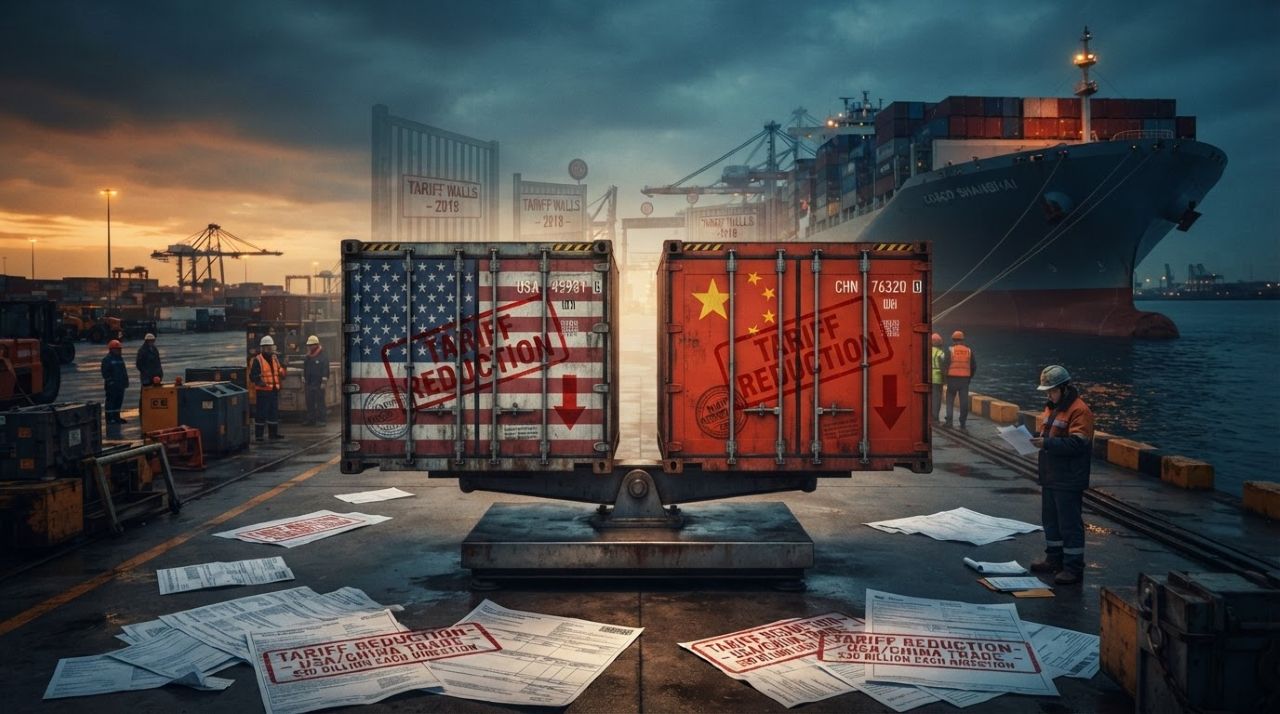
China has spent years trying to escape deflationary gravity. The property sector cratered, households became increasingly cautious, companies cut prices to fight for market share, and Beijing kept responding with more manufacturing and infrastructure investment—the exact policy mix most likely to make an oversupply problem worse. So, when August brought stronger inflation figures, officials had something to point at.
Unfortunately, the numbers appear to contain less good news than they first suggest. Consumer prices rose, yes. Factory-gate prices rose faster than expected, yes. But this was not a broad revival in Chinese household demand. It was imported pressure: higher oil prices, costlier metals, semiconductor shortages, and the kind of geopolitical disruption that makes everything more expensive without making anyone meaningfully wealthier.
Elsewhere, regulators are becoming alarmed by another familiar Chinese market spectacle: a state-backed strategic industry attracting a flood of speculative money before it has established a viable commercial future. This time, it is humanoid robots. And looming over both developments is the approaching Xi Jinping–Donald Trump summit in Washington, where upbeat language and possible commercial deals may sit alongside a much grimmer reality of technological rivalry, Taiwan tensions, espionage, and supply-chain leverage.
In other words, Beijing may be getting a temporary break from deflation, but it is not getting the demand-led recovery it actually needs. And Washington and Beijing may be getting a summit, but they are not getting anything close to reconciliation.
Key Takeaways
- August inflation improved, but energy, metals, and supply shortages—not stronger household spending—drove the increase.
- China’s securities regulator is tightening scrutiny of humanoid robot IPOs amid fears of a speculative technology bubble.
- The US-China summit may improve crisis management and enable narrow trade-offs, while strategic competition continues to intensify.
- Taiwan remains the issue most likely to rupture an increasingly fragile framework of stability.
Table of Contents
- China’s inflation figures improved, but the underlying economy did not
- Why supply-driven inflation cannot solve China’s deflation problem
- Beijing’s humanoid robot boom is attracting the wrong kind of enthusiasm
- Why Chinese regulators are intervening before the bubble gets bigger
- The Xi-Trump summit is likely to offer stability, not friendship
- Strategic stalemate is Beijing’s preferred operating environment
- Taiwan remains the point where managed competition could fail
- A colder, more honest definition of détente
China’s inflation figures improved, but the underlying economy did not.
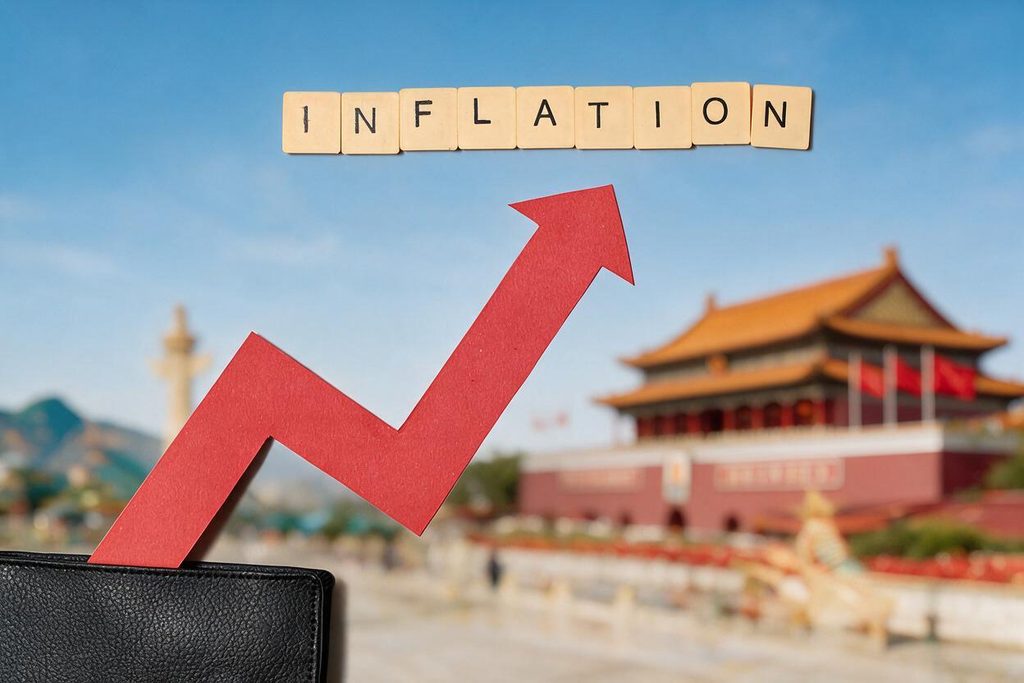
China’s consumer price index rose 0.8% year on year in August, up from 0.5% in July and in line with expectations. Producer prices increased by 3.8%, slightly ahead of forecasts. Both measures rose 0.4% from the previous month, while core inflation—which excludes volatile food and energy costs—reached 1% and increased for the first time in four months.
On its face, that is a more encouraging set of figures than China has become accustomed to. Persistent deflation is an ugly economic problem. When prices and wages stagnate or fall, consumers delay purchases, businesses lose pricing power, and debts become harder to service in real terms. The longer that cycle continues, the harder it becomes to break.
But the composition of this inflation matters enormously. Petrol prices jumped 7.2% month on month and accounted for roughly 0.21 percentage points of the increase in consumer prices—more than half of the monthly CPI rise. Oil and metals-related industries were responsible for around 78% of the monthly rise in producer prices.
That is not the profile of a consumption recovery. It is the profile of an external cost shock arriving at the factory gate and petrol pump.
Brent crude moved above US$100 a barrel amid fears that conflict around Iran could disrupt shipping through the Strait of Hormuz. At the same time, metals prices have surged, semiconductors remain constrained, and the global rush to build AI infrastructure has made electronics more expensive. Factory-gate prices for consumer durables rose 1.2%—their fastest increase since records began in 1996.
That last figure is striking, but it should not be mistaken for a sign that Chinese consumers suddenly have money burning a hole in their pockets. A laptop, appliance, or electronic device becoming more expensive because of input shortages is not the same thing as a manufacturer confidently raising prices because customers are clamouring to buy.
For a broader assessment of why apparent economic resilience can mask weak domestic fundamentals, see this analysis of China’s fragile recovery narrative and its advanced-chip constraints.
Why supply-driven inflation cannot solve China’s deflation problem
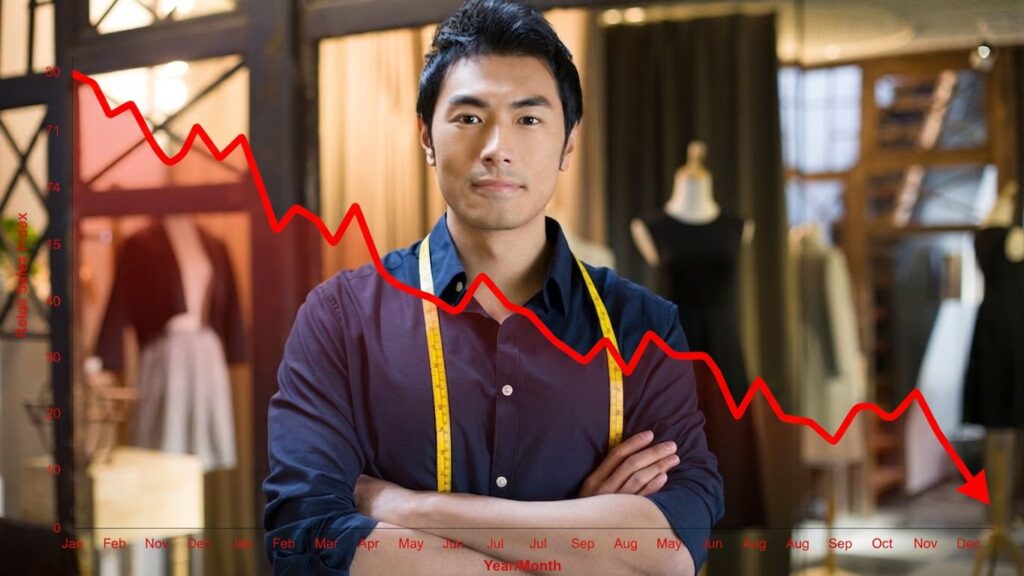
China’s real issue is demand. The property crisis has damaged household confidence and reduced the sense of financial security that encourages families to spend. Years of intense industrial competition have pushed firms into wage cuts, discounting, and increasingly thin margins. Overcapacity means companies often produce more than the market can absorb, then compete viciously to unload it.
Beijing’s response has repeatedly leaned towards investment in factories, infrastructure, and strategic manufacturing. This can support headline growth and preserve industrial capability, but it does very little to resolve the imbalance between weak household consumption and abundant supply. In fact, it can deepen that imbalance.
This is the awkward truth behind the August numbers. Higher imported costs may raise headline inflation for a time, but they do not repair consumer confidence. They do not clear housing-sector liabilities. They do not restore broad corporate pricing power. And they certainly do not make Chinese households feel wealthy enough to spend freely.
There is also a darker possibility: supply-driven inflation can hurt consumers precisely when demand is already weak. If fuel, food, and durable goods become more expensive while incomes remain constrained, households may cut spending elsewhere. That is not an economic recovery. It is a squeeze.
Seasonal and weather-related increases in vegetables, eggs, and pork helped lift prices in August, but those effects are unlikely to be a durable engine of growth. The same applies to energy prices. A commodity shock can make inflation statistics look healthier while leaving the underlying economy just as structurally unwell as before.
China’s deflationary problem has been years in the making. One month of higher prices—particularly prices driven by oil, metals, and supply bottlenecks—is not enough to declare it solved.
Beijing’s humanoid robot boom is attracting the wrong kind of enthusiasm.

China wants to dominate the global robotics industry. That ambition is not irrational. Humanoid robots sit at the intersection of advanced manufacturing, AI, sensors, semiconductors, automation, and national prestige. They are precisely the sort of industry Beijing sees as essential to long-term technological power.
The problem is that “strategically important” and “commercially viable” are not remotely the same thing.
The China Securities Regulatory Commission has reportedly issued informal guidance to investment banks and investment firms indicating that humanoid robot companies will face tougher scrutiny when attempting initial public offerings. Applicants will reportedly need to demonstrate recurring revenue, meaningful technological innovation, or a credible route towards narrowing losses.
That may sound like a low bar. In a normal market, it would be. Yet the need for regulators to underline these standards tells its own story.
China’s private robotics market has been flooded with funding, while a long queue of companies seeks access to public markets. The danger is that investors are pouring money into a fashionable strategic sector because they expect a hot listing, rather than because they believe the underlying businesses can build machines people will buy at scale.
Unitree, one of China’s most prominent humanoid robot manufacturers, illustrates the concern. Its shares surged initially, then fell by more than half from their intraday peak on the first day of trading. It is an almost cartoonishly familiar sequence: excitement, frenzy, inflated expectations, then reality arriving with a baseball bat.
The wider IPO environment has encouraged this behaviour. Fifty-three companies that listed in Shanghai and Shenzhen during 2026 gained more than 350% on average in their trading debuts when weighted by deal size. With roughly 250 million retail investors competing for allocations, successful placements have been nicknamed “big fat tickets” because they can produce gains of more than 100,000 yuan.
That is not investment in the sober, patient sense of the word. It is a lottery culture built around access, scarcity, and the expectation that someone else will pay more tomorrow.
Why Chinese regulators are intervening before the bubble gets bigger
Window guidance gives Chinese regulators a useful tool: they can communicate expectations privately without issuing formal public rules that may trigger panic or appear to be an admission that a sector has become wildly overheated. It is regulation by raised eyebrow.
The authorities are trying to strike a delicate balance. They want capital flowing towards genuine robotics innovation, because the sector aligns neatly with China’s industrial ambitions. But they do not want a pile of cash-burning companies to list at absurd valuations, collapse after the initial hype, and leave retail investors holding the bag.
That would not merely be embarrassing. It could damage public confidence in a strategically prioritised industry and make it harder for viable companies to raise capital later.
The underlying issue is straightforward. Many humanoid robotics companies remain unprofitable, heavily dependent on fundraising, and unable to demonstrate sustained demand for their products. The technology may be exciting. The eventual market may be large. But “may” is doing some extremely heavy lifting here.
Beijing has seen variations of this story before: policy enthusiasm, generous financing, capacity expansion, speculation, and then a painful reckoning when the market discovers that not every national priority can immediately become a profitable business.
The Xi-Trump summit is likely to offer stability, not friendship.
Xi Jinping’s planned September 24 summit in Washington is being presented as an opportunity to stabilise the US-China relationship. There may be a large Chinese business delegation. There may be commercial announcements. There may be carefully choreographed language about dialogue, cooperation, and preventing misunderstanding.
All of that could be useful. None of it means the strategic conflict is easing.
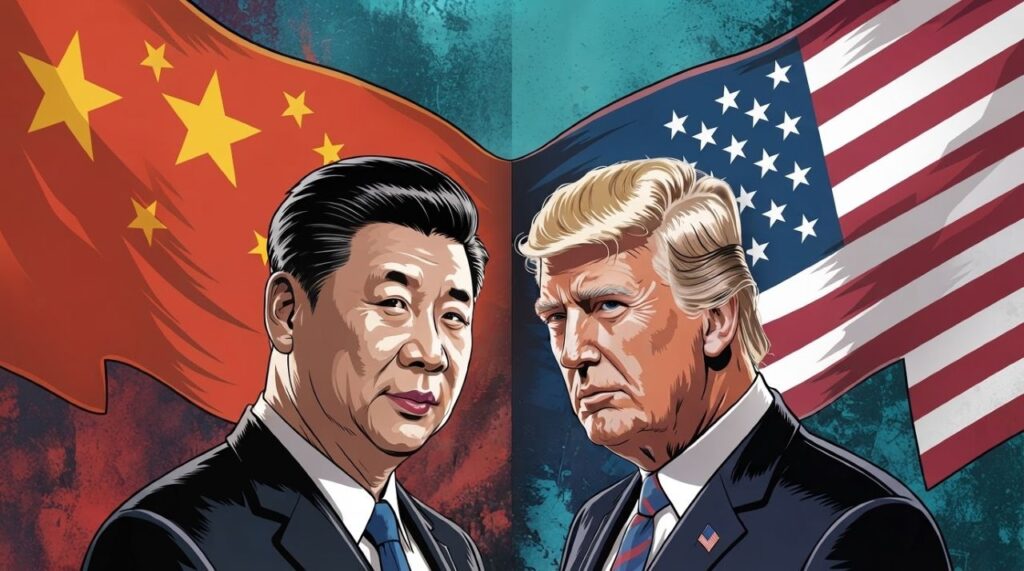
The reported Chinese delegation may include executives from Zhongji Innolight and Eoptolink, major producers of high-speed optical transceivers. These components connect the processors used in AI data centres, making them central to the global race for computational capacity. Their inclusion would underline the fact that even the most hostile parts of the technology competition remain deeply interdependent.
Chinese transceiver manufacturers reportedly rely on American lasers. Western firms, meanwhile, face potential restrictions involving indium phosphide, a crucial material in high-speed data transmission. This creates room for narrowly designed trade-offs: Beijing could ease pressure on a strategically important material while Washington preserves selected access to US lasers and maintenance.
But that would be stabilisation, not détente. It would be two rival powers deciding not to smash an economically useful piece of shared machinery while they continue arguing over who controls it.
The relationship is increasingly K-shaped. At the leadership level, diplomatic engagement and crisis-management mechanisms may improve. Underneath that polished surface, competition over technology, intelligence, supply chains, Taiwan, and military power is accelerating.
A recent analysis of Beijing’s increasingly securitised worldview helps explain why economic policy, technology, diplomacy, and national security are now so tightly fused. China does not see semiconductor supply, AI capability, or industrial resilience as merely commercial concerns. It sees them as elements of national survival and geopolitical leverage.
Strategic stalemate is Beijing’s preferred operating environment.
Former US officials and China analysts have described the emerging relationship as a form of strategic stalemate. Beijing appears willing to offer enough cooperation to keep the relationship from spiralling into an open crisis while using that time to reduce its dependence on the United States and strengthen domestic capabilities.
There is a distinctly Maoist echo to this approach. Mao Zedong’s concept of protracted war rejected both despair and fantasies of quick victory. The relevant aim was endurance: survive the difficult middle period, maintain strategic patience, consolidate strength, and wait for the balance to shift.
That does not mean Beijing expects or wants a literal war with Washington. It does mean Chinese policymakers increasingly appear to view the competition as long-term, systemic, and unlikely to be resolved by a cordial meeting between leaders.
From this perspective, the summit is valuable because it reduces immediate pressure. It buys time. It preserves market access where possible. It lowers the chance of military miscalculation. But it does not require China to abandon its core objective of technological self-sufficiency and greater strategic autonomy.
Washington is doing much the same in reverse. The United States wants guardrails, but it is simultaneously widening restrictions and intelligence efforts directed at Chinese companies operating in strategically sensitive fields such as AI, semiconductors, and biotechnology.
Taiwan remains the point where managed competition could fail.
Taiwan is the issue most capable of wrecking any fragile stability arrangement. Beijing’s calculation rests heavily on whether it believes peaceful cross-strait integration remains possible. If Chinese leaders conclude that Taiwan is moving irreversibly away from that outcome—or that Washington is helping it do so—the risk of escalation rises sharply.

Some Chinese analysts have argued that Washington could reassure Beijing by explicitly opposing Taiwanese independence. More controversially, one proposal suggests that the United States could recognise Chinese sovereignty over Taiwan while attempting to preserve Taiwan’s existing political and social system.
That proposal is politically explosive and extraordinarily unlikely. It would be deeply contentious in Taiwan and profoundly difficult in Washington. But its existence illustrates the scale of the gulf between the two sides.
Trump’s reported decision during a May meeting with Xi to pause US$14 billion in arms sales to Taiwan apparently reduced immediate tensions. Yet it may also have raised Beijing’s expectations. If Washington restarts those transfers—as many American observers expect—China could respond forcefully, putting any emerging stability framework under severe strain.
There are, at least, signs that both militaries recognise the need to avoid accidental escalation. The commander of the People’s Liberation Army Eastern Theatre Command recently met US military representatives at the Indo-Pacific Chiefs of Defence Conference in Canada. That command would be central to any Taiwan conflict, making communication channels and safe conduct between forces more than mere diplomatic niceties.
They are basic crisis-management infrastructure.
A colder, more honest definition of détente
The Xi-Trump summit may produce useful outcomes: commercial agreements, continued military communication, and language about strategic stability. Those things matter. In a relationship between the world’s two most powerful states, avoiding unnecessary escalation is not a trivial achievement.
But it is also important not to mistake a pause for peace.
China’s inflation rebound is being driven primarily by external costs, not a repaired domestic economy. Its humanoid robotics sector is receiving a dose of regulatory caution because speculative capital is racing ahead of commercial reality. And its relationship with the United States is becoming more formally managed even as the underlying rivalry grows more intense.
The shared objective is not friendship. It is to stop competition from becoming war while neither side abandons the competition.
That is the bleak but realistic shape of the emerging arrangement: cooperation at the summit table, strategic struggle everywhere else.
Frequently Asked Questions
Why did China’s inflation rise in August?
China’s consumer and producer prices were lifted largely by higher fuel, oil, metals, semiconductor, and electronics costs. Petrol prices alone accounted for more than half of the monthly CPI increase, making the rebound primarily supply-driven rather than demand-driven.
Does higher inflation mean China’s economy is recovering?
Not necessarily. A durable recovery would require stronger household confidence, consumption, and broad corporate pricing power. Higher imported commodity costs can raise headline inflation while the underlying problems of weak demand, property-sector stress, and industrial overcapacity remain unresolved.
Why is China tightening rules for humanoid robot IPOs?
Regulators are concerned that enthusiasm for humanoid robotics has become speculative. Companies seeking listings are reportedly being asked to show recurring revenue, meaningful innovation, or a credible path to lower losses so that public-market valuations are more closely tied to commercial reality.
What could the Xi-Trump summit realistically achieve?
The summit could produce commercial announcements, improved military communication, and limited trade-offs in strategically sensitive supply chains. It is unlikely to resolve the deeper rivalry over technology, intelligence, Taiwan, and long-term geopolitical influence.