China is throwing another substantial pile of state money at its financial system. This is not, strictly speaking, proof of an imminent banking collapse. Beijing’s largest lenders still report capital ratios that appear comfortably above regulatory minimums. But it is a very clear sign that the authorities understand something many outside observers have been saying for years: the country’s debt-fuelled growth model has left a bill, and somebody has to pay it.
That somebody, as usual, is the Chinese state.
At the same time, Western sanctions are redirecting Russian gold through Hong Kong, Europe is running out of patience with China’s industrial export machine, and Chinese coast guard vessels are making themselves increasingly at home in the waters east of Taiwan. These are not isolated developments. They are all examples of a system under pressure trying to turn economic scale, state power and ambiguity into strategic advantage.
Key Takeaways
- China is injecting roughly 360 billion yuan into major financial institutions to support lending and absorb mounting economic pressure.
- Russian gold is increasingly moving through Hong Kong after Western sanctions redirected bullion trade towards Asian markets.
- EU-China trade tensions are escalating as Brussels weighs new restrictions on Chinese exports, particularly plug-in hybrids.
- Chinese coast guard patrols east of Taiwan could help Beijing normalise a persistent presence along a vital Pacific supply route.
Table of Contents
- Beijing recapitalises the banks because the old model is groaning
- Capital is only useful if it comes from somewhere real
- Russian gold is flowing east, and Hong Kong wants to become the hub
- A note on Gold Group Mining
- Europe is finally losing patience with China’s export strategy
- China’s coast guard pushes east of Taiwan
- The same strategy, deployed in different arenas
Beijing recapitalises the banks because the old model is groaning.
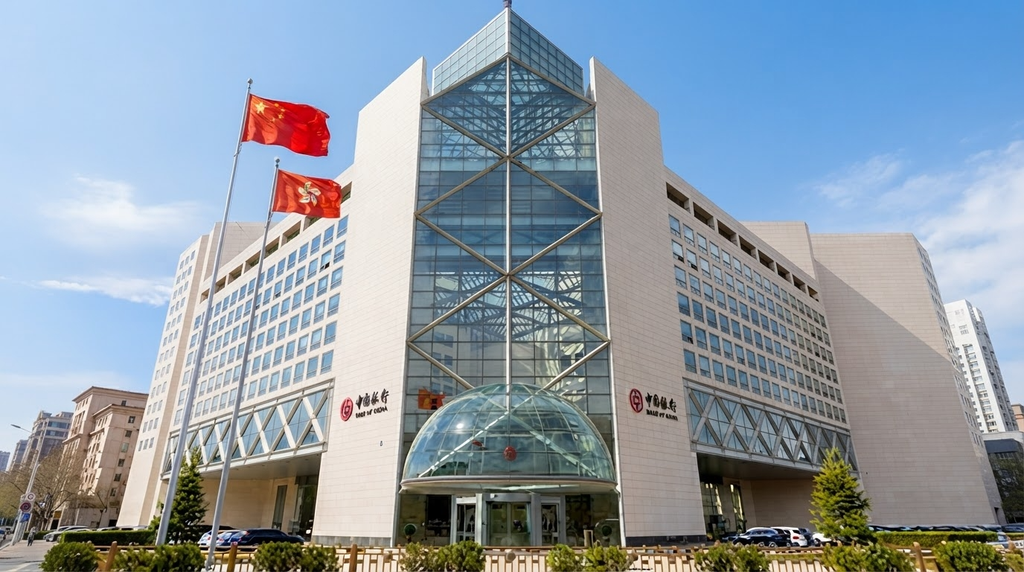
Chinese authorities are injecting roughly 360 billion yuan, or about US$54 billion, into major banks, insurers and policy lenders. At least eight financial institutions are raising fresh capital, with the Ministry of Finance providing more than 80% of the funding. A planned 300 billion yuan issue of special treasury bonds will help bankroll the wider programme.
The numbers are not trivial. Agricultural Bank of China is seeking up to 160 billion yuan, while Industrial and Commercial Bank of China plans to raise 100 billion yuan. The Ministry of Finance is expected to subscribe to 130 billion yuan and 70 billion yuan of those respective placements. China National Tobacco Corporation is also participating, because apparently even the tobacco monopoly must now help shore up the balance sheet of Chinese capitalism.
Other institutions are receiving their share of the state’s financial umbrella. China Life Insurance is set for 35 billion yuan, the Export-Import Bank of China for 30 billion yuan and the People’s Insurance Company of China for 15 billion yuan. Smaller injections are going to China Taiping, China Reinsurance and China Export & Credit Insurance Corporation.
Officially, this is about strengthening core Tier 1 capital and giving lenders greater room to support the economy. China’s banking sector reported an average capital adequacy ratio of 15.26% and a core Tier 1 ratio of 10.72% as of June. On paper, then, this is not a system crying out for emergency treatment.
But “on paper” is doing some extraordinarily heavy lifting.
Chinese banks have spent years being directed to lend cheaply, cut mortgage rates and support firms that might otherwise struggle to obtain credit. This has compressed net interest margins to historic lows. Meanwhile, the property crisis has left lenders exposed to distressed developers, unfinished homes and collateral whose value continues to slide. Local governments and their financing vehicles are buried under mountains of debt, while cautious households are less interested in borrowing than Beijing would like.
Smaller regional lenders are especially exposed. Their business models are frequently tied to local property markets, local enterprises and local government-linked borrowers—three things which become rather less reassuring when a property downturn turns into a protracted structural malaise.
This is part of the broader uncertainty explored in this analysis of China’s banking stress and strategic management of risk. The key point is simple: headline stability does not necessarily mean underlying health.
Capital is only useful if it comes from somewhere real.
China has been here before. In the late 1990s, years of politically directed lending had left major state banks technically insolvent. Beijing responded by creating four asset management companies to absorb around 1.4 trillion yuan in bad loans before recapitalising and listing the large lenders.
Since then, the authorities have also contained several rural-bank failures, dealt with the collapse of Baoshang Bank and tightened their grip on shadow banking. The current programme is less dramatic than those episodes, but it follows the same basic doctrine: financial stress must never be allowed to become political stress.
There is, however, an inconvenient distinction between making an individual bank look safer and making the entire system safer.
As finance professor Michael Pettis has argued, additional capital protects the wider system only if it originates outside that system. If banks are effectively recapitalised by claims on other banks or by a state already responsible for everyone’s losses, the accounting may improve without the underlying risk disappearing. In a truly systemic crisis, each bank’s loss remains everyone else’s problem.
The relevant historical cautionary tale is Mexico’s 1995 banking crisis. Its banks had capital in theory after privatisation, but much of that capital was directly or indirectly tied to other banks. When the system came under pressure, the supposed buffers did not prevent contagion; they helped transmit it.
That is why Beijing’s latest move is best understood not as a clean solution, but as a statement of responsibility. The Ministry of Finance is ultimately on the hook. It is using the sovereign balance sheet to keep credit flowing, stabilise markets and absorb some of the legacy costs of the country’s investment-heavy growth era.
China says it has nearly halved the number of high-risk financial institutions, reducing the total to 302 by mid-2025. Yet recurring rescue packages suggest that policymakers expect the pressure to endure. This is what happens when banks are asked to fund growth, subsidise policy priorities, support local governments and quietly carry the debris of a property bubble all at once.
Russian gold is flowing east, and Hong Kong wants to become the hub.
While China’s domestic financial system gets another state-sponsored patch job, Hong Kong is benefiting from a different kind of financial rerouting: Russian gold shipments are increasingly moving into Asia.

Hong Kong imported almost 100 tonnes of Russian gold during the first seven months of the year, nearly three times the volume recorded during the same period in 2025. Since 2022, Hong Kong entities have reportedly bought around US$35 billion worth of Russian bullion.
The reason is hardly mysterious. After Russia’s invasion of Ukraine, the United States and the United Kingdom sanctioned Russian gold, cutting producers off from London’s traditional bullion market. Gold did not cease to exist because London no longer wanted it. It simply found other routes.
Hong Kong has become a natural gateway because much of the bullion arriving there ultimately moves into mainland China. Chinese buyers can also store gold in the territory to avoid mainland import quotas. Given that China is already the world’s largest producer and consumer of gold, with demand coming from both households and the central bank, that is a rather useful arrangement.
Hong Kong is now attempting to turn this shift into a longer-term advantage, developing a clearing system and encouraging central banks to use its vaults. The ambition is clear enough: take a larger share of a bullion trade traditionally centred on London, New York and Dubai.
There are risks. International banks and refineries face difficult compliance questions if Russian bullion is mixed with other supplies or tied to sanctioned producers. But the larger geopolitical lesson is more important. Sanctions can be enormously disruptive, but disruption is not the same as disappearance. Where there is a willing buyer, a financially useful intermediary and a major state prepared to tolerate the trade, markets tend to find a way.
Europe is finally losing patience with China’s export strategy.
The European Union appears to be preparing a new wave of trade restrictions against China after months of negotiations produced very little. Brussels’ central demand is reportedly straightforward: China needs to show a credible willingness to restrain exports in politically sensitive industries. Beijing, unsurprisingly, does not appear eager to volunteer for that.
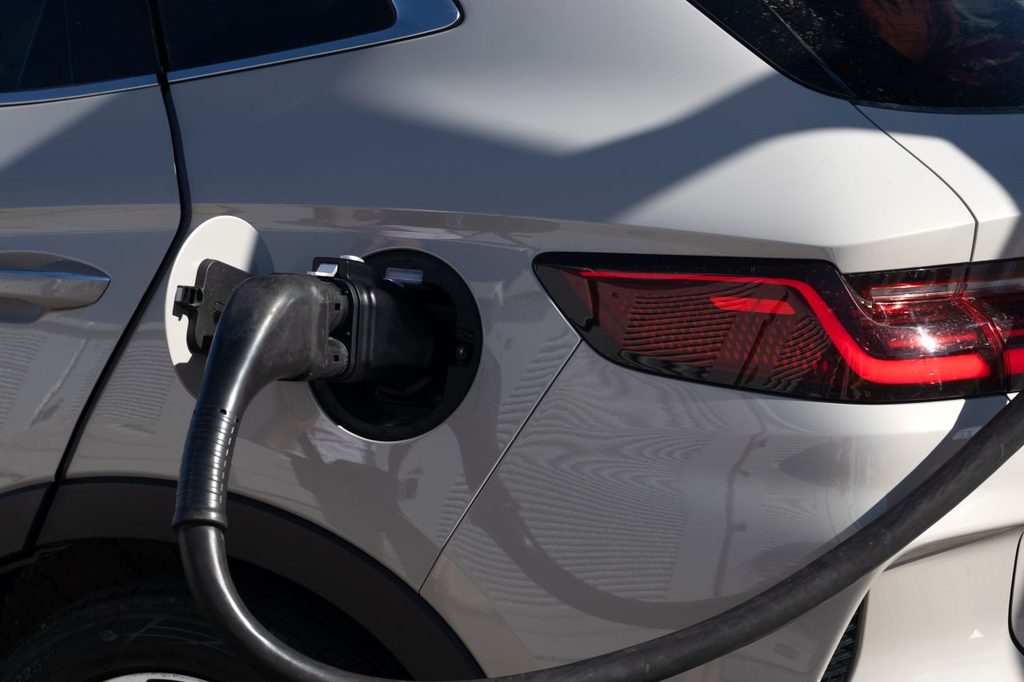
Plug-in hybrid vehicles have become the immediate test case. The EU imposed tariffs on Chinese battery electric vehicles two years ago, but Chinese plug-in hybrid exports to Europe have since increased more than tenfold by volume and more than sixfold by value. European officials believe manufacturers are using hybrids to sidestep the commercial impact of duties on fully electric vehicles.
Brussels has reportedly given Beijing until October to present a credible plan to limit those shipments or face immediate measures. The issue is not merely one product category. It is a confrontation over whether Europe will accept China’s enormous industrial capacity being redirected into European markets whenever domestic demand cannot absorb it.
China’s position is that Europe should negotiate as an equal and stop issuing unilateral threats. Europe’s answer is likely to be that Chinese subsidies, state-backed credit and industrial policy are also unilateral actions—just ones that have been operating for much longer and with considerably more money behind them.
Germany’s changing attitude matters enormously here. For years, German caution limited how far the EU was willing to go against China. But political and industrial leaders increasingly question whether the benefits of deep economic engagement outweigh the damage from subsidised competition. Once Berlin starts moving, the EU’s centre of gravity shifts with it.
The bloc has already shown that targeted action can work. A €3 fee on low-value parcels, aimed largely at the flood of cheap goods shipped by Chinese e-commerce platforms, generated around €224 million at Belgium’s principal entry point during its first seven weeks. Small-parcel arrivals at that airport fell by 53%.
The EU has published its own explanation of the trade-defence instruments it can use when it believes imported goods are unfairly subsidised or dumped. The political appetite to use those tools now looks far stronger than it did only a few years ago.
China is unlikely to accept export restraints easily. Its electric-vehicle makers increasingly rely on overseas sales because the domestic market is brutally competitive and burdened by overcapacity. But if Beijing refuses to compromise and Brussels imposes broader restrictions, retaliation against European companies with exposure to China becomes far more likely. The slow-motion EU-China trade fight may be about to become a proper trade war.
China’s coast guard pushes east of Taiwan.
Then there is Taiwan, where Beijing is expanding its maritime presence into the waters east of the island. Since June, Chinese authorities have reportedly deployed an average of two coast guard cutters each month into the area—the first recorded patrols there since ship-tracking data began in January 2025.
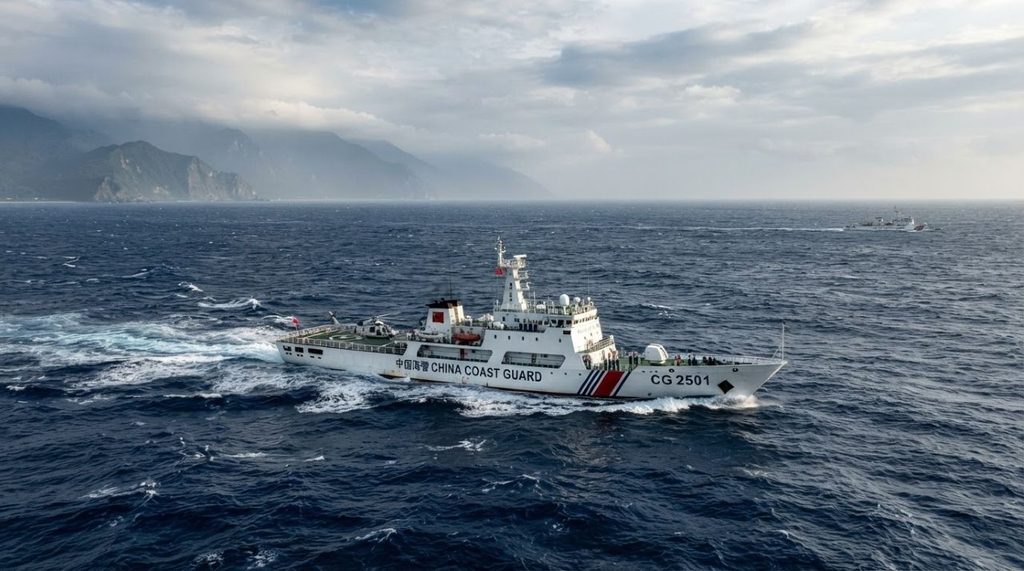
The patrol zone covers roughly 27,100 square nautical miles, more than twice Taiwan’s land area. The vessels have remained about 30 nautical miles from Taiwan’s eastern coast, outside waters claimed by Taipei. That is precisely what makes the campaign effective: it is coercive enough to create pressure but ambiguous enough to avoid the immediate dangers of a naval confrontation.
These eastern waters matter far more than the map might initially suggest. The Taiwan Strait is famously busy, but Taiwan’s Pacific coast is also a critical route for energy, military supplies and commercial shipping. It connects Taiwan with the Philippines and the wider Pacific, making it an obvious corridor for American and allied support in any future crisis.
In June, 527 ships carrying oil, gas, iron ore and agricultural products transited east of Taiwan, compared with 420 through the normally busier Taiwan Strait. Whoever can interfere with that route does not merely create a military headache; they gain leverage over the island’s economic lifelines.
China calls the deployments routine law-enforcement operations defending maritime rights. Taipei argues that Beijing is creating a permanent operational presence and building the capacity to control navigation around the island. Both statements are, in their own way, revealing.
Chinese vessels reportedly inspected 198 commercial ships during one operation, while crews questioned foreign vessels travelling along Taiwan’s Pacific coast. Analysts warn that what begins as requests for information can gradually become navigation instructions, and navigation instructions can become de facto control. Research vessels have also been observed moving unusually slowly near undersea communications infrastructure east of Taiwan.
Using the coast guard instead of the People’s Liberation Army Navy is deliberate. Coast guard ships are easier to frame as civilian law enforcement, even when they are conducting a distinctly geopolitical operation. It allows Beijing to test responses, normalise its presence and develop blockade-relevant capabilities without firing a shot or sailing a warship directly into an escalatory encounter.
This fits a wider pattern of calibrated pressure around the island, including the dynamics explored in China’s increasingly securitised approach to economic and geopolitical policy. The objective is not necessarily a dramatic confrontation tomorrow. It is to make the extraordinary seem routine until the rules of navigation in the Western Pacific have quietly changed.
The same strategy, deployed in different arenas
China’s bank recapitalisation, Russian gold trade, confrontation with Europe and coast guard activity east of Taiwan may appear unrelated. In reality, they demonstrate the same governing instinct: manage instability through scale, state intervention and gradual pressure.
In finance, Beijing socialises risk and keeps credit moving. In bullion markets, Hong Kong turns sanctions-driven diversion into an opportunity. In Europe, China resists demands that would constrain its industrial export model. Around Taiwan, it uses civilian-looking maritime pressure to chip away at established norms without inviting an immediate military response.
None of this means China is ten feet tall. The banking bailout itself is evidence of deep domestic weakness, while Europe’s increasingly defensive posture shows that export dependence comes with political costs. But Beijing’s preferred response to structural problems is rarely retreat. It is to build more capacity, deploy more state power and make everyone else adapt to the new reality.
Frequently Asked Questions
Why is China injecting capital into its banks?
The stated purpose is to strengthen bank capital, expand lending capacity and help financial institutions absorb future losses. The intervention comes amid pressure from low interest margins, property-sector distress, local-government debt and weak borrowing demand.
Does the bank recapitalisation mean China faces an immediate banking crisis?
Not necessarily. Official capital ratios remain above regulatory thresholds. However, repeated state-backed recapitalisations indicate that Beijing expects persistent stress and wants to prevent financial weakness from becoming a wider economic or political problem.
Why is Hong Kong importing more Russian gold?
Western sanctions limited Russian producers’ access to traditional markets, particularly London. Hong Kong offers a route into Asian markets and mainland China, where demand for gold remains strong among retail buyers and the central bank.
What is driving the EU-China dispute over vehicles?
The EU believes Chinese manufacturers are using rapidly growing plug-in hybrid exports to offset tariffs imposed on Chinese battery electric vehicles. Brussels is pressing Beijing to restrain exports, while China rejects what it sees as unilateral protectionist demands.
Why are Chinese coast guard patrols east of Taiwan significant?
Taiwan’s eastern waters are vital for commercial shipping and could be essential for outside support during a crisis. A sustained Chinese coast guard presence could gradually normalise Beijing’s ability to monitor, inspect and potentially influence navigation along that route.