Watch the full video here: https://www.youtube.com/watch?v=WN3qQwS459U
China is confronting a distinctly unpleasant collection of problems: a catastrophic Himalayan flood shrouded in censorship, a looming clash with Washington over Iran, a fragile thaw with India, and the bill for an old banking bailout that never really disappeared. The common thread is not difficult to spot. Beijing is exceptionally capable of mobilising the state when things go wrong. What it has never been especially comfortable doing is openly acknowledging who will ultimately pay for the cleanup.
That matters because, whether the problem is a glacial collapse in Tibet or a mountain of financial losses, the cost does not evaporate because officials move it from one spreadsheet to another. It merely ends up somewhere else—often with ordinary households, who are usually the least politically influential group in the room.
Quick Summary
- Flooding in Tibet has triggered a major rescue effort amid strict limits on independent information.
- China’s purchases of Iranian oil complicate Washington’s attempt to economically isolate Tehran.
- China and India agreed on practical border safeguards without resolving their underlying territorial dispute.
- China’s earlier banking rescue shifted losses onto households through prolonged financial repression.
Table of Contents
- A Himalayan Disaster Meets China’s Information Wall
- Iran’s Oil Exports and Washington’s China Problem
- China and India Try to Stop Their Border Dispute Becoming a War
- China’s Last Banking Cleanup Was Paid for by Households
- The Next Cleanup Cannot Be Hidden So Easily
A Himalayan Disaster Meets China’s Information Wall
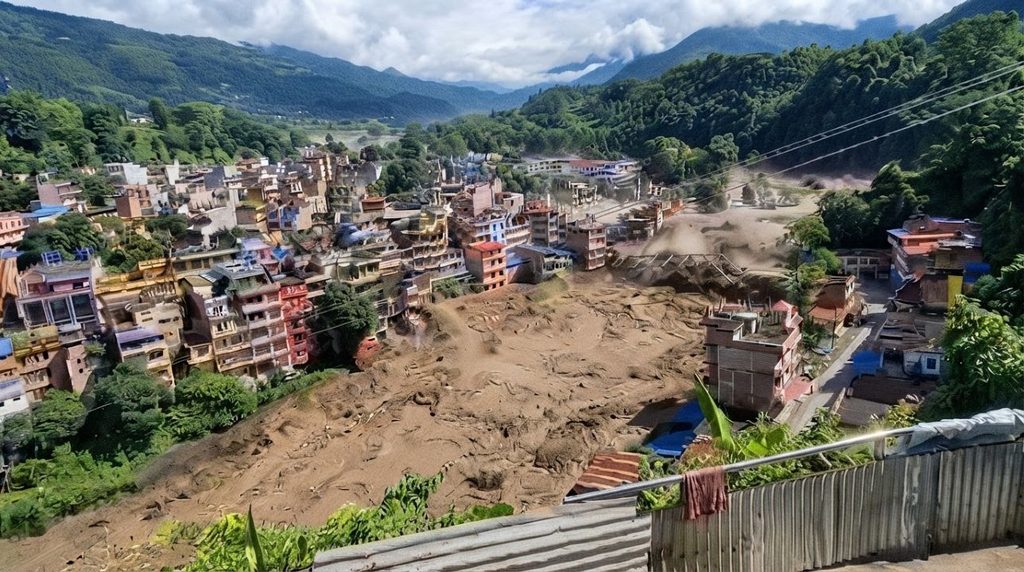
China has intensified rescue operations after catastrophic flooding along the border between Nepal and the Tibet Autonomous Region. The disaster began with a glacial collapse that sent ice, mud, rocks and water tearing through Himalayan valleys, devastating settlements in Nepal before hitting Gaurong Port, an important crossing between Nepal and China.
The human toll is already grim. At least 579 people have been confirmed dead across the affected area, overwhelmingly in Nepal. Chinese authorities have reported seven fatalities and 554 people missing. Across both countries, the number of people unaccounted for has approached 2,500, including hundreds of foreign nationals.
Rescue workers have been deployed to reach isolated communities, crossing rivers and scaling cliffs through an environment that remains extremely dangerous. Xi Jinping chaired an emergency meeting, while Premier Li Qiang travelled to the region to oversee relief efforts and debris removal. There is also a continuing risk of secondary flooding: mud and debris have blocked rivers, creating unstable lakes that could burst under pressure from further monsoon storms.

None of this is particularly controversial. Floodwater does not care about political sensitivities. The response becomes more troubling, however, when considering how little independently verifiable information has emerged from the Chinese side of the border.
Footage of people fleeing as water and debris swept away roads and buildings circulated internationally. Yet the dramatic images were largely absent from Chinese television and the country’s heavily censored online platforms. User-generated videos were reportedly removed. State media has publicised official rescue efforts but released few survivor accounts and little independently confirmable detail on the scale of destruction in Tibet.
This is the familiar authoritarian disaster-management formula: deploy substantial resources, control the narrative, and make absolutely sure that grief does not become public anger. Local Communist Party officials were told to help with relief, psychological assistance, social order and public confidence. Poor performance could bring accountability. In other words, rescue the stranded, calm the frightened, and please do not let anyone ask inconvenient questions about preparedness or the death toll.
Tibet makes this especially sensitive. Foreign journalists require permission to enter, while residents risk serious consequences for speaking with overseas media. The International Campaign for Tibet praised emergency responders but called for complete and verifiable information. That is not a radical demand. Families searching for missing relatives should not need to rely on filtered state bulletins to find out whether their communities still exist.
Beijing’s information controls may protect political stability in the short term. They also create a vacuum in which trust collapses. During a major disaster, opacity is not merely a public-relations choice; it becomes another source of trauma.
Iran’s Oil Exports and Washington’s China Problem
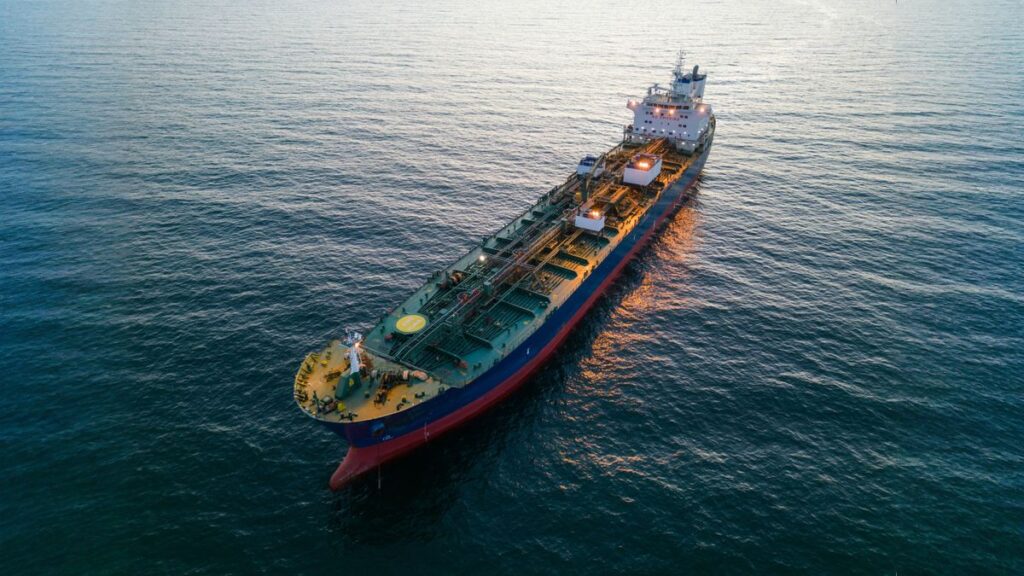
Elsewhere, Beijing has warned it will defend its economic interests after the Trump administration threatened sanctions against countries and firms that continue to trade with Iran. China’s foreign ministry argued that its cooperation with Tehran was lawful and should not be disrupted by the United States. It promised “all necessary measures” to protect Chinese rights and interests.
This is where Washington’s effort to economically isolate Iran runs into a fairly obvious obstacle: China buys around 90% of Iranian oil exports. Much of the crude reportedly moves through a shadow fleet before reaching smaller independent Chinese refiners, commonly known as teapots.
The US has sanctioned a Chinese-owned tanker, along with China- and Hong Kong-based companies and individuals accused of helping Iran acquire sensitive equipment. But it has avoided sanctions against the Chinese institutions that would really matter: major banks, central state-owned enterprises and companies deeply tied into the US-led financial system.
That is almost certainly deliberate. Treasury Secretary Scott Bessent insisted that nobody was beyond the reach of US sanctions while repeatedly avoiding a direct confrontation with China. The restraint appears linked to Donald Trump’s planned summit with Xi Jinping next month. It is difficult to conduct a cordial summit while simultaneously dropping a financial bunker-buster on the other side’s major banks.
But the strategic dilemma is unavoidable. If sanctions remain focused on relatively obscure entities, Iran’s main economic lifeline may remain broadly intact. If Washington goes after larger Chinese institutions, Beijing can retaliate. It could restrict exports of rare earths and other critical materials, escalate trade disputes, or reconsider Xi’s trip to Washington altogether.
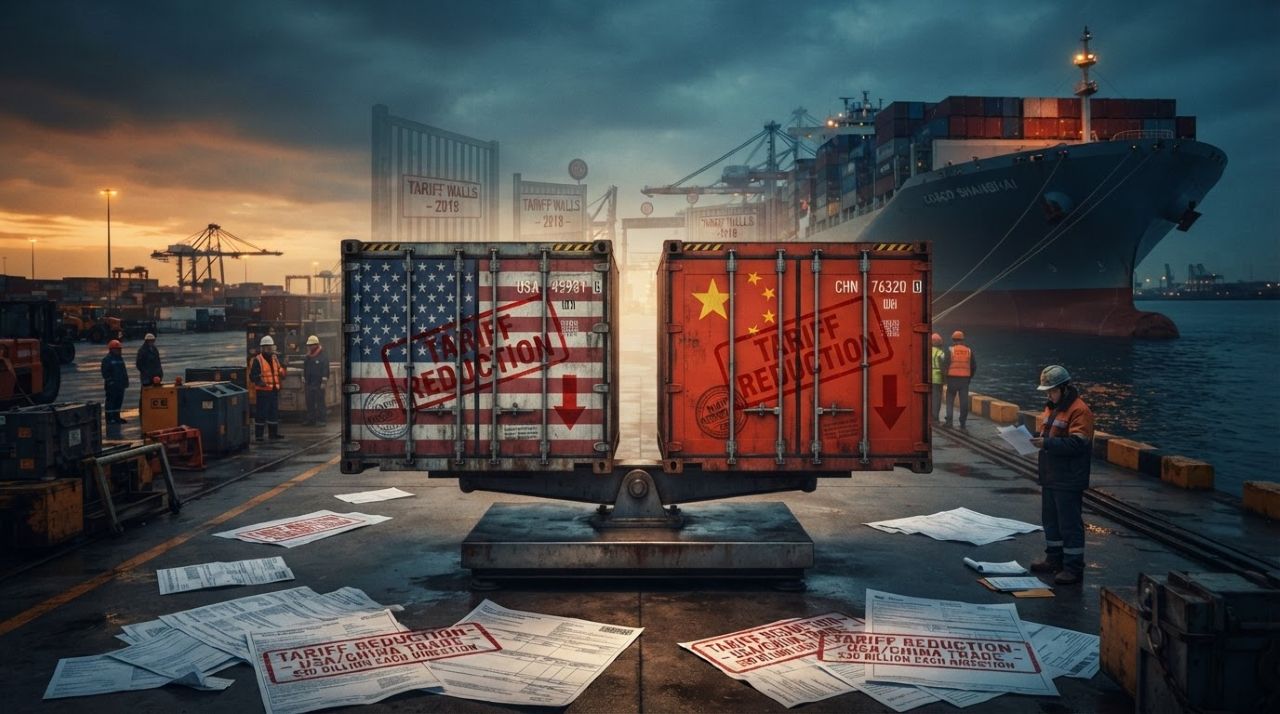
China has already threatened countermeasures over a possible 7.5% US tariff tied to allegations of Chinese industrial overcapacity. Foreign Minister Wang Yi has described Washington’s measures as unfounded and called for relations to return to the “right track”—a phrase that generally means the track on which China gets what it wants and the US stops asking difficult questions.
Beijing has an interest in containing conflict in the Middle East, particularly given its exposure to energy supplies and trade routes. But it has little reason to help Trump squeeze Tehran unless it receives substantial concessions in return. Iran, meanwhile, has every reason to believe that China remains its most important escape route.
For more on the wider pressures created by the Iran conflict, including energy costs and China’s industrial vulnerabilities, see this analysis of Hormuz disruption, inflation and China’s debt strain.
China and India Try to Stop Their Border Dispute Becoming a War
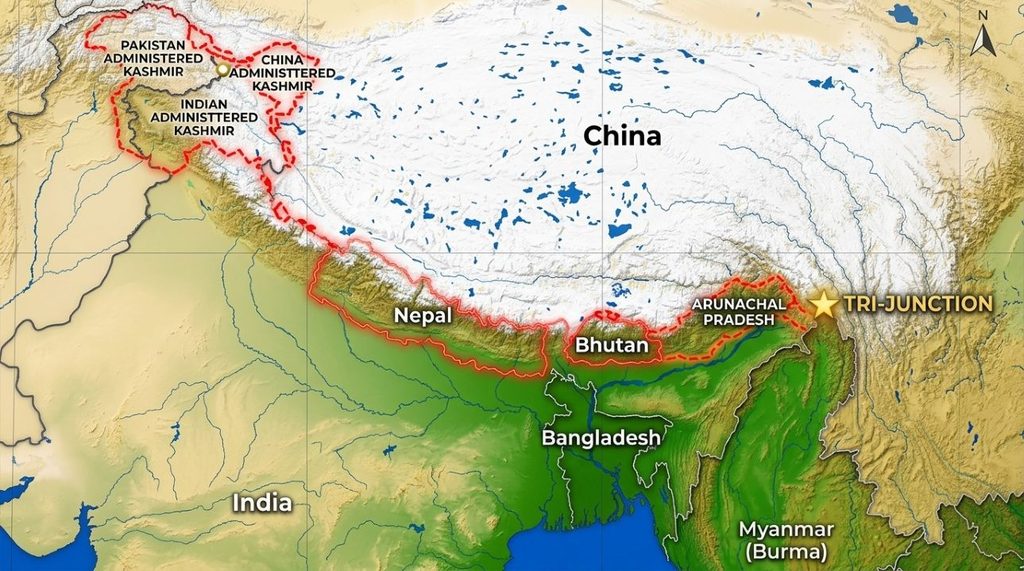
There was at least one comparatively constructive development. China and India have agreed on eight measures intended to stabilise their disputed Himalayan frontier. The agreement emerged from the 25th round of boundary talks between Wang Yi and Indian National Security Adviser Ajit Doval, with Beijing and New Delhi issuing identical statements in a carefully choreographed display of progress.
This does not resolve the territorial dispute. Nobody should confuse new hotlines with a sudden outbreak of strategic trust between two nuclear-armed powers that have spent decades disagreeing about where their border actually is. It does, however, create a more practical framework for managing tensions along the Line of Actual Control and reducing the risk of another military confrontation.
The measures include:
- Maintaining peace in border areas while negotiations continue under principles established in 2005.
- Creating expert groups focused on boundary delimitation and border management.
- Establishing two additional senior military meeting points and two military hotlines.
- Using existing diplomatic and military channels, including local commander meetings, to address new incidents.
- Continuing talks on hydrological data sharing, border trade and Indian pilgrimages to Mount Kailash and Lake Manasarovar.
Three designated border trading points have reopened, and the next trans-border rivers meeting is scheduled for September. The 26th round of special representative talks will take place in India in 2027.
The agreement arrives before an expected Xi-Modi encounter at the Shanghai Cooperation Organisation summit, followed by a more substantial meeting when Xi travels to New Delhi for the BRICS summit in September. It would be Xi’s first visit to India in seven years.
Both governments have reasons to prevent the border from poisoning everything else. India wants room to pursue its own economic and diplomatic priorities. China wants a more functional relationship with New Delhi as it promotes BRICS and a “multipolar” world order less dominated by the United States. Deep distrust has not gone away, but functional crisis management is better than nationalist brinkmanship conducted at 4,000 metres above sea level.
China’s Last Banking Cleanup Was Paid for by Households
The most consequential issue may be China’s financial system. A new report by Michael Pettis, the Peking University finance professor and senior fellow at the Carnegie Endowment for International Peace, challenges the comforting notion that Beijing painlessly repaired its banks in the early 2000s.

It did not. It simply made Chinese households absorb a substantial part of the pain without ever being asked whether they fancied doing so.
By the late 1990s, China’s largest state-owned banks were technically insolvent after years of politically directed lending to inefficient state-owned enterprises and local governments. Official estimates put non-performing loans at 25% to 30% of bank lending. Independent assessments placed the number as high as 40% to 50%.
Beijing established four asset management companies to acquire roughly 1.4 trillion yuan in bad loans—about 20% of GDP at the time—then recapitalised and listed major banks. This created the appearance of a resolution. But moving impaired assets between state-controlled balance sheets is not the same thing as eliminating the losses. It is basically financial housekeeping with a great deal more political ceremony.
The underlying mechanism, Pettis argues, was financial repression. Deposit rates were kept artificially low, frequently below inflation, while households had limited alternatives for investing their savings. Banks, local governments and state-owned companies consequently received cheap capital. Depositors, meanwhile, earned negative real returns.
That is the key transfer. China’s households effectively recapitalised the banking system through suppressed returns on their savings. Pettis estimates that the hidden transfer may have reached five percentage points of GDP annually during the most repressive years between 2001 and 2010.
The broader consequences were enormous. Household consumption fell from 63.9% of GDP in 2000 to 49.4% in 2010, an astonishingly low level for a major economy. Cheap credit fuelled investment, manufacturing capacity and exports. It also entrenched an economic model in which growth depended on suppressing household income to subsidise producers and borrowers.
Once productive investment opportunities began to diminish, maintaining high growth required either ever more debt or ever larger trade surpluses. The supposedly successful bank cleanup therefore helped create the structural imbalances that Beijing is struggling with today.
This backdrop helps explain why China’s banking-sector strains deserve more attention than official profit figures alone. A recent examination of banking stress beneath China’s apparently stable financial system makes the same essential point: risk can be delayed, concealed and redistributed, but it cannot be wished away.
The Next Cleanup Cannot Be Hidden So Easily
China now has one of the world’s highest debt-to-GDP ratios, surpassed among major economies only by Japan. Asking households to absorb another banking cleanup through low returns and financial repression would further damage consumption, precisely when Beijing says it wants domestic demand to play a larger role in growth.
That leaves three groups who can absorb the losses: households, businesses or the state.
Households have already carried too much of the burden. Businesses could take the hit through higher wages, higher interest rates, currency appreciation or reduced subsidies. That would shift income toward families, but it would also reduce manufacturing profitability, weaken investment and slow growth.
The government could assume more of the cost through fiscal transfers, debt restructuring or the sale of public assets. Pettis considers asset sales the most economically efficient route, but it is also politically difficult because it threatens powerful interests invested in China’s investment-led model.
There is no magical fourth option where losses disappear because a state-owned asset management company gives them a new name. Someone pays. The only real question is who pays, how transparently, and whether the adjustment strengthens or further weakens China’s long-neglected household sector.
That dilemma sits behind almost every other story. Beijing wants stability in Tibet, leverage against Washington, a manageable border with India, and a financial system capable of sustaining growth. Yet stability built on concealment has a habit of becoming more expensive over time. China’s leaders are exceptionally good at postponing difficult choices. They are less able to repeal the arithmetic.
Frequently Asked Questions
Why is information about the Tibet flooding so limited?
Chinese authorities have tightly controlled access to Tibet, while user-generated footage has reportedly been removed from domestic platforms. State media has focused on official rescue operations and provided limited independently verifiable detail about casualties and destruction.
Why does China matter so much to Iran’s oil exports?
China purchases roughly 90% of Iranian oil exports. Much of the crude is reportedly transported through a shadow fleet and sold to smaller independent Chinese refineries, making China Iran’s most important economic outlet.
Do the China-India border measures settle the territorial dispute?
No. The measures are designed to reduce the risk of confrontation along the Line of Actual Control through hotlines, meeting points, expert groups and established military and diplomatic channels.
What does financial repression mean in China’s banking context?
It refers to keeping household deposit rates artificially low, often below inflation, so banks and state-linked borrowers can access cheap funding. The result is a transfer of income from savers to the financial system, businesses and local governments.