Photo by Igor Omilaev on Unsplash
Taiwan is spending more on defence because it has little choice. China is drawing down oil inventories because it planned for precisely this sort of crisis. And, in the background, a rather revealing academic fight has broken out over whether Beijing is a restrained status quo power or a rising revisionist one.
These are not three disconnected stories. They are different faces of the same geopolitical reality: the balance of power in Asia is being shaped by technology, supply chains, energy resilience and the increasingly difficult question of what China actually intends to do with its growing capabilities.
Taipei is using an AI-fuelled export boom to strengthen its military deterrent. Beijing, meanwhile, has found that two decades of anxiety about maritime chokepoints have bought it some breathing room during Middle Eastern turmoil. Then there is the uncomfortable intellectual question underneath it all: when a powerful state says it merely wants stability, how much should anyone take that at face value?
Table of Contents
- Taiwan crosses the 3% defence threshold
- AI has given Taiwan a very useful windfall
- China’s old Malacca anxiety is paying dividends
- How Beijing reduced the immediate pain
- So, what does China actually want?
- The problem with taking official language literally
- Why the answer remains difficult
- Technology, energy and power are now inseparable
Taiwan crosses the 3% defence threshold.
Taiwan’s cabinet has approved a proposed defence budget of NT$1.12 trillion, or roughly US$35.1 billion, for the coming year. That is not merely a large number. It is designed to push defence expenditure to 3.01% of GDP, narrowly passing President Lai Ching-te’s stated 3% target.
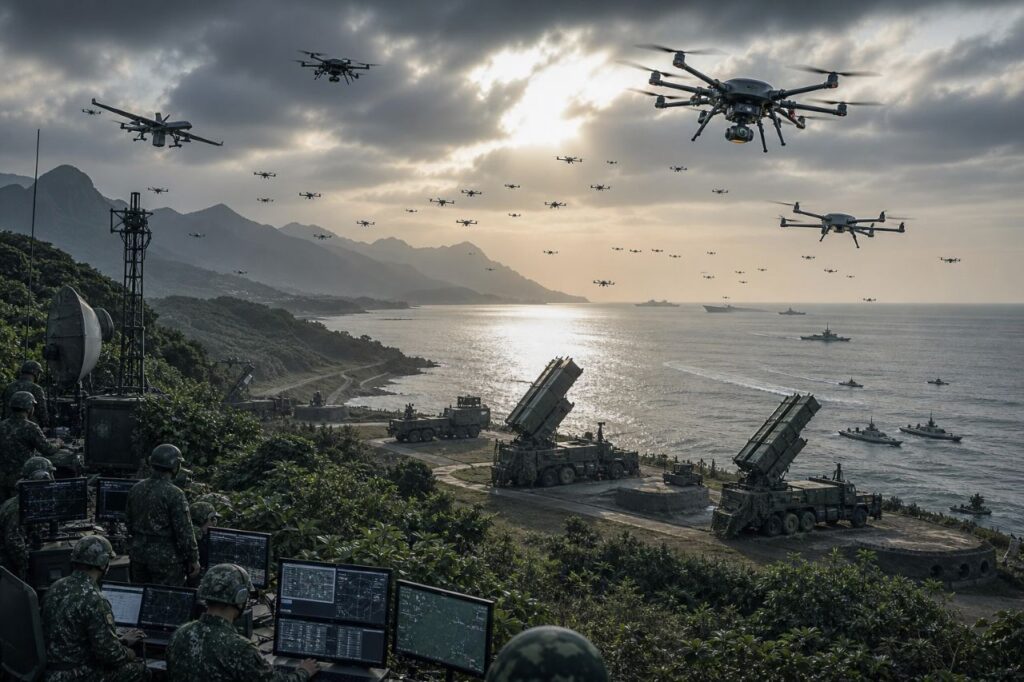
That threshold matters politically as much as financially. For years, Washington has pressed Taipei to spend more on the practical tools of deterrence: weapons, logistics and military capabilities that would make any attempted invasion prohibitively painful, slow and uncertain. Donald Trump has also publicly questioned whether Taiwan was doing enough to defend itself. The message from the United States has been rather blunt: deterrence is a group project, and Taiwan must carry more of the weight.
The urgency is not difficult to understand. Chinese military and coastguard activity around Taiwan has intensified, while Beijing continues to claim the democratically governed island as its territory and refuses to rule out the use of force. Taipei rejects that claim. The result is an enduring pressure campaign in which defence spending is not just about preparing for a hypothetical invasion; it is about demonstrating that coercion will not be cheap.
The proposed funding is split between the central government budget and additional special-budget expenditure. Yet approval is not guaranteed. Taiwan’s opposition-controlled legislature must still pass both the wider budget and the defence package, and recent budget disputes suggest the process could be messy. Local elections on the horizon may make it messier still, because nothing improves national-security planning quite like domestic political theatre.
AI has given Taiwan a very useful windfall
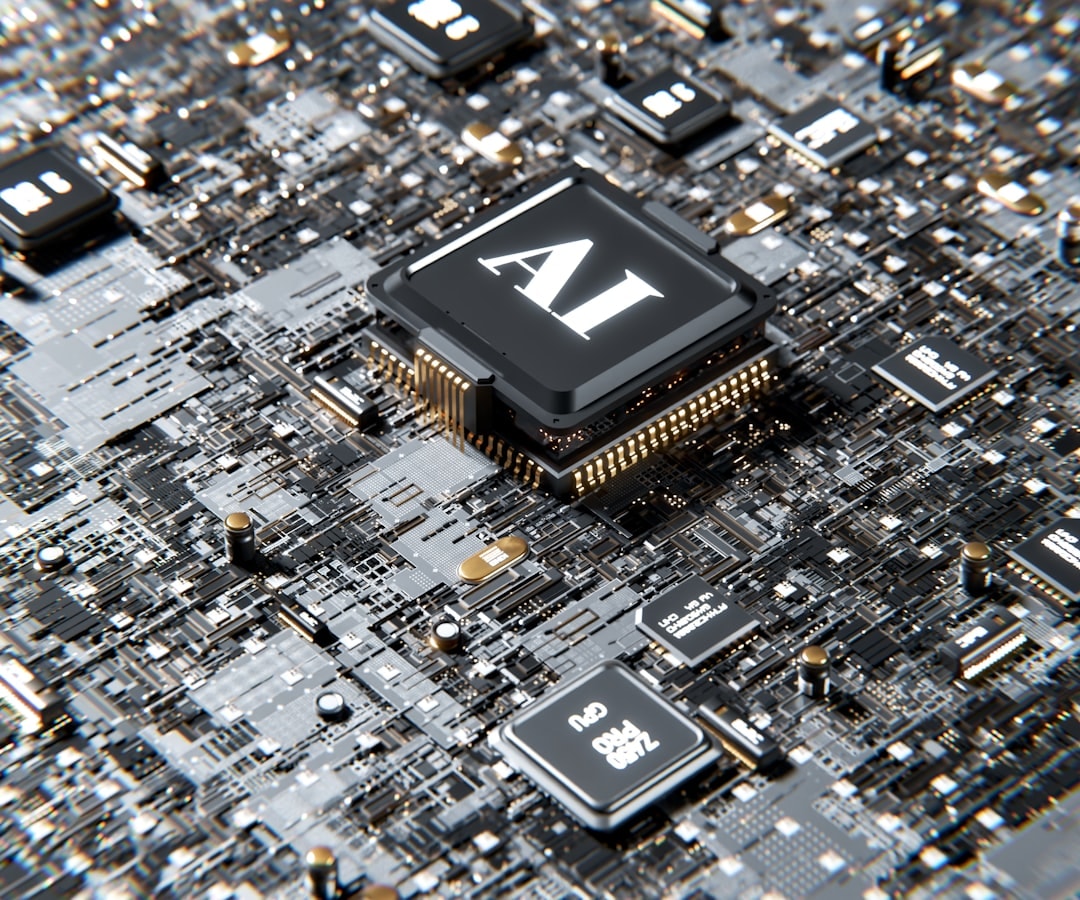
What makes this moment unusual is that Taiwan is not attempting to finance a military expansion from a position of economic weakness. Quite the opposite. It is riding an extraordinary technology boom driven by global demand for advanced semiconductors, servers and AI infrastructure.
The government has raised its 2026 growth forecast to 11.05%, which would represent Taiwan’s fastest expansion since 1987 and its first double-digit growth year since 2010. The economy expanded 12.93% in the second quarter, following growth of 8.76% the previous year. Exports are expected to rise by 41.19%, with annual export value potentially passing US$1 trillion for the first time in 2027.
This is the strange, slightly alarming economic logic of the AI age. The world is pouring money into computing capacity. Taiwan manufactures a critical portion of the hardware. Taiwan Semiconductor Manufacturing Company, a key supplier to Nvidia and Apple, reported a 45% rise in July sales. And some of that wealth can now be redirected into national security.
The cabinet has also approved NT$10,000 cash payments for every resident, with officials estimating the measure could add 0.35 percentage points to the following year’s growth. That is a handy political dividend from the AI boom, but the deeper dividend is strategic. A richer Taiwan has more fiscal space to harden itself against coercion.
This does not make Taiwan safe. Economic strength is not a substitute for military preparedness, nor does a semiconductor boom dissolve the island’s difficult domestic politics. But it does give Taipei something extremely valuable: the ability to pay for deterrence without immediately crushing the rest of the economy.
For a wider look at the intersection between Taiwan’s economic performance, rising cross-strait tensions and Beijing’s changing trade strategy, see this analysis of Taiwan’s economic surge and regional tensions.
China’s old Malacca anxiety is paying dividends
China’s ability to weather disruption in Middle Eastern oil supplies is the result of a very old fear. In 2003, then-leader Hu Jintao reportedly described China’s dependence on energy shipments moving through Southeast Asia as the “Malacca dilemma". The concern was straightforward: if a hostile power could control the Strait of Malacca, it could potentially strangle China’s energy supply lines.
For Beijing, this was never merely an abstract shipping problem. It was a strategic vulnerability sitting in plain sight. China depended heavily on imported energy, much of it moving along maritime routes exposed to foreign naval power. The answer was not one policy but a sprawling long-term project:
- Expand naval capabilities and strategic reach.
- Diversify oil suppliers and increase domestic production.
- Build enormous strategic, commercial and refinery inventories.
- Electrify transport, especially rail and road transport.
- Develop coal-to-chemicals capacity to replace some oil-derived products.
- Reduce overall exposure to imported petroleum demand.
It is a classic Chinese state-capacity response: identify an external vulnerability, throw planning, capital, industrial policy and redundancy at it for decades, then discover during a crisis that the supposedly boring infrastructure was actually the point.
Before the conflict, China was importing roughly 11 million barrels of oil per day, almost 60% of it from the Middle East. Between February and June, imports reportedly fell by 5.8 million barrels per day, nearly 49%, without producing severe domestic shortages. That is a remarkable decline. It does not mean China is invulnerable. It means the country has been able to absorb an initial shock far better than many import-dependent economies could.
How Beijing reduced the immediate pain
China’s resilience has not come from producing a magical alternative to oil. It has come from cutting demand, slowing industrial processing and using stockpiles accumulated for exactly this kind of emergency.
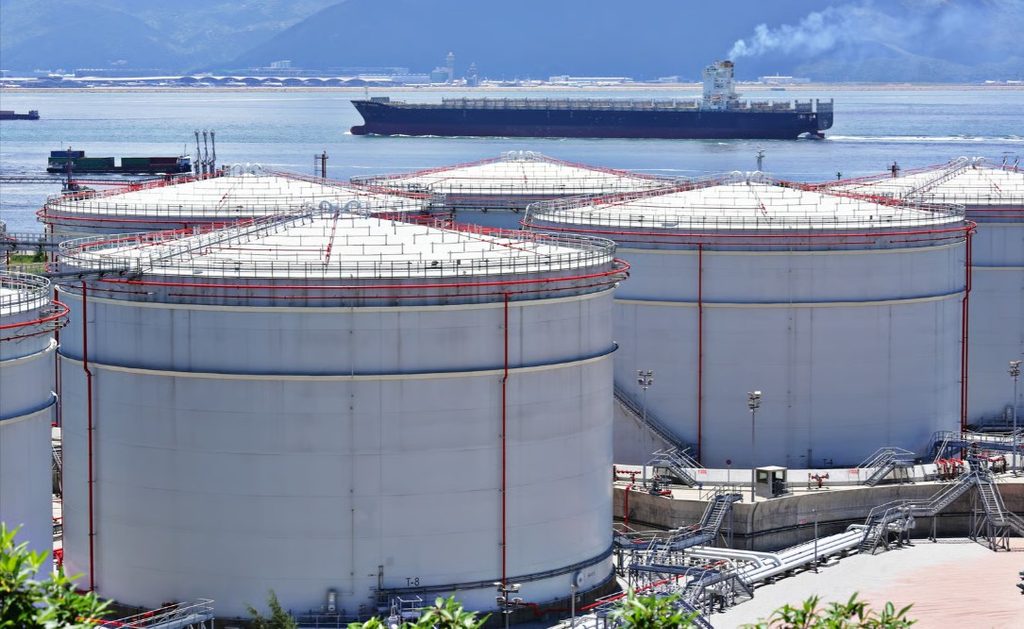
Beijing restricted fuel exports, while refiners reduced crude processing. By May, operating rates across 49 state-owned refineries had fallen to 71.6%, their lowest level since the pandemic. Aviation demand also softened as fuel surcharges rose, with passenger numbers down 8% in May and 7% in June.
Then there is electrification. Electric cars and other new-energy vehicles are already displacing around one million barrels per day of petroleum demand. The International Energy Agency’s work on electric-vehicle adoption underscores why that shift matters strategically, not only environmentally: every vehicle that no longer relies on petrol slightly reduces exposure to imported oil shocks.
China’s coal-heavy power system has also insulated its extensive electric rail network from the immediate effects of oil-market disruption. Coal-to-chemicals investments have expanded domestic capacity to make substitutes for oil, gasoline and petrochemical feedstock. None of this is especially elegant. Some of it is environmentally dreadful. But in a crisis, elegance is not the metric. Availability is.
Most important are the reserves. China entered the conflict with an estimated one billion to 1.4 billion barrels in strategic, commercial and refinery storage. It spent 2025 buying discounted Russian and Iranian crude, reportedly adding around 1.1 million barrels per day to inventories. Since May, it has drawn roughly 56 million barrels from commercial storage and 15 million barrels from refinery stocks, while leaving much of the strategic reserve untouched.
That has allowed Beijing to avoid desperately bidding against other importers for scarce cargoes. In doing so, it has helped limit wider pressure on global oil prices and inflation. The grim irony is that a national energy-security strategy originally shaped in large part by fears of conflict over Taiwan has proved useful during a Middle Eastern crisis.
There are limits, of course. Reserves can be depleted. Demand can recover. Oil disruption becomes far more dangerous when it lasts long enough to exhaust the buffers built for a temporary emergency. Still, Beijing will almost certainly see this episode as a vindication of its strategy. Other energy-importing Asian economies may be tempted to draw the same lesson: redundancy is expensive right up until the day it is priceless.
China’s exposure to energy disruptions, producer-price pressures and debt-funded growth is explored further in this assessment of Hormuz turmoil and China’s broader economic strain.
So, what does China actually want?
This brings us to the larger argument, and it is a genuinely consequential one. A debate in international security has focused on whether China should be understood as a fundamentally status quo power, primarily concerned with domestic regime security and sovereignty, or as a country seeking to reshape the regional and eventually global order around its own interests.
David C. Kang, Jackie S. H. Wong and Zenobia T. Chan argue in their article, “What Does China Want?”, that China’s official rhetoric points to limited ambitions. Their analysis finds Beijing focused principally on Communist Party rule, sovereignty, economic relations and territorial issues involving Taiwan, Hong Kong, Tibet and Xinjiang.
The policy implication is obvious. If China is fundamentally cautious, a relentlessly hostile US military posture in the Indo-Pacific may create the confrontation it claims to deter. This is the argument that makes many policymakers nervous, because it suggests Washington could be escalating a rivalry that might otherwise remain manageable.
But the rebuttals raise an equally uncomfortable point: rhetoric is not intent, and a rising power has every reason to understate its ambitions.
The problem with taking official language literally
Rush Doshi, a prominent scholar of Chinese grand strategy and former Biden administration official, argues that the study’s method risks excluding the very evidence that would reveal broader ambitions. China’s leadership does not always announce its geopolitical objectives in tidy, searchable language. Beijing often refers indirectly to the United States through terms such as “some countries", “external forces” or “hegemonic powers". Excluding such phrases, critics argue, may undercount adversarial rhetoric.
Doshi also argues that official language must be examined alongside behaviour. A state’s intentions are not contained exclusively in speeches and newspaper articles. They are also expressed through military expansion, overseas basing ambitions, technology policy, economic coercion, cyber operations and efforts to reduce domestic dependence on foreign economies while increasing foreign dependence on China.
Other scholars make a related criticism: counting phrases cannot replace interpreting what they mean. A single private comment, or an operational decision taken during a crisis, may reveal more than hundreds of formulaic public statements. Language can remain superficially stable while its practical meaning shifts dramatically as a country’s power grows.
Consider Xi Jinping’s concept of comprehensive national security. Security, in this framework, extends far beyond tanks and missiles. It includes technology, ideology, economic links and overseas interests. That does not automatically prove that China wants global domination. But it does make simplistic claims of restraint look rather flimsy.
Why the answer remains difficult
Kang, Wong and Chan defend their methodology on reasonable grounds. Systematic coding, they argue, protects researchers from cherry-picking especially aggressive statements to prove a pre-existing theory. After expanding their dataset to 442,854 People’s Daily articles published between 2012 and 2025, they found that more than 97% of articles using disputed euphemisms for Washington also explicitly named the United States. They also used word-embedding analysis and large-language-model validation, concluding that the contested phrases were usually domestic in orientation and, in international contexts, more associated with cooperation, development and governance than coercion.
That is serious evidence. It should not be waved away because it clashes with Washington’s increasingly settled assumption that China is inevitably expansionist.
Yet the critics have a serious point, too. A government’s statements can reassure, conceal, coordinate domestic audiences or simply preserve diplomatic flexibility. Denying a desire for hegemony costs almost nothing. It is compatible with genuinely limited ambitions, but it is also compatible with a patient strategy designed to avoid provoking balancing coalitions too early.
The real dispute, then, is not merely whether China is revisionist. It is about what kind of evidence should be trusted when assessing a powerful state whose capabilities are expanding rapidly. Official rhetoric? Military conduct? Economic leverage? Private remarks? Institutional changes? The answer is probably all of them, interpreted with caution rather than ideological certainty.
Technology, energy and power are now inseparable.
Taiwan’s defence budget and China’s oil resilience demonstrate why this debate is no longer academic in the dismissive sense. Taiwan’s AI-driven prosperity is helping fund military preparedness. China’s industrial policy, electrification and stockpiling are helping it absorb energy shocks. Both sides are trying to make themselves harder to coerce.
This is what modern strategic competition looks like. It is not only aircraft carriers crossing a strait or diplomats issuing statements. It is chip fabrication, refinery utilisation, battery adoption, stockpiles, fiscal capacity, port access and the unglamorous ability to keep an economy functioning after somebody else tries to disrupt it.
China may be more cautious than its harshest critics believe. It may also be more ambitious than its official language suggests. The evidence supports uncertainty, not complacency. And as Taiwan invests more heavily in deterrence while Beijing demonstrates greater economic resilience, that uncertainty is becoming more expensive for everyone involved.
Frequently Asked Questions
How large is Taiwan’s proposed defence budget?
Taiwan’s cabinet approved a proposed NT$1.12 trillion defence budget, equivalent to about US$35.1 billion. The package would bring defence spending to 3.01% of GDP, subject to legislative approval.
Why can Taiwan increase defence spending now?
Taiwan is benefiting from strong global demand for advanced semiconductors, servers and AI infrastructure. Its government forecasts 11.05% economic growth in 2026, giving Taipei greater fiscal capacity to finance defence investments.
How has China managed reduced Middle Eastern oil imports?
China has relied on large oil inventories, lower refinery activity, restrictions on fuel exports, weaker aviation demand, transport electrification and domestic alternatives such as coal-to-chemicals production. These measures have reduced the immediate impact of supply disruption.
Is China a status quo power or a revisionist power?
The evidence remains contested. One scholarly view finds China’s official rhetoric focused primarily on domestic security and sovereignty. Critics argue that official language alone cannot reveal intent and must be assessed alongside China’s military growth, economic statecraft, technology policies and regional behaviour.