China Evergrande was once supposed to represent the unstoppable rise of modern China: towers going up, cities expanding outward, consumers buying ever more expensive apartments, and a private developer borrowing aggressively because apparently nothing could ever go wrong. Its founder, Hui Ka Yan, was for a time Asia’s second-richest man. He owned a football club, pushed into electric vehicles, bottled water, and healthcare, and generally behaved as though an infinite supply of credit was a law of nature.
It was not.
Hui has now been sentenced to life imprisonment following one of the most spectacular corporate collapses in modern history. The conviction closes the personal chapter of a man who climbed from rural poverty to billionaire status, but it does nothing to solve the much larger disaster left behind: unfinished homes, indebted local governments, weakened banks, households watching their wealth evaporate, and an economy still struggling to escape the wreckage of its property boom.
And that is the important point. Evergrande was never merely one rogue company run by one very ambitious man. It was an extreme manifestation of a system built on debt, land speculation, pre-sales, rising prices, and the broad assumption that Beijing would never let the housing market seriously fall.
Table of Contents
- From China’s property miracle to a 360 billion dollar collapse
- Why Beijing’s “three red lines” turned a slowdown into a reckoning
- The property crisis is not over because Evergrande is gone
- China’s reusable-rocket breakthrough is real, but it is only the first step
- JD.com’s German takeover becomes another China-EU battleground
- Wang Yi’s South Korea visit shows why Beijing still needs the Korean Peninsula
From China’s property miracle to a 360 billion dollar collapse
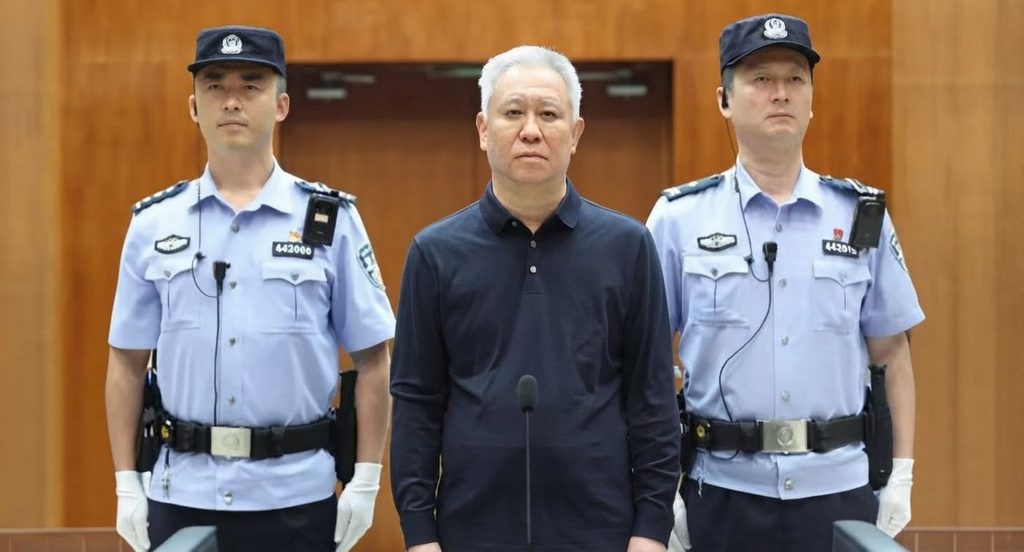
Hui, also known by his Mandarin name Xu Jiayin, was born in Henan province in 1958 and grew up in poverty. His father was a woodcutter. He later worked for a steel company before heading south during China’s reform era, eventually entering the property business in Guangzhou.
The timing could hardly have been better. China’s nationwide commercial housing market was formally established in 1998, unleashing one of the largest urbanisation and wealth-creation experiments in human history. Hundreds of millions of people moved into towns and cities. Home ownership became central to family security, marriage prospects, savings, and social status. Local governments became dependent on selling land. Developers became dependent on borrowing ever more money to buy it.
Evergrande, founded in 1996, became a monster of this model. At its height, it had more than 1,300 projects in 280 cities and was China’s largest developer by contracted sales. Its name was designed to suggest permanence and greatness. In retrospect, that is almost painfully on the nose.
The company expanded far beyond construction. Evergrande sold bottled water, entered healthcare, acquired Guangzhou FC and turned it into one of Asia’s most successful football clubs, and promised an electric-vehicle future. These ventures created the image of a sprawling modern conglomerate. But underneath the branding, the core business remained brutally simple: borrow money, acquire land, sell apartments before finishing them, and use the cash from one project to keep another project alive.
That machinery works beautifully until it does not. It requires rising sales, rising prices, easy credit, and buyers confident that developers will actually finish what they sell. Remove any one of those pillars and the whole thing begins to wobble. Remove all of them, and you get Evergrande.
Customers often paid for apartments before construction was complete. The proceeds could then be used to fund other developments or buy more land. Banks, suppliers, employees, retail investors, domestic bondholders, and overseas creditors all became part of the financing web. This was not merely leverage. It was leverage stacked on top of leverage, held together by confidence and a great deal of optimistic accounting.
Chinese regulators alleged that Evergrande’s main onshore unit inflated revenue by more than 250 billion yuan by recognising apartment sales too early. The scale of the alleged fraud exceeded scandals associated with Luckin Coffee and Enron. By the end of 2021, Evergrande had accumulated around US$360 billion in liabilities.
That is not a bad quarter. That is a corporate crater.
Why Beijing’s “three red lines” turned a slowdown into a reckoning
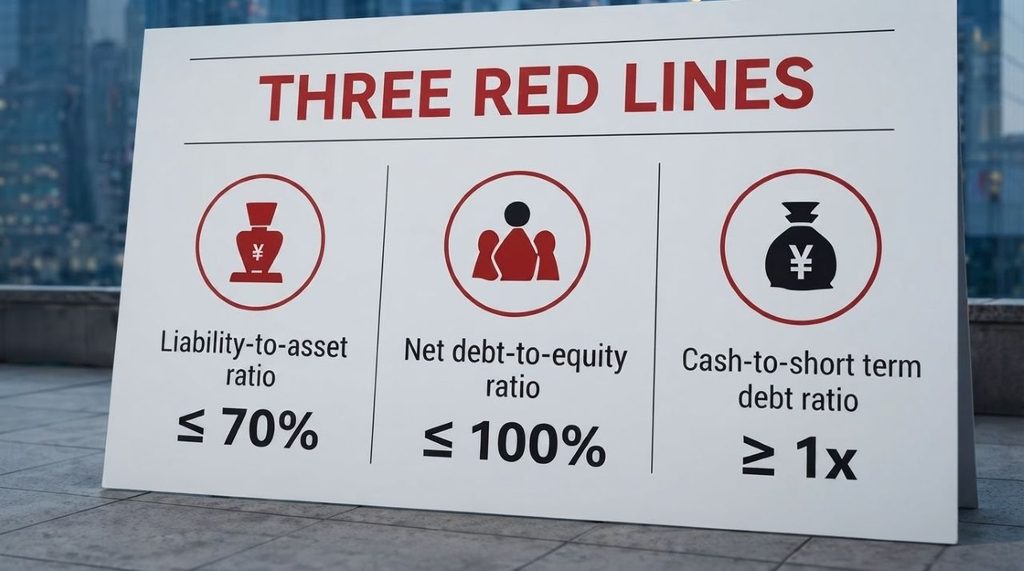
The immediate turning point came in 2020, when Beijing introduced the “three red lines” policy to constrain borrowing by heavily indebted developers. The policy was not irrational. China’s housing market had become increasingly unaffordable, debt levels were grotesque, and authorities had spent years warning that homes were for living in rather than speculation.
But policy intervention has consequences, especially when an entire sector has been conditioned to depend on ever more financing. Developers such as Evergrande suddenly found themselves cut off from the credit needed to refinance old obligations and maintain construction. The property giant defaulted on offshore debt in December 2021. Other major developers, including Sunac and Country Garden, were dragged into the crisis.
After restructuring negotiations failed, a Hong Kong court ordered Evergrande’s liquidation in 2024. Its shares were delisted in 2025 and became effectively worthless. Hui had been under police control since 2023. He pleaded guilty to offences including fundraising fraud and illegally accepting public deposits, while he and Evergrande were also found guilty of bribery, securities fraud, and violations of information-disclosure rules.
Authorities said Hui concealed liabilities, inflated assets, and embezzled company money through dividend arrangements. The court ordered his personal assets confiscated. Another 56 people connected with Evergrande received sentences, including his sons, while former companies associated with the group were fined a combined 15.82 billion yuan.
China’s state media described the sums as exceptionally large, the circumstances as particularly serious, and the economic losses as severe. For once, this is an understatement.
There is a grim political usefulness to such a verdict. It allows authorities to present Hui as the face of corporate excess and greed, a disgraced billionaire who abused the system. But Evergrande did not invent China’s dependence on property. It did not force local governments to rely on land sales, nor did it create the cultural and financial conditions in which apartments became the dominant store of household wealth. It exploited those conditions more aggressively than most. That is different.
For more on how mortgage stress, negative equity, and delayed foreclosures are complicating the broader downturn, see this analysis of China’s growing housing reckoning.
The property crisis is not over because Evergrande is gone.
It is tempting to treat Evergrande’s liquidation and Hui’s imprisonment as a tidy ending. Corporate villain punished, company destroyed, lesson learned. Unfortunately, the property market is not a courtroom drama, and it does not wrap itself up conveniently after sentencing.
Liquidators and creditors are still navigating a vast collection of onshore and offshore assets in the hope of recovering some fraction of what they are owed. For many, that recovery may amount to cents on the dollar. Meanwhile, ordinary buyers are still waiting for apartments they paid for years ago.
The wider property downturn is now in its fifth year. Used-home prices in China’s top-tier cities have fallen by more than a third from their peaks, with smaller cities generally recording deeper declines. This matters because housing is not just a sector of the Chinese economy. It is the foundation of household wealth, local-government revenue, bank collateral, construction employment, and consumer confidence.
When values fall, people feel poorer. When people feel poorer, they spend less. When consumer spending weakens, deflationary pressures intensify. Banks must then worry about developers, mortgage holders, and business loans secured against property that is no longer worth what it was supposed to be worth. The elegant little financial machine becomes a very expensive confidence problem.
The crisis has also spread beyond the weakest privately run developers. China Vanke, long considered one of the industry’s strongest and best-connected firms, reported a record 89 billion yuan loss in 2025. Its combined losses across two years exceeded 130 billion yuan. If even Vanke is taking that sort of damage, it is difficult to pretend this remains a problem limited to a few reckless private companies.
Beijing has responded with lower mortgage rates, reduced purchase taxes, relaxed restrictions on buyers, and financing intended to complete stalled projects. Authorities are also considering mortgage-interest subsidies and larger tax rebates for borrowers. Yet these measures have not produced a sustained recovery, largely because lowering the cost of borrowing does not automatically convince people to buy an asset they suspect will keep falling.
That is the bleak paradox facing policymakers: the old model cannot be revived without reinflating some of the very risks Beijing wanted to contain. But allowing the correction to continue means absorbing years of lower confidence, weaker demand, and steadily worsening balance sheets. A related look at the scale of household wealth damage can be found in this report on China’s deepening property losses.
China’s reusable-rocket breakthrough is real, but it is only the first step.
While the property sector continues to burn through confidence and capital, China is trying to build the industries it hopes will define its next growth phase. Space is one of them.
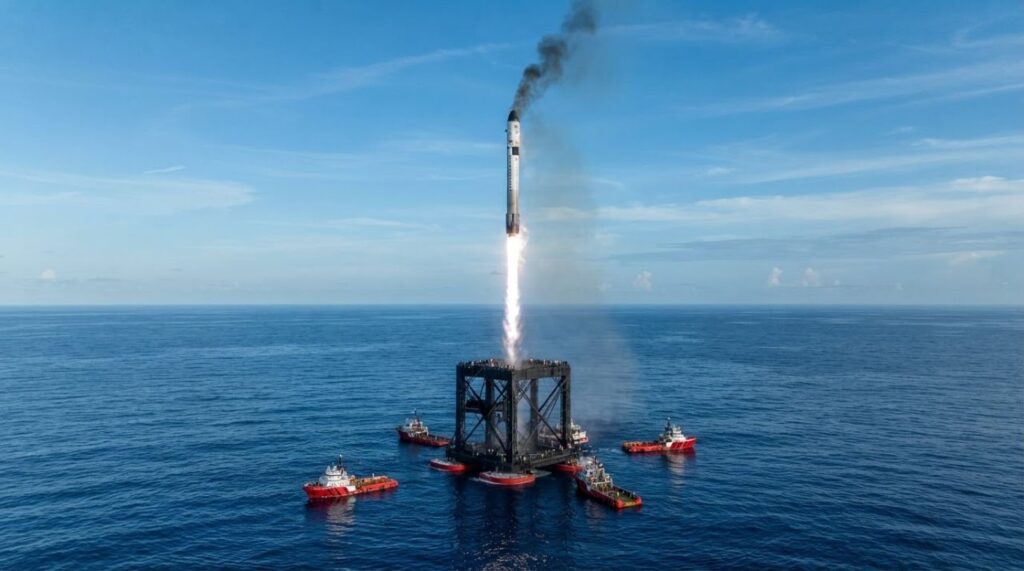
LandSpace Technologies has recovered an orbital rocket booster on land for the first time in China, after its Zhuque-3 rocket launched a satellite from the Jiuquan Satellite Launch Center and returned for a controlled vertical landing in Gansu province. The booster reportedly reduced thrust before touching down on extendable landing legs.
This follows China’s first successful sea recovery of a rocket only a month earlier. It is an important milestone because reusable boosters can dramatically lower the cost of reaching orbit. The basic logic is obvious: a rocket that can be inspected, refurbished, and flown again is more useful than a rocket that turns into extremely expensive debris after one mission.
SpaceX has routinely recovered and reused Falcon 9 boosters since 2017, a capability that helped it dominate the global launch market. China’s emerging satellite constellations have remained much more dependent on expendable rockets, which makes large-scale deployment of satellite-internet networks more difficult and expensive.
LandSpace is already a major private-space player. In 2023, it became the first company in the world to successfully launch a methane-fuelled rocket into orbit and has applied for a public listing in Shanghai. Still, a successful landing is not the end of the story. It is the start of the hard bit.
The company must prove that Zhuque-3 can be turned around quickly, safely, and cheaply. Recovering a booster once is a technological achievement. Reusing it routinely without consuming most of the savings in repairs and inspection is a commercial system. That distinction is precisely why SpaceX’s lead remains formidable, even as Chinese firms narrow the gap.
For background on the wider commercial-launch sector and reusable launch systems, the Falcon 9 programme remains the obvious benchmark.
JD.com’s German takeover becomes another China-EU battleground.
Elsewhere, the already testy relationship between Beijing and Brussels has acquired another bureaucratic knife fight.
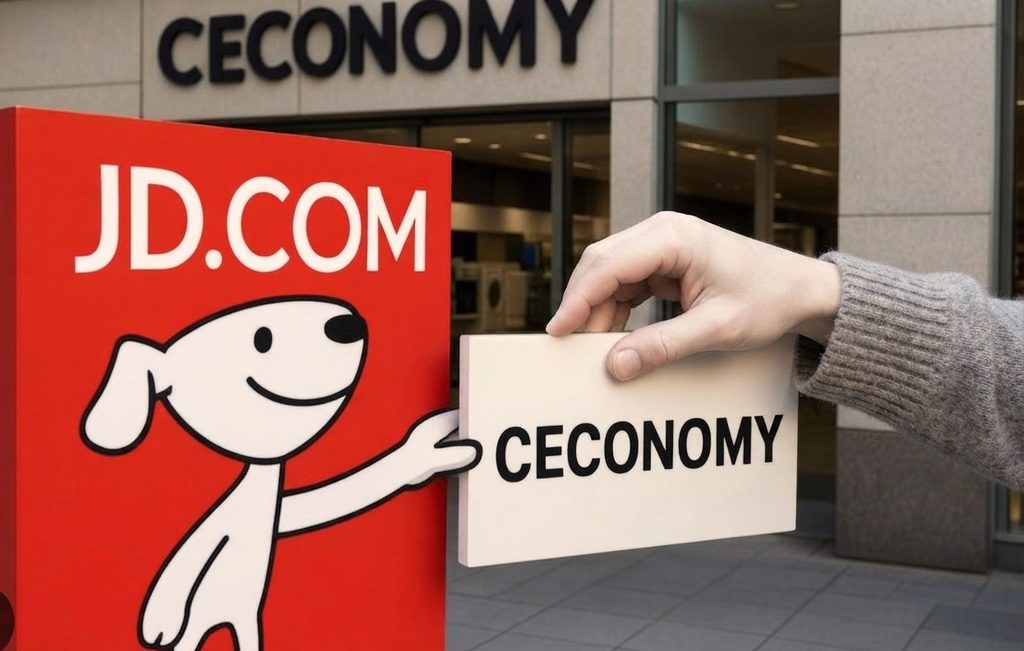
China has ordered companies and individuals not to cooperate with an EU investigation into JD.com’s planned €2.2 billion acquisition of German electronics retailer Ceconomy. The Ministry of Justice argued that the European Commission’s requests for information represented an improper use of extraterritorial jurisdiction and were unnecessarily broad under the EU’s Foreign Subsidies Regulation.
The Commission opened an in-depth review in May, making this the first Chinese corporate acquisition examined under the regulation. European regulators are considering whether JD.com received government support through preferential financing, grants, or tax incentives that could distort competition in the single market.
Beijing’s intervention gives JD.com a domestic legal basis to refuse at least some requests. The company may seek alternatives, such as anonymised data, independent audits, or information already available in Europe. But the strategy comes with an obvious problem: EU rules allow regulators to make decisions using “facts available” when a company does not provide complete information or obstructs an investigation.
In other words, refusing to cooperate may protect Chinese legal principles while making Brussels more suspicious. The Commission could draw adverse conclusions, pause its review, impose conditions, or block the deal altogether.
This is not an isolated confrontation. Beijing issued a similar prohibition in May concerning an EU investigation into Chinese security-equipment producer Nuctech. With an October deadline approaching for China and the EU to address widening trade disputes, the JD.com case is becoming a useful test of how far each side is prepared to go. Beijing says Europe is abusing the foreign-subsidy mechanism. Brussels believes it is defending fair competition. Neither position is likely to become less politically useful in the months ahead.
The European Commission’s Foreign Subsidies Regulation overview explains the legal framework now at the centre of the dispute.
Wang Yi’s South Korea visit shows why Beijing still needs the Korean Peninsula.
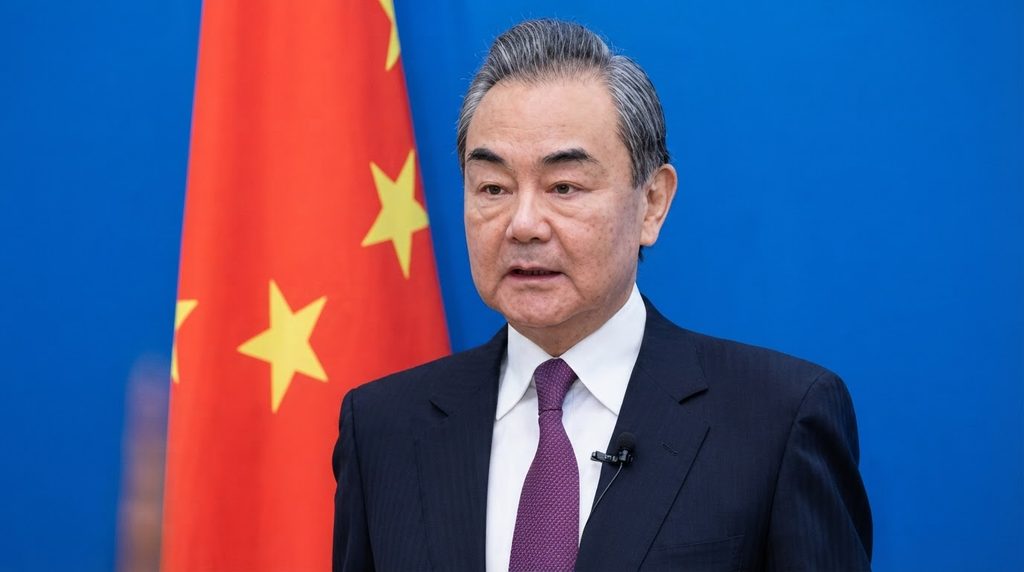
Finally, Chinese Foreign Minister Wang Yi has travelled to South Korea for the first time in five years, as Seoul seeks Beijing’s help reviving engagement with North Korea. Wang met South Korean Foreign Minister Cho Hyun before holding discussions with President Lee, shortly before the 34th anniversary of diplomatic relations between
the two countries.
South Korea wants China to play what it calls a constructive role in bringing Pyongyang back to negotiations. Seoul’s government has promoted peaceful coexistence between the two Koreas and hopes to act as a “pacemaker” for renewed dialogue between North Korea and the United States.
Washington has also shown interest in another Trump-Kim summit, with President Donald Trump expressing a willingness to meet Kim Jong Un and ordering a substantial reduction in some joint military exercises with South Korea. Pyongyang, unsurprisingly, still describes the drills as preparations for war. Kim’s sister has denied reports of direct communications between Trump and Kim.
Wang offered limited support for a possible summit, arguing that it was for Washington and Pyongyang to decide, while insisting the United States must first abandon what Beijing and North Korea call its hostile policy. North Korea added a familiar reminder of the diplomatic reality by launching several short-range ballistic missiles, its third launch of the month.
China’s interests are clear enough. Beijing wants to avoid war on its border, a refugee crisis, disruption to regional trade, and the possibility of US forces moving closer to Chinese territory. It is also concerned that North Korea’s expanding nuclear arsenal could encourage South Korea or Japan to pursue nuclear weapons of their own. At the same time, deeper defence coordination between Washington, Seoul, and Tokyo threatens to constrain China strategically.
Beijing therefore wants influence over both Koreas while ensuring that any eventual diplomatic process still requires Chinese participation. Xi Jinping’s first visit to Pyongyang in seven years, in June, underlined efforts to restore China’s status as North Korea’s most important partner, particularly as Pyongyang has strengthened military ties with Russia.
Wang’s visit also offered Beijing a chance to stabilise relations with Seoul through economics. China proposed expanded artificial-intelligence cooperation and faster negotiations over the second phase of the China-South Korea Free Trade Agreement. A possible Xi-Lee meeting at the APEC summit in Shenzhen in November would reinforce that effort.
The through-line is not subtle. China faces a property crisis rooted in the failure of its old growth model, while it competes for technological advantage in space, pushes back against European economic scrutiny, and tries to remain indispensable on the Korean Peninsula. The Evergrande sentence may be the cleanest headline. It is not the cleanest problem. China has rather a lot of those now.
Frequently Asked Questions
Why was Evergrande founder Hui Ka Yan sentenced to life imprisonment?
Hui pleaded guilty to offences including fundraising fraud and illegally accepting public deposits. He and Evergrande were also found guilty of bribery, securities fraud, and information-disclosure violations. Authorities accused him of concealing liabilities, inflating assets, and embezzling company funds.
Did Evergrande’s collapse end China’s property crisis?
No. Evergrande was a major trigger and symbol of the crisis, but falling home prices, developer stress, unfinished projects, weak land-sale revenue, and negative equity continue to affect China’s wider economy.
Why is China’s reusable rocket landing significant?
Reusable boosters can reduce launch costs and support large satellite deployments. LandSpace’s successful land recovery is an important technical milestone, although the company still needs to demonstrate fast, economical refurbishment and repeat launches.
What is the dispute over JD.com’s purchase of Ceconomy?
The EU is examining whether JD.com received state support that could distort competition under the Foreign Subsidies Regulation. China has prohibited cooperation with aspects of the investigation, arguing that Brussels is making improper and overly broad information requests inside China.
Why does China want influence over Korean Peninsula diplomacy?
Beijing wants to prevent conflict, refugee flows, and economic disruption near its border. It also seeks to limit US military influence in the region and prevent North Korea’s nuclear expansion from encouraging South Korea or Japan to pursue their own nuclear weapons.