China’s economy is increasingly resembling a two-speed train, except one carriage is packed with lithium batteries, industrial robots and AI hardware, while the rest is rattling backwards into a property crater. July’s economic data was not merely disappointing. It showed a broad deterioration in the parts of the economy that matter most for household confidence, employment, private investment and long-term stability.
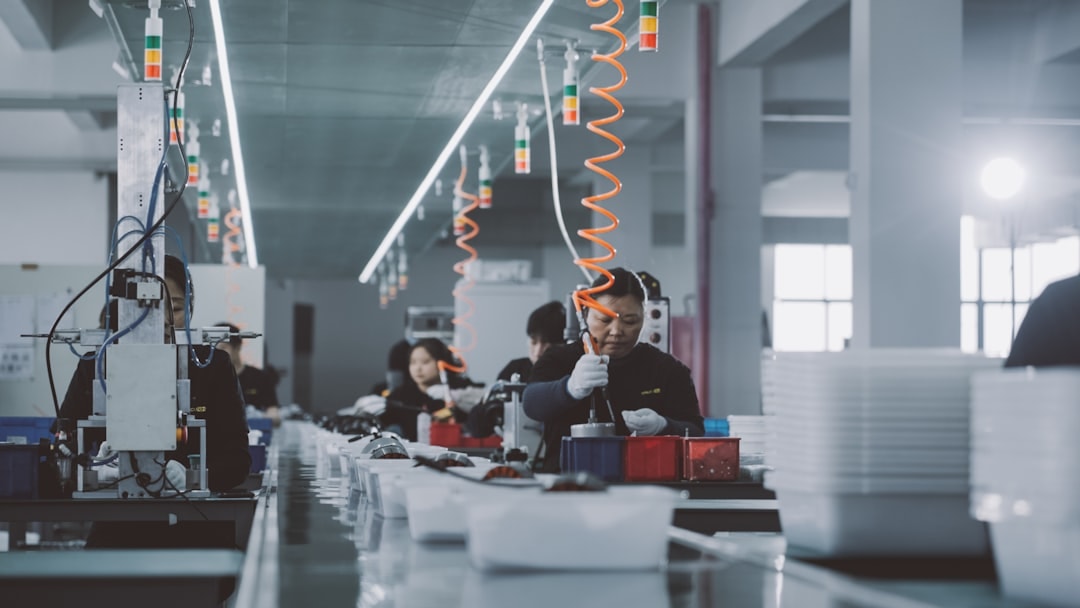
There is still industrial strength, certainly. China remains exceptionally good at building things: electric-vehicle components, batteries, advanced machinery, electronics and increasingly sophisticated technology hardware. But factories cannot indefinitely compensate for a population that is hesitant to spend, a private sector that is reluctant to borrow, and a housing market that has spent roughly five years removing wealth from households with the enthusiasm of a malfunctioning vacuum cleaner.
The problem for Beijing is that it has become very effective at supporting production while remaining far less effective at restoring confidence. That is not a small distinction. It is the distinction between an economy growing because people want to invest and consume and an economy growing because the state has instructed someone, somewhere, to build another industrial park.
Table of Contents
- July’s Numbers Were Bad Across the Board
- Weak Confidence Is the Common Thread
- The Housing Slump Still Has Not Found a Floor
- Meanwhile, the Technology Machine Keeps Roaring
- Three Risks Could Turn a Slowdown Into Something Much Worse
- More State Spending Cannot Manufacture Confidence
- Apple, Chinese Memory Chips and Washington’s Supply-Chain Anxiety
- A Compressed Xi-Trump Summit Signals Damage Control, Not a Grand Bargain
July’s Numbers Were Bad Across the Board
China’s industrial production rose by 4.5% year on year in July, down from 5.3% in June and below expectations. That would be an underwhelming figure at any time. It is particularly concerning when set against the scale of state support, industrial policy and public investment flowing into the economy.
Retail sales rose just 0.6%. Fixed-asset investment fell 6.7% in the first seven months of 2026 compared with the same period a year earlier. Property investment plunged 19.2%, setting a fresh record decline. Infrastructure investment reportedly dropped at a double-digit pace in July as well.
In other words, consumption was weak, property was dreadful, investment was shrinking, and even infrastructure—a traditional emergency lever for China’s policymakers—failed to provide much of a cushion.
BNP Paribas China chief economist Jacqueline Rong estimated that the economy may have grown at an annualised rate of around 4.1% in July. That matters because Beijing needs roughly 4.3% growth in the second half of the year to achieve the lower end of its official 4.5% to 5% annual target.
Heavy rain, high temperatures and strong winds disrupted factories, ports and electricity supplies in several regions. Weather clearly played a role. But blaming the slump entirely on bad weather would be the economic equivalent of blaming a house fire on the smell of smoke. The weakness was too broad, too entrenched and too familiar.
For a wider look at why a headline recovery narrative has appeared increasingly fragile, read this analysis of China’s uneven recovery, technology constraints and wider geopolitical pressures.
Weak Confidence Is the Common Thread

The most worrying figures were arguably in credit. Chinese financial institutions recorded a net decline of 340 billion yuan in new loans in July, when markets had expected an increase of 126 billion yuan. Household loans fell by around 460 billion yuan. Corporate borrowing declined by roughly 130 billion yuan.
This is not what a healthy recovery looks like. Interest rates can be low, liquidity can be plentiful, and state banks can be urged to lend until they are blue in the face. None of it changes the central problem: households and businesses do not appear eager to take on more debt.
That reluctance makes sense. Families facing falling home values and uncertain employment may prefer to save. Businesses confronting soft domestic demand, weak margins and uncertain export conditions may decide that borrowing money to expand capacity is a rather strange way to lose money faster.
Aggregate financing has remained stronger largely because the state is borrowing. Government-directed credit, fiscal spending and policy lending can keep headline activity moving. Yet they are a poor substitute for private demand. State-led borrowing may construct roads, factories and industrial clusters, but it cannot easily persuade a household worried about its job prospects to buy a new apartment or upgrade its appliances.
Official urban unemployment rose to 5.2% in July. Even taking that figure at face value, it is an additional reason for consumers to remain cautious. Income expectations are subdued, and there is little sign that confidence in property prices has returned.
The Housing Slump Still Has Not Found a Floor
China’s property downturn is the great unresolved question hanging over the entire economy. In July, new-home prices across 70 cities fell 0.18% from June, worsening from a 0.15% fall in the previous month. Resale values declined 0.29%.

The modest improvement in the pace of resale-price declines offers very little comfort. Any signs of resilience remain concentrated in major cities and in select properties located in desirable areas. Vast sections of lower-tier China remain under pressure, with weaker demand, large housing inventories and diminishing expectations that prices will recover anytime soon.
That has consequences well beyond developers and mortgage holders. Housing is a major store of household wealth. Falling prices make consumers feel poorer, which encourages saving and discourages discretionary spending. Local governments also depend heavily on land sales, so a weak property market strips them of revenue just when they are expected to support growth and public services.
Beijing and Shanghai have loosened some home-buying restrictions, but policymakers have avoided a truly large rescue package. The result has been a familiar pattern: incremental measures, brief bursts of optimism, then another set of figures showing that the national market remains badly impaired.
The wealth effects from the property slump are now too large to ignore. As explored in this assessment of China’s deepening property losses and industrial transformation, even a slower pace of home-price declines does not erase the financial damage already inflicted on households, developers and local authorities.
Meanwhile, the Technology Machine Keeps Roaring
Here is the awkward contradiction. China’s advanced industrial sectors are growing at a pace that would make many developed economies delirious with envy.
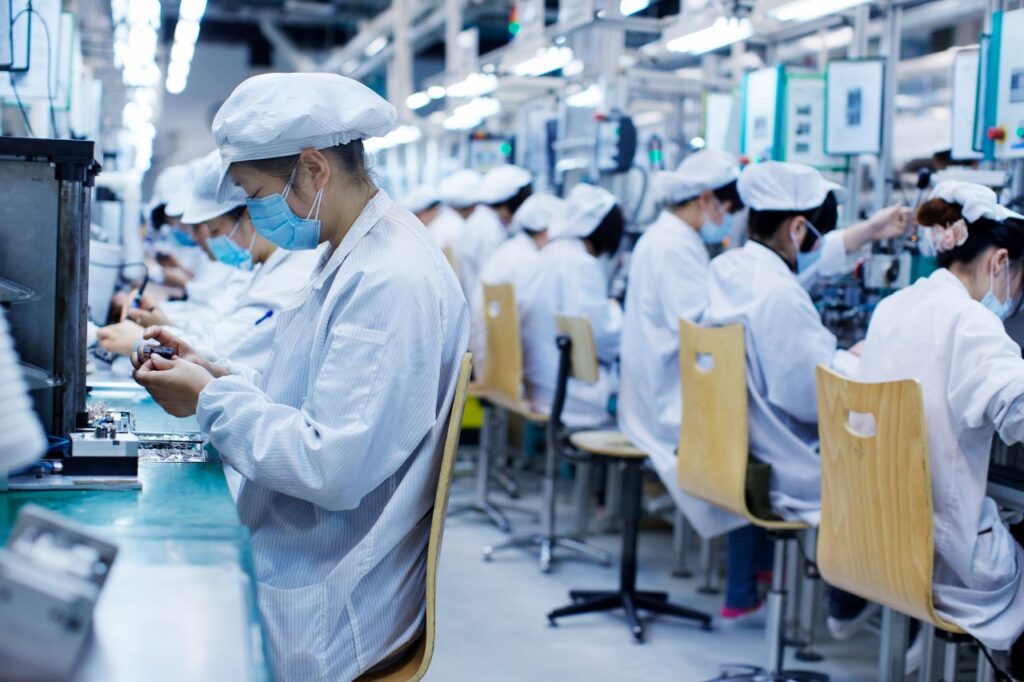
Industrial output increased 5.3% in the first seven months of the year. Equipment manufacturing rose 9.7%, while high-tech manufacturing expanded 13.8%. Production of 3D-printing equipment jumped 52.3%. Lithium-ion battery output climbed 40.2%. Industrial robot production rose 28.5%.
In July alone, high-tech manufacturing grew 16.9%, digital-product output rose 17.3%, and electronic-equipment production surged by more than 19%.
These are not imaginary achievements. China’s investments in artificial intelligence, semiconductors, robotics, digital equipment and advanced machinery are producing real industrial capacity. Global demand for technology goods has also supported exports, which rose 23.9% in July.
But this is also where the growth story becomes rather less reassuring. Société Générale economists have described China’s economy as increasingly “K-shaped”: technology and policy-backed industries rising sharply, while property, consumption, private investment and much of the conventional economy either stagnate or contract.
It is an apt description. The upper arm of the K contains chipmaking, batteries and robotics. The lower arm contains households with depreciating apartments, developers with too much debt, local governments with shrinking land-sale income and private firms unwilling to invest.
China may become a world-leading advanced-manufacturing powerhouse. That does not automatically mean it has solved the problems facing hundreds of millions of people outside its strongest coastal and technological hubs.
Three Risks Could Turn a Slowdown Into Something Much Worse
The first risk is deflation. If households continue to save rather than spend, companies may cut prices to shift excess inventory. Lower prices sound appealing in theory, but persistent deflation increases the real burden of existing debt, squeezes corporate profits and encourages consumers to postpone purchases in the hope that prices will fall further.
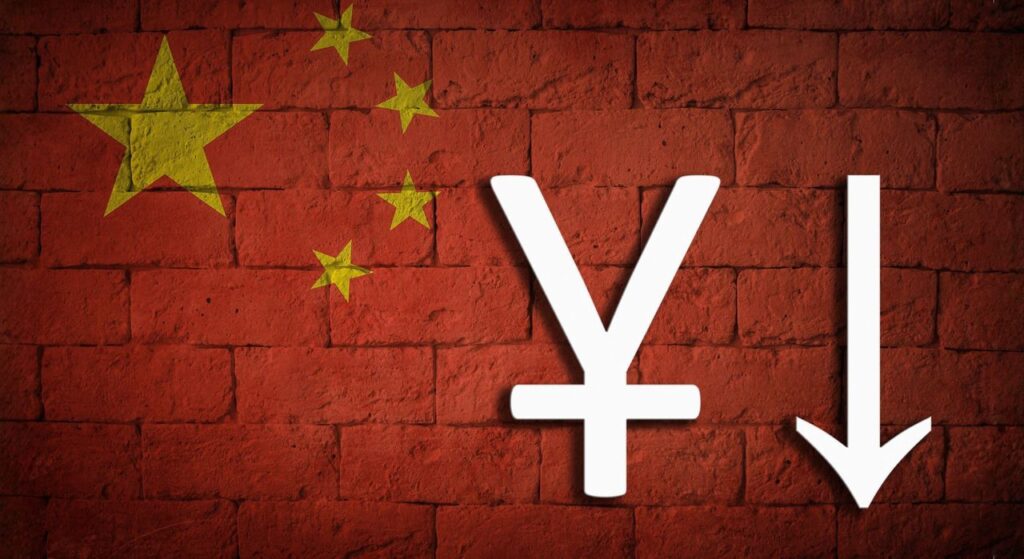
That cycle is difficult to break once it becomes embedded. Japan’s long experience with weak demand and deflation remains a warning that cheap money alone does not magically create confidence. The International Monetary Fund’s explanation of inflation and deflation is useful here: falling prices can become economically destructive when they reflect collapsing demand rather than improved productivity.
The second risk is a deeper property collapse. More home-price declines would further erode household wealth and worsen the finances of developers and local governments. Local authorities could then cut infrastructure spending and public services, adding yet another drag to growth.
The third is external. China’s advanced-manufacturing capacity is expanding much faster than domestic demand. That encourages firms to sell more abroad. Yet the more Chinese manufacturers attempt to export their way out of domestic weakness, the more likely they are to provoke tariffs, trade restrictions and anti-subsidy investigations from the United States, Europe and emerging economies concerned about overcapacity.
The nightmare scenario is all three pressures arriving together: property deterioration, deflation and escalating protectionism. At that point, banks would face growing losses from developers, local-government financing vehicles and struggling companies. Private investment could fall further, unemployment could rise, and Beijing would face an unpleasant choice between accepting much weaker growth or deploying a huge debt-funded stimulus programme.
More State Spending Cannot Manufacture Confidence
Chinese policymakers have not announced a large-scale rescue package. Instead, they have pledged to accelerate existing fiscal outlays and use policy-based financial instruments, including a planned 800 billion yuan programme.
That approach may help stabilise official growth figures. It may sustain industrial activity, public works and politically important technology sectors. It may even prevent a more immediate downward lurch.
But it also risks worsening the structural imbalance. More state-directed investment can create more factories, infrastructure and production capacity. It does not necessarily produce households willing to spend or entrepreneurs willing to risk their own capital.
This is the core issue. China’s technology boom is genuine, but it is not large enough to carry the entire economy—and it may never be. The country needs a broader restoration of consumption, property confidence and private-sector investment. Without that, it risks becoming an advanced manufacturing superpower with pockets of extraordinary prosperity sitting beside a much larger economy caught in stagnation.
Apple, Chinese Memory Chips and Washington’s Supply-Chain Anxiety
China’s technology growth is also colliding with Washington’s semiconductor strategy. The Trump administration is reportedly pressing Apple not to buy Chinese memory chips as a global memory shortage pushes technology companies to consider alternative suppliers.

Apple has reportedly tested memory chips from Chinese manufacturers CXMT and Yangtze Memory Technologies for possible use in products sold within China. AI data centres are consuming enormous quantities of memory, driving shortages and raising component prices across the electronics industry.
Memory chips are a particularly awkward category because they generally require less customisation than many advanced semiconductors. Apple can legally buy off-the-shelf chips and negotiate commercial terms with Chinese suppliers, even while US companies require government licences before sharing certain technical product information with those firms.
That leaves Washington caught between competing priorities. Micron, the US memory-chip maker, has urged the administration to prevent Apple from using Chinese components, arguing that it would undermine domestic manufacturing and America’s broader semiconductor strategy. Apple, meanwhile, has promised substantial investment in the United States and expanded Mac Mini assembly in Texas, while maintaining a supply chain that remains overwhelmingly Asian.
The dispute neatly captures the wider dilemma. Washington wants resilient, domestic and allied supply chains. Major technology companies want reliable components at workable prices. Chinese firms want to move up the value chain. And AI is consuming so much hardware that every party is now discovering how difficult it is to separate commercial reality from national security policy.
A Compressed Xi-Trump Summit Signals Damage Control, Not a Grand Bargain
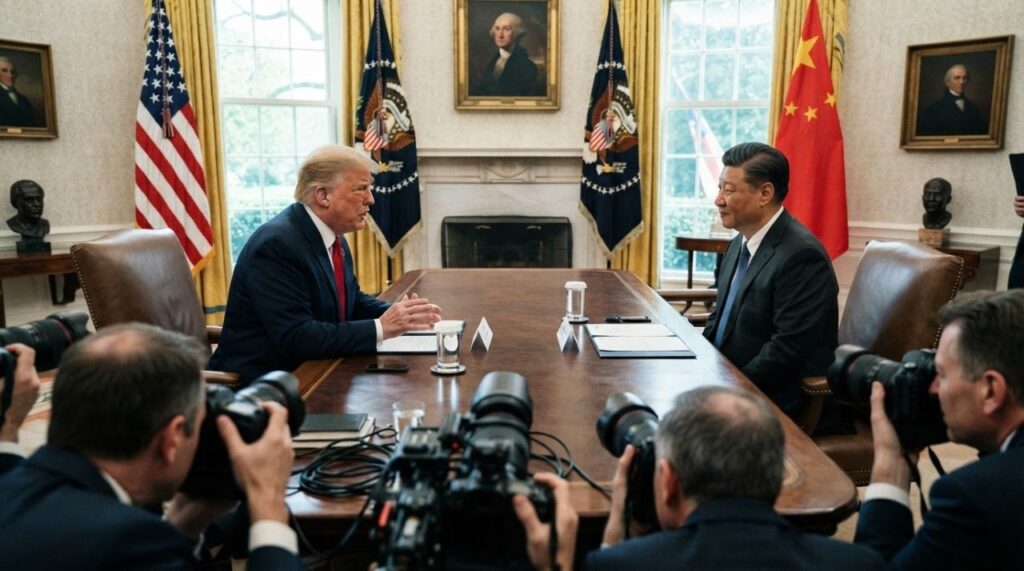
Xi Jinping is expected to travel to the United States next month for a tightly managed summit with President Donald Trump. The reported itinerary is strikingly short: arrival in Washington late on September 23, meetings at the White House on September 24, then departure the following day.
Xi is not expected to attend the United Nations General Assembly in New York, despite the general debate beginning on September 22. That suggests the trip will be built around direct leader-to-leader diplomacy rather than a broader international appearance. It also suggests there is little appetite for improvisation.
The summit comes amid persistent disputes over trade, technology, academic research and security. The Pentagon has ordered 30 US universities to audit foreign research partnerships, including links to Chinese institutions and bodies associated with former Confucius Institutes. Institutions that fail to comply could lose access to future federal funding.
Military tensions remain equally stubborn. Chinese state media has highlighted reported difficulties involving the USS Benfold in the South China Sea, while the USS George Washington is expected to temporarily leave the Pacific to replace the USS Abraham Lincoln in the Middle East. The Lincoln’s extended deployment in support of operations against Iran temporarily reduces US carrier presence in Asia.
None of this is likely to be solved in a roughly 48-hour visit. The more realistic goal is stabilisation: setting boundaries, lowering the risk of escalation and perhaps finding narrow areas where both governments can claim a modest win without appearing weak.
That may be the best available outcome. A comprehensive breakthrough on tariffs, export controls, supply chains, research links and military risk management would require far more than a brief White House meeting. For now, both sides appear to be managing a relationship in which economic dependence and strategic suspicion have become inseparable.
Frequently Asked Questions
Why is China’s July economic data so concerning?
The weakness was broad rather than confined to one sector. Retail sales barely rose, fixed-asset investment contracted, new lending fell sharply and property investment recorded a fresh record decline.
What does a K-shaped Chinese economy mean?
It describes a widening divide between fast-growing technology and state-supported manufacturing sectors, and weaker parts of the economy, such as property, household consumption, private investment and conventional industries.
Why do falling home prices matter beyond real estate?
Housing represents a major share of household wealth and local-government revenue. Falling prices reduce consumer confidence, weaken spending, hurt developers and shrink land-sale income for local authorities.
Can China export its way out of weak domestic demand?
Exports can provide support, particularly in advanced manufacturing, but relying on them creates a greater risk of tariffs and trade restrictions from countries concerned about Chinese overcapacity.
What is likely to be discussed at the Xi-Trump meeting?
Likely subjects include tariffs, technology restrictions, semiconductor supply chains, research-security rules and military risk management. The short schedule suggests an effort to stabilise relations rather than secure a sweeping agreement.