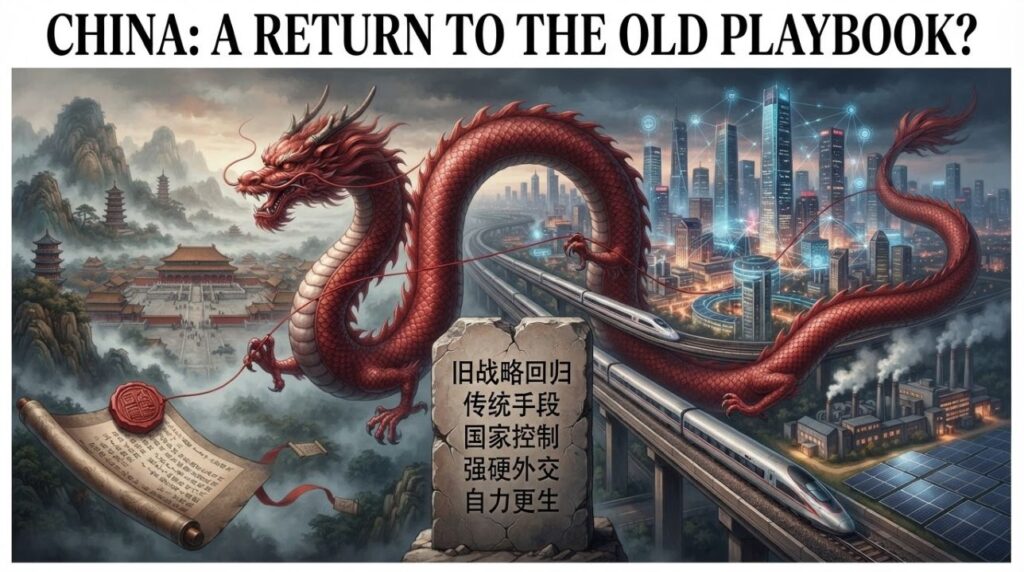
China’s leadership is busy making the past useful again. In Beijing, that means celebrating the reform-era legacy of Jiang Zemin and Zhu Rongji while carefully sanding down the bits that look awkward in 2026: political repression, mass layoffs, deepening inequality and the debt distortions now threatening the economy they helped build.
Outside Beijing, the country is experimenting with a new route through the Arctic, where melting ice, Red Sea insecurity and Russia’s growing dependence on China have created a potentially useful—if deeply hazardous—alternative to the Suez Canal. And in Shanghai, a spectacular stock-market debut for memory-chip producer CXMT has offered the clearest illustration yet of how Beijing intends to fund the next stage of strategic competition with Washington.
Put together, these stories reveal the contours of China’s emerging model. The Communist Party wants the legitimacy of the reform era, the logistical resilience of a more fractured world, and a financial system capable of turning household savings into semiconductors, artificial intelligence and advanced manufacturing. Whether it can achieve all three without creating another property-style bubble is another question entirely.
Table of Contents
- Jiang Zemin’s centenary is about continuity, not reconsideration
- The reform-era story has a large asterisk
- China’s Arctic Express is a bet on a hotter and more dangerous world
- CXMT’s IPO shows Beijing wants capital markets in the chip war
- Cheap capital is useful; it is not a substitute for technology
Jiang Zemin’s centenary is about continuity, not reconsideration.
China’s senior leadership gathered in Beijing to mark the 100th anniversary of Jiang Zemin’s birth in a ceremony attended by the Politburo Standing Committee and other top officials. This was not, of course, an open discussion of Jiang’s record. Party commemorations are not really designed for that sort of thing. They are political rituals: exercises in continuity, discipline and historical ownership.
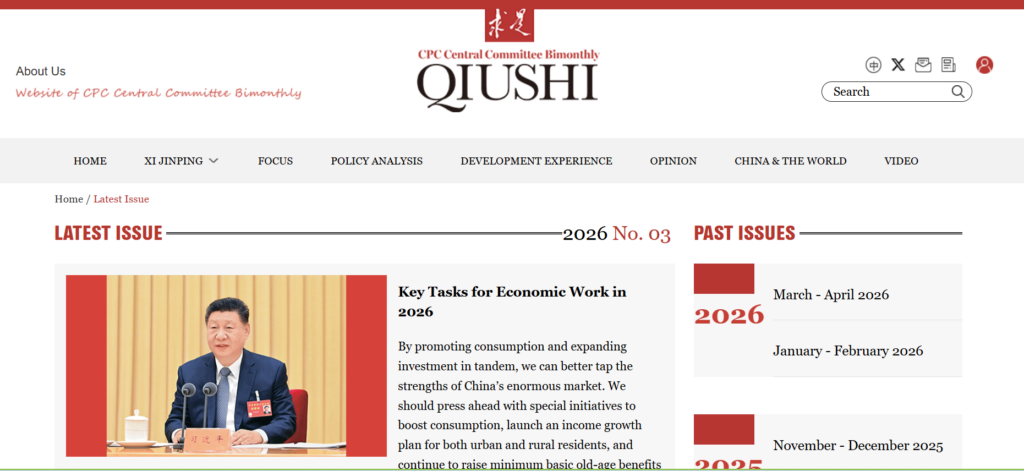
Before the anniversary, China’s propaganda system released a 12-part series on Jiang’s life, presenting him as a central figure in the development of “socialism with Chinese characteristics". Qiushi, the Party’s leading theoretical journal, also published a lengthy article tying Jiang’s contribution directly to Xi Jinping’s current agenda. The point was difficult to miss: the Party’s history is a single, uninterrupted march toward national rejuvenation, and Xi sits at the current summit of that march.
Jiang’s career certainly mattered. Born in Jiangsu in 1926 and trained as an electrical engineer, he rose through the Party bureaucracy before becoming Shanghai’s Party secretary in 1987. He was elevated to national leadership after the 1989 Tiananmen Square crackdown, replacing Zhao Ziyang as Communist Party general secretary.
At first, Jiang was widely seen as a compromise figure—someone without an overwhelming national faction or an independent power base. Yet he steadily consolidated his position and led China from 1989 until Hu Jintao became party leader in 2002.
His time in power coincided with China’s emergence as a major economic and diplomatic force. Market reforms accelerated, foreign investment expanded and China joined the World Trade Organization in 2001. That accession was one of the pivotal events in the global economy of the past quarter-century, helping turn China into the manufacturing centre of the world and embedding it far more deeply into global supply chains.
Jiang’s government also oversaw Hong Kong’s 1997 handover, Macau’s return in 1999, an improvement in US-China relations after several difficult crises, and the continuing modernisation of the People’s Liberation Army. His “Three Represents” theory opened Communist Party membership to private entrepreneurs, acknowledging that businesspeople had become too economically important to remain outside the political tent.
It was, in other words, a period of extraordinary growth and widening global integration. It was also a period in which the Party’s political monopoly remained entirely non-negotiable.
The reform-era story has a large asterisk
The sanitised version of the Jiang era is easy enough to understand. Prosperity, confidence, globalisation, skyscrapers, factory floors and an increasingly assertive China. But the model carried costs that Beijing’s official retrospective has little interest in dwelling on.
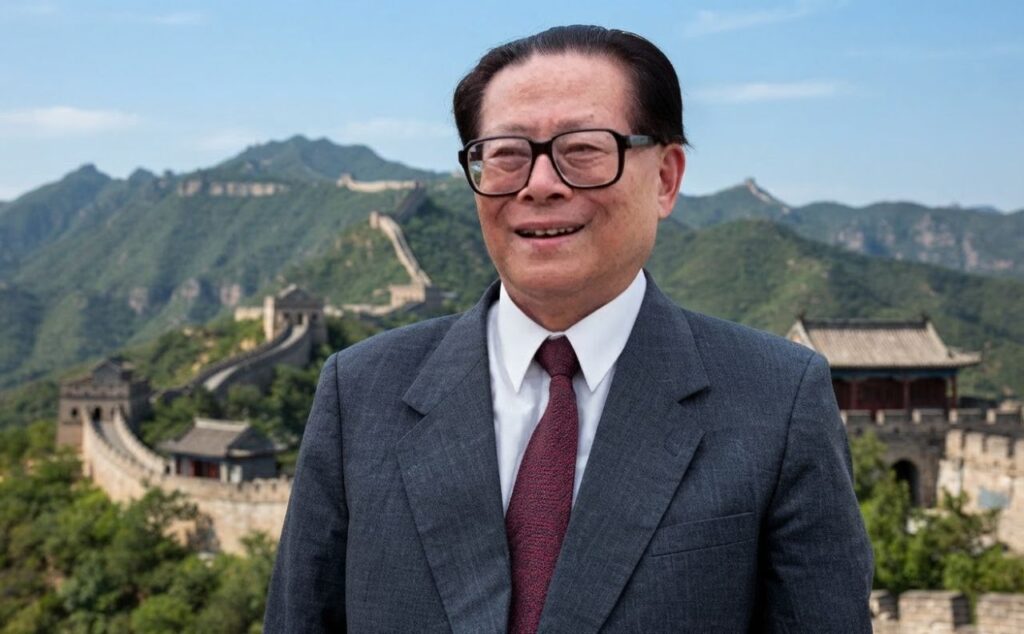
Jiang came to power immediately after the violent suppression of the 1989 democracy movement. Political opposition, independent civil society and the media remained tightly restricted throughout his tenure. In 1999, his administration launched a severe campaign against Falun Gong, involving mass detention and widespread allegations of torture and other abuse. Such allegations are difficult to independently verify, and accounts surrounding Falun Gong can themselves be politically charged, but the broader reality of a major state repression campaign is not seriously disputed.
Then there was the economic restructuring. Jiang and Premier Zhu Rongji made China’s state sector more efficient, but that efficiency came with a brutal social bill. Tens of millions of workers lost their jobs as state-owned enterprises were overhauled, merged or closed. Corruption expanded rapidly. Inequality surged. And while reform generated immense wealth, it also helped create the uneven economy China is still attempting to manage today.
Zhu, who died aged 97 shortly before Jiang’s centenary, was perhaps the most formidable economic official of that era. Premier from 1998 to 2003, he helped restructure state-owned enterprises, reform the banking system and negotiate WTO accession. Abroad, he gained a reputation as unusually candid and forceful—a Chinese official willing to speak openly about the country’s economic problems.
But Zhu’s reputation as an uncomplicated reformer has always been somewhat too neat. His policies strengthened the central state’s fiscal and administrative authority, while political urgency repeatedly beat deeper institutional reform. The financial system remained state-led, credit allocation remained distorted and the foundations were laid for debt problems that would become genuinely alarming decades later.
That tension remains central to understanding modern China. Beijing wants the wealth and national power created by reform and globalisation. It does not want the political liberalisation, independent institutions or social disruptions that might accompany a more genuinely open system.
As China confronts slowing growth, property-sector damage and increasingly difficult external conditions, the nostalgia for the Jiang-Zhu period is understandable. But it is also selective. The Party is celebrating an era when China opened economically while retaining political control—and hoping that formula can somehow be repeated in a much less forgiving world.
China’s Arctic Express is a bet on a hotter and more dangerous world.
The next part of that strategy is much colder. Chinese shipping company Sea Legend has launched the first regular container service between Asia and Europe through Arctic waters, testing whether Russia’s Northern Sea Route can become a commercially viable alternative to established shipping lanes.
The vessel, the Dubai Tower, departed from Ningbo-Zhoushan bound for Felixstowe in Britain. With capacity for 1,740 twenty-foot containers, it is travelling along Russia’s northern coast under the rather bluntly named “Arctic Express” service.
The attraction is obvious. The journey could take roughly 18 to 20 days, compared with more than 40 days for routes around Africa’s Cape of Good Hope. That detour has become much more common as carriers avoid the Red Sea and the Suez Canal due to attacks by Houthi forces. Conflict in the Middle East has also increased uncertainty around the Strait of Hormuz, one of the world’s most strategically vital maritime chokepoints.
China’s energy and shipping exposure to regional instability has become increasingly obvious, as explored in this analysis of Beijing’s push for an Iran ceasefire and its concerns over the Strait of Hormuz disruption. The Arctic route is not a replacement for established trade corridors, but it is a useful hedge when those corridors begin looking less reliable.
Sea Legend completed a trial journey in 2025 and plans eight crossings between August and late October. That makes this the most substantial commercial experiment on the route since a container ship completed an Arctic passage in 2018.
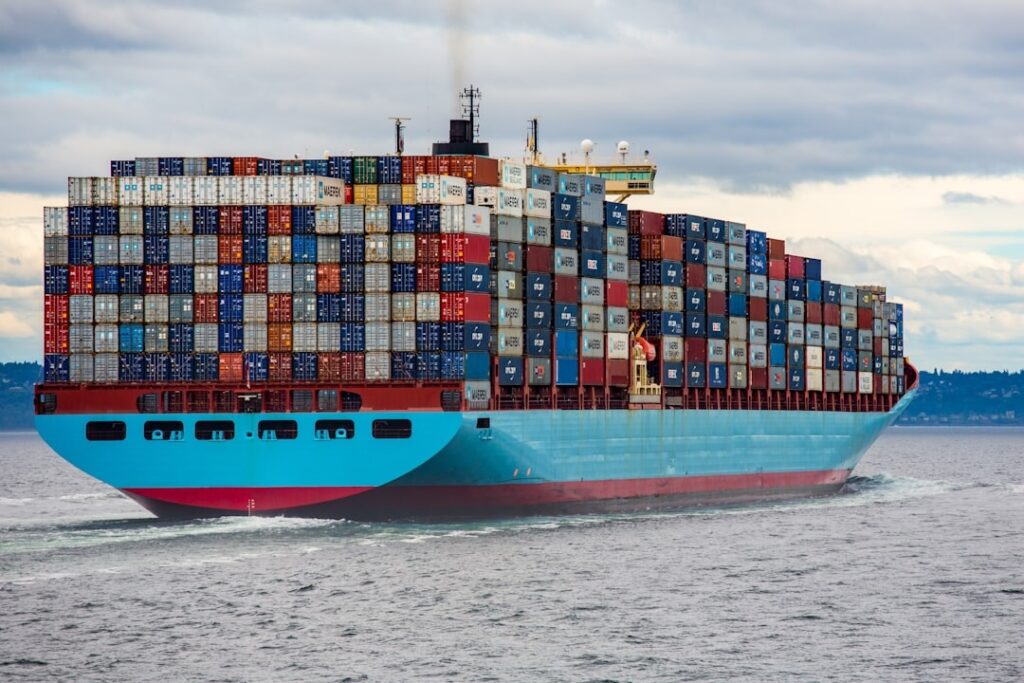
The commercial logic is strengthened by climate change. Nearly half of the Arctic region’s summer ice has disappeared over the past five decades, widening the period in which ships can navigate the route. Fuel represents more than 70% of a vessel’s operating costs while at sea, so a dramatic reduction in distance becomes more attractive when oil prices rise.
At oil prices around $90 per barrel, credit insurer Coface estimates that liquefied natural gas shipments through the Arctic could cost around 33% less than taking the Cape route. Dry bulk cargoes such as grain might be roughly 8% cheaper. The route could also appeal to shippers carrying temperature-sensitive goods, including electric vehicles, lithium batteries and solar panels.
But there is a sizeable difference between “shorter” and "safe". Arctic insurance premiums are around 40% higher than those for the Cape route. Ships face moving ice, rapidly changing weather, long periods of darkness and the possible need for icebreaker support. If a ship breaks down in the middle of the Arctic, help is not exactly a short helicopter ride away.
The environmental risks are worse still. Oil and heavy fuel spills decompose slowly in cold conditions and can become exceptionally difficult to remove beneath ice. Black carbon emissions can settle on snow and ice, reducing reflectivity and accelerating warming. Russia’s emergency-response infrastructure in the Arctic is limited, meaning a serious accident could become a disaster with very few good options.
Then there is Russia. Moscow claims control over the Northern Sea Route. Rosatom, the state nuclear company, issues navigation permits and operates the nuclear-powered icebreakers used to escort vessels. For Western shipping companies, any savings must be weighed against sanctions exposure and a new level of dependence on Moscow.
For Beijing, however, this is bigger than shipping. Xi Jinping has promoted a “Polar Silk Road” since 2017, and Russia’s isolation after its invasion of Ukraine has given China greater access and leverage in the Arctic. The scale remains tiny—only 23 cargo ships completed the Northern Sea Route last summer, while more than 30 vessels pass through Suez every day—but that is precisely why this matters. China is establishing a foothold before the route becomes strategically indispensable.
CXMT’s IPO shows Beijing wants capital markets in the chip war.
If the Arctic Express is an experiment in logistical resilience, CXMT’s Shanghai listing is an experiment in financial mobilisation. And it was not subtle.
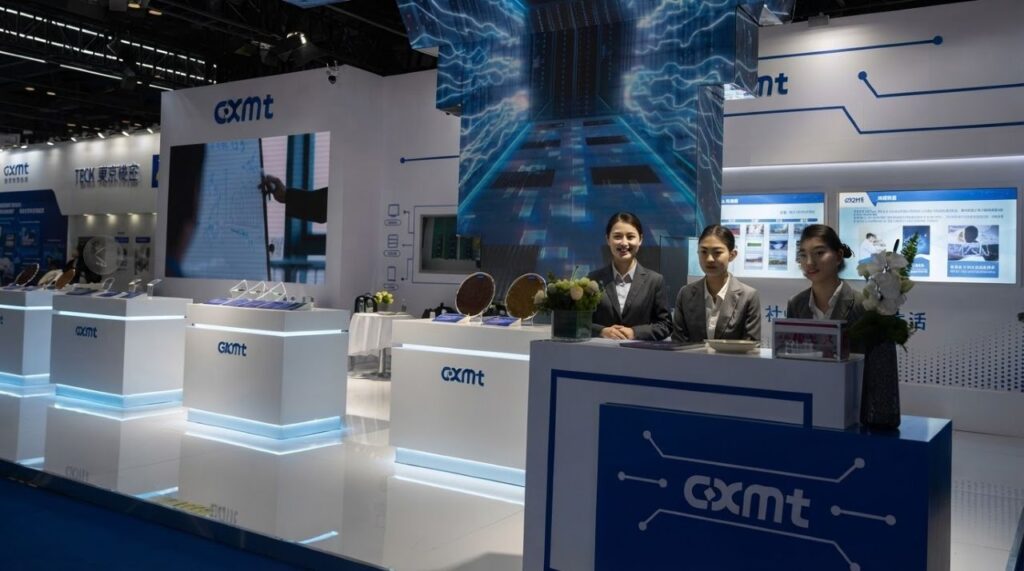
Shares in the Chinese memory-chip manufacturer surged more than 500% within hours of their debut, briefly making CXMT the most valuable mainland-listed company and placing it ahead of Industrial and Commercial Bank of China. For a country trying to build semiconductor self-sufficiency under tightening US technology restrictions, that is not merely a stock-market oddity. It is a political statement.
CXMT is China’s strongest domestic challenger to foreign memory-chip producers, including Samsung, SK Hynix and Micron. Its listing proceeded with unusual speed: fewer than eight months passed between filing and debut, compared with the years many Chinese companies had historically spent waiting for approval.
The offering raised about $9.8 billion, making it one of China’s largest recent IPOs. Yet the shares closed their first trading session 466% above the offering price, which rather loudly suggested that the company had been sold far below what investors were prepared to pay.
China’s conservative IPO pricing model is designed to protect buyers from immediate losses. In this case, it also meant CXMT raised much less than it might have secured in a more market-driven sale. SK Hynix, by comparison, recently raised $26.5 billion through a US share offering.
That contrast points to the central challenge. Beijing can direct capital, accelerate approvals, encourage institutional support and stabilise a market when it becomes inconveniently volatile. But it cannot simply decree a financial system as deep as America’s.
Chinese technology firms have raised around $217 billion through IPOs and bond sales over the past two years. US companies raised approximately $1.4 trillion over the same period—more than six dollars for every dollar secured by Chinese counterparts. The bond-market gap is similarly absurd: Chinese technology firms issued at least $38 billion in bonds this year, compared with $578 billion raised by American peers.
Beijing’s response is to use what it has. China has roughly $26 trillion in household savings, and policymakers want more of that money flowing away from property, consumer companies and traditional sectors toward semiconductors, AI and advanced manufacturing. Regulators are fast-tracking strategic listings, widening bond-market access and leaning on long-term investors to support favoured companies.
When Chinese technology shares fell sharply in July, state funds and regulators moved quickly to stabilise the market. The intervention was not solely about CXMT, but its impending debut reportedly influenced the timing. Such is the nature of China’s capital markets: they are markets, certainly, but they are also instruments of industrial policy.
This push has a fiscal logic too. Local governments are heavily indebted, while state-owned banks are often wary of lending to young, loss-making businesses with huge research budgets. Capital markets offer a way to fund national-priority industries without forcing the government to personally bankroll every chip plant, AI lab and advanced manufacturer.
It also fits into Beijing’s broader effort to compete with US technological power while navigating restrictions on hardware and finance. The stakes have risen sharply amid allegations of AI-model extraction and growing trade-security tensions, issues examined in this report on AI theft allegations and America’s changing trade posture.
Cheap capital is useful; it is not a substitute for technology.
China does possess one meaningful advantage: borrowing is much cheaper. Major Chinese technology companies have issued bonds this year with an average coupon of 1.9%, more than three percentage points below their US counterparts. CATL, the battery producer, sold five-year yuan notes at a coupon of just 1.58%. LG Energy Solution paid 5.25% for comparable dollar debt.

More major listings are reportedly coming. AI developers Z.ai and MiniMax are pursuing mainland offerings after Hong Kong debuts. Moonshot AI, the company behind Kimi models, could list within months. DeepSeek is also reportedly preparing for a possible IPO.
The obvious risk is that political enthusiasm starts masquerading as commercial wisdom. CXMT trades at a substantial premium to established global memory-chip makers, suggesting scarcity and national importance may be doing more work than current profits. China has seen this movie before. State support can create extraordinary manufacturing scale—as solar panels and electric vehicles demonstrate—while simultaneously creating overcapacity, vicious competition and collapsing margins.
There is an even more politically sensitive danger. If ordinary Chinese households are encouraged to pour savings into a strategic industry and that industry subsequently implodes, the losses do not remain confined to the balance sheets of speculative technology firms. China’s property collapse has already shown what happens when large numbers of families discover that the great national growth story was not quite as safe as advertised.
Ultimately, money alone will not decide the technology contest. China still faces weaker domestic AI chips and US restrictions on advanced semiconductor equipment. Success depends on talent, engineering, innovation and commercialisation—not just cheap credit and an enthusiastic queue of retail investors.
Still, Beijing does not necessarily need to match Washington dollar for dollar. UBS estimates that Chinese AI models cost less than 10% as much to train as global leaders, while their API prices are below 20% of comparable foreign models. China’s aim may be less about winning a spending contest than deploying AI at an enormous scale through low-cost engineering, inexpensive capital and manufacturing capacity that remains extraordinarily difficult to replicate.
That is the new Chinese proposition: control the story of the past, diversify the trade routes of the present and mobilise the savings of the future. It is ambitious, coherent and very risky. Which, in fairness, is a rather good description of China’s economic model in general.
Frequently Asked Questions
Why is China commemorating Jiang Zemin now?
The centenary reinforces the Communist Party’s preferred narrative of political continuity. Official messaging highlights Jiang’s role in economic development and national strength while connecting his legacy to Xi Jinping’s current leadership and modernisation agenda.
What made Jiang Zemin’s era economically important?
China accelerated market reforms, expanded foreign investment and joined the World Trade Organization in 2001 during Jiang’s leadership. These developments helped establish China as a central hub in global manufacturing and trade.
Why would shipping companies use the Arctic route?
The Northern Sea Route can reduce Asia-Europe travel times to roughly 18 to 20 days, compared with more than 40 days around the Cape of Good Hope. It has become more attractive as Red Sea insecurity disrupts Suez Canal shipping and melting summer ice widens the Arctic navigation window.
What are the main risks of Arctic shipping?
Ships face higher insurance costs, ice hazards, difficult weather, darkness, limited rescue infrastructure and potentially severe environmental consequences from an accident. The route also requires engagement with Russian authorities and can expose operators to geopolitical and sanctions risks.
Why does CXMT’s stock-market debut matter?
CXMT is a leading Chinese challenger in memory chips, a strategically important sector where China remains dependent on foreign technology. Its rapid listing and extraordinary share-price rise show Beijing’s effort to use domestic capital markets to finance semiconductor and AI development.