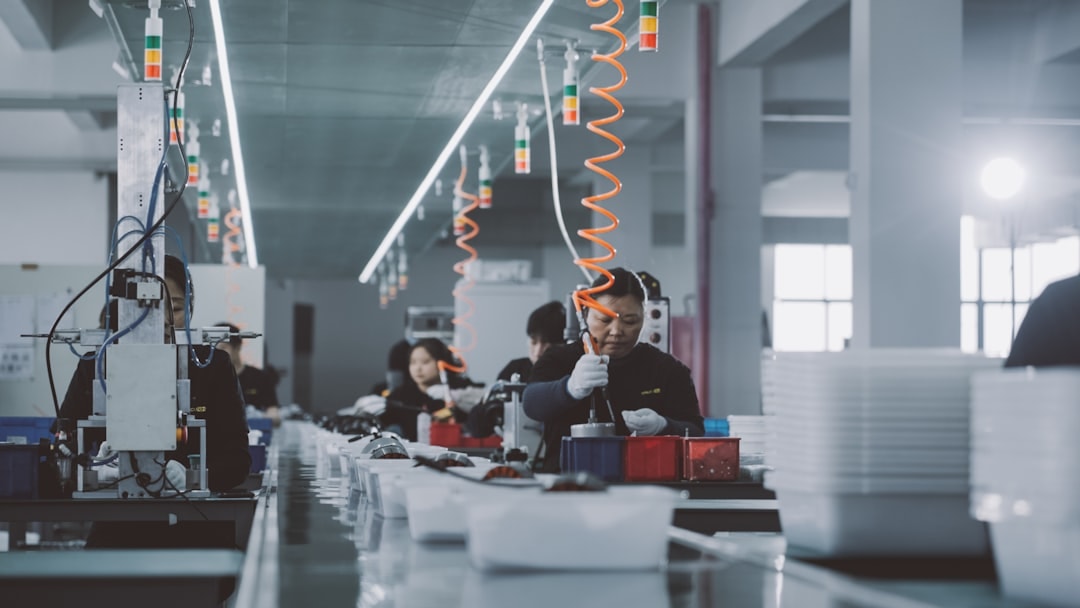

Photo by Jason Mavrommatis on Unsplash
Three developments underline the pressure building around China’s economy and its place in global trade: Washington is raising barriers around drones and drone components, Chinese households are becoming more cautious about overseas travel, and China’s enormous manufacturing surplus is intensifying fears of a wider global economic shock.
These are not isolated stories. They all reflect a world in which strategic industries are being protected, consumer confidence remains fragile, and countries are increasingly unwilling or unable to absorb ever-larger volumes of Chinese manufactured goods.
Table of Contents
- Washington raises tariffs on drones and drone components
- Chinese outbound travel is still recovering, but households are more selective
- China’s trade surplus is reaching its economic and political limits
- Why a disorderly adjustment could become a global crisis
- The case for a gradual rebalancing
Washington raises tariffs on drones and drone components.
The Trump administration has announced tariffs of up to 100% on imported drones and related components, using national-security powers to reduce US dependence on foreign suppliers and encourage domestic drone manufacturing.
The highest tariff rate applies to drones weighing more than 25 kilograms and to systems considered sensitive from a national-security perspective. Smaller drones and many components will generally face a 25% tariff.
There are lower rates for certain trading partners. Drones wholly originating in the European Union, Japan, Switzerland or Taiwan face a 15% levy, while UK imports face a 10% rate. Most measures are due to begin 21 days after the proclamation was signed, although tariffs on less sensitive components are scheduled to take effect after 180 days.
China was not explicitly named in the announcement. But the policy is widely understood as another effort to erode Beijing’s position at the centre of global drone supply chains.
That position remains extraordinarily strong. Shenzhen-based DJI accounted for roughly 70% of the US commercial drone market last year, a reminder of the degree to which American businesses, hobbyists and institutions have come to rely on Chinese technology.
Drone dependence has already started to unravel.
The tariff announcement comes after a year of growing restrictions on both sides. The United States limited the entry of new foreign-made drone models, while Beijing tightened scrutiny of drone-related exports to America.

The result has been a sharp fall in Chinese drone exports to the United States. During the first half of 2026, drone exports were worth roughly US$50 million, around half the level recorded a year earlier.
Components remain a much larger area of trade. China exported nearly US$300 million worth of drones and aircraft parts to the United States in the first six months of the year, compared with US$580 million for all of 2025. That indicates how much of the supply chain remains linked to Chinese manufacturing, even as finished drone imports face more scrutiny.
Washington is treating drones as strategically important because modern conflicts have demonstrated how consequential inexpensive unmanned systems can be. The Russia-Ukraine war has shown their value in reconnaissance, targeting, surveillance and battlefield operations. Drones are no longer simply consumer electronics. They increasingly sit at the intersection of commercial technology, defence production and national security.
The duties are being imposed under Section 232 of the Trade Expansion Act, which permits restrictions on imports deemed to threaten national security. The administration has already used this authority for tariffs on steel, aluminium, copper, vehicles and automotive components.
US drone and defence-related stocks rose after the announcement. The market response reflects the expectation that protection from imports could create opportunities for domestic manufacturers, although rebuilding supply chains that have long depended on China will not be quick or cheap.
The measures also arrive shortly before an expected meeting between President Donald Trump and China’s leader Xi Jinping. Broader trade agreements remain in place, but the direction of travel is clear. Drones, robots, power inverters and other advanced technologies are increasingly being treated as sectors where selective economic decoupling is acceptable and perhaps inevitable.
Chinese outbound travel is still recovering, but households are more selective.
China’s outbound tourism recovery is slowing as a weak economic outlook makes households more careful with discretionary spending. The change is not a collapse in travel. It is a shift in how Chinese consumers choose destinations and decide whether a particular trip is worth the cost.
China Trading Desk, a travel-data and marketing company, has reduced its 2026 forecast to roughly 179 million outbound trips, with spending abroad expected to reach around US$285 billion. Both figures are nearly 3% below their June estimates.
Even with the downgrade, the numbers remain significant. Chinese travellers made about 175 million international trips in 2019 and spent around US$255 billion. This year’s projected travel total would also be 7% higher than in 2025, meaning cross-border tourism is still moving beyond pre-pandemic levels.
The key issue is confidence. The prolonged property downturn and weak consumer sentiment have made households more cautious. Many people are not abandoning travel altogether, but they are weighing each trip more carefully against their financial circumstances.
For those who do go abroad, budgets have broadly held up. Average spending is estimated at US$1,437 per trip. That suggests Chinese travellers remain economically important to destinations that can attract them, even if the overall growth rate of outbound tourism is moderating.
Safety concerns and geopolitics are changing where Chinese tourists go.
Destination choices are being reshaped by more than domestic economic caution. Conflict in the Middle East has disrupted long-haul travel, while diplomatic tensions over Taiwan have prompted Chinese airlines to reduce capacity to Japan.
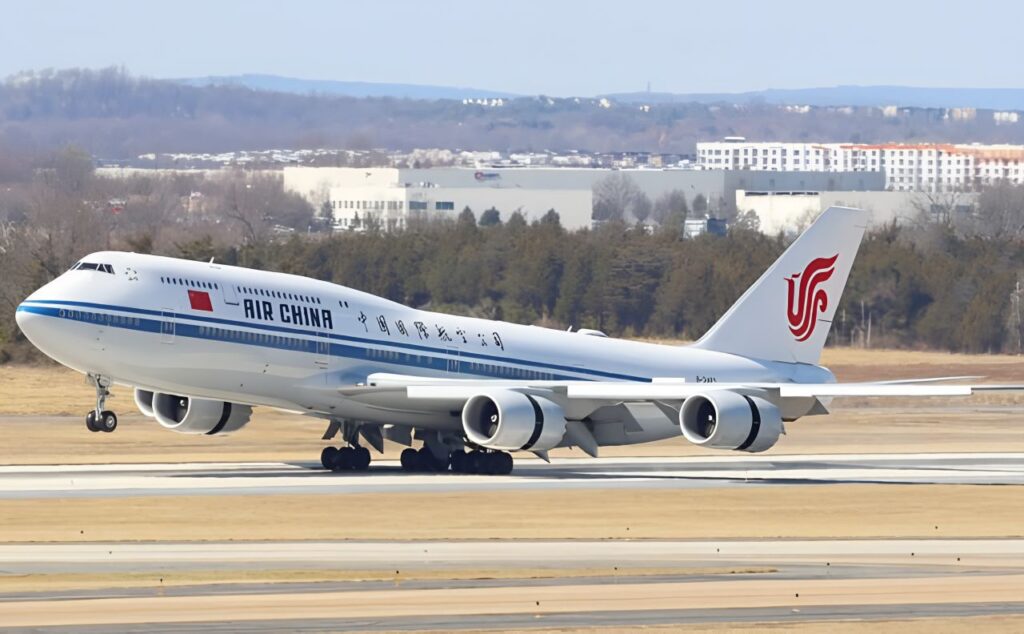
Japan is expected to receive just 4.1 million Chinese arrivals this year, more than a halving from previous expectations. Thailand has also lost some appeal following highly publicised scams and safety incidents.
Nearby destinations are gaining from that shift. Hong Kong and Macau are projected to capture almost 40% of China’s outbound market. Hong Kong alone could receive 41 million trips, although high visitor numbers do not necessarily translate into exceptionally high expenditure. Average spending there is expected to be only around US$310 per person.
South Korea appears to be one of the biggest beneficiaries of reduced travel to Japan. It is projected to welcome 7 million Chinese visitors and receive almost US$13 billion in spending. For a destination that can offer short travel times, shopping, food, entertainment and relative convenience, it is well placed to benefit from a more selective Chinese traveller.
Premium long-haul markets still matter, even where total arrivals are lower. France is expected to draw 2.2 million Chinese visitors, with average spending of US$7,622 per person. That contrast is important. Tourism numbers alone do not reveal the entire economic picture. A smaller group of high-spending visitors can be more valuable than a much larger volume of short, low-spending trips.
China’s outbound tourism rebound, then, has not reversed. But the expansion is becoming more uneven, with geography, safety perceptions, diplomacy and consumer confidence all influencing where money flows.
China’s trade surplus is reaching its economic and political limits.
The most consequential issue is China’s enormous manufacturing trade surplus. In a recent Foreign Affairs analysis, Michael Froman, former US trade representative and president of the Council on Foreign Relations, argues that China’s export-led growth model may be approaching both mathematical and political limits.
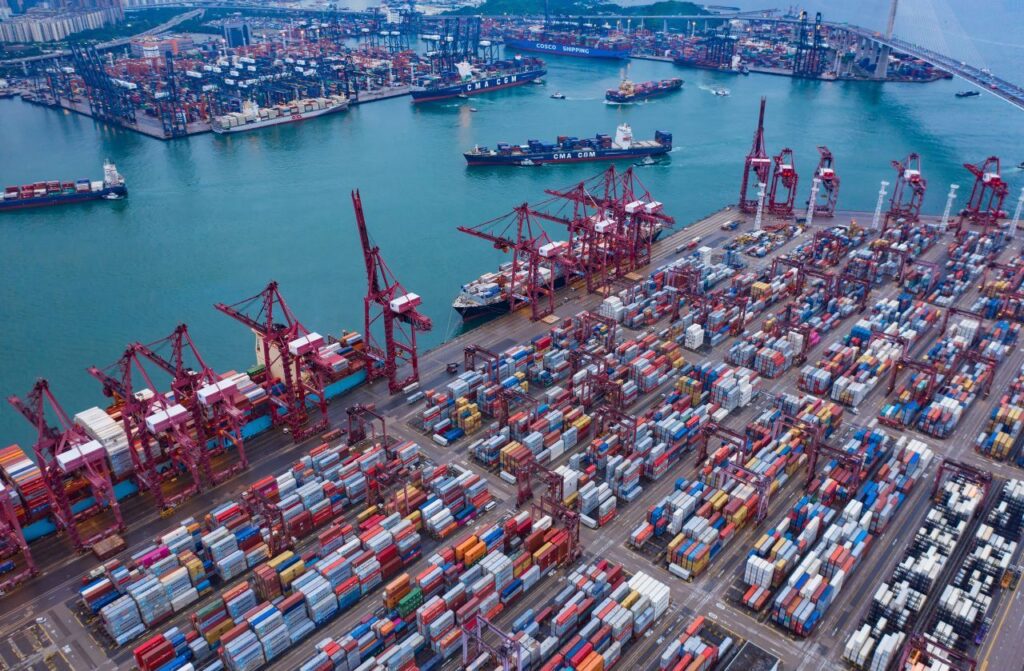
China recorded a trade surplus of almost US$1.2 trillion in 2025, the largest on record. It now accounts for roughly 30% of global industrial production, and one United Nations projection suggests that share could rise to 45% by 2030.
The concern is not simply that China is competitive. It is that its industrial system continues producing at a pace that global demand may no longer be able to absorb.
Cheap credit from the state-controlled financial system, local government support, subsidised land, infrastructure and policy backing have all helped favoured industries expand. Firms that might otherwise close can remain alive because they preserve local jobs, tax revenues and production targets.
Nearly 30% of China’s industrial companies are operating at a loss. In sectors receiving the fastest investment growth, that figure rises to 34%. Yet production continues to expand even as margins deteriorate.
In China, this relentless competition is often described as neijuan, or involution. Companies keep cutting prices, adding capacity and competing for market share because slowing down can be more dangerous than losing money in the short term.
For years, this system could function because China was a smaller part of the global economy. Foreign markets could absorb rising volumes of Chinese goods while benefiting from lower prices. But China can no longer increase exports two or three times faster than global demand indefinitely. The scale is now simply too large.
A previous analysis of how Beijing has acknowledged the limits of export-led growth explored the same structural dilemma: China needs stronger domestic demand, but building a consumer-led economy requires reforms that are politically and economically difficult. China’s own debate over the sustainability of export-led growth is therefore becoming increasingly important.
Overcapacity is most visible in strategic industries.
The imbalance is particularly stark in sectors that Beijing sees as strategically vital.
- Chinese factories can reportedly produce around 1,200 gigawatts of solar equipment each year, almost twice the amount installed worldwide last year.
- China can manufacture about 25 million electric and plug-in hybrid vehicles annually, despite domestic demand of only around 12 million.
- Across all vehicle types, Chinese factories have capacity to produce approximately 55 million cars a year, roughly 60% of the global automotive market.
This capacity cannot be absorbed domestically. It must either be exported, reduced, or supported through further debt and state intervention. Each option carries serious costs.
Exports provoke protectionist responses. Reducing capacity threatens jobs, local government revenues and highly indebted firms. Continuing to fund excess production risks worsening financial strain and deepening the cycle of unprofitable investment.
The United States has already introduced barriers against Chinese goods, while Europe is pursuing tariffs on electric vehicles, local-content requirements and supply-chain restrictions. Germany illustrates the political pressure. Between 2022 and 2025, German car exports to China fell 66%, while China became the world’s largest vehicle exporter.
German manufacturers are now cutting jobs and reassessing domestic production. The issue is not merely commercial competition. It is becoming a politically sensitive question of industrial survival across advanced economies.
Why a disorderly adjustment could become a global crisis

If overseas markets close more quickly than China can rebalance its economy, the consequences could be severe. Thousands of indebted manufacturers could fail. Banks would have to recognise losses. Local governments, already under fiscal pressure, could lose revenue. Unemployment could rise across industrial regions.
China has limited easy alternatives. The property sector remains depressed, infrastructure investment is delivering diminishing returns, and domestic consumption is still too weak to replace a major loss of export demand.
The risks would not stop at China’s borders. Commodity-exporting economies such as Australia, Brazil and Chile depend heavily on Chinese demand. A major slowdown could push down iron ore, copper and oil prices, hurting government revenues, corporate profits and growth across resource-producing countries.
Several developing economies send nearly half, or more, of their exports to China. Beijing is also the world’s largest bilateral creditor to developing countries. A domestic financial crisis could lead China to cut overseas lending, increasing the danger of sovereign defaults in countries already carrying heavy debt burdens.
The global economy is poorly positioned to absorb such a shock. Froman notes that public debt in advanced economies has risen from around 70% of GDP before the 2008 financial crisis to nearly 110% today. Governments have less fiscal room to support growth, while international coordination has deteriorated.
Recent concerns about rising producer prices, debt dependence and pressure on industrial supply chains show how little margin exists for another major disruption. The combination of weak demand, elevated debt and geopolitical friction is examined further in this report on China’s inflation, financing and supply-chain pressures.
The case for a gradual rebalancing
Froman’s proposed alternative is a coordinated and gradual adjustment, broadly resembling the 1985 Plaza Accord approach to international economic imbalances.
Under such a framework, China would allow the renminbi to appreciate, reduce industrial subsidies, expand its social safety net and encourage higher household consumption. Stronger welfare protections could reduce the need for precautionary household saving, helping move income and demand back toward consumers.
Trading partners, meanwhile, would need to coordinate trade restrictions carefully rather than acting in a way that suddenly shuts Chinese goods out of major markets. The objective would be to slow and manage the adjustment, not trigger a collapse.
That is easier said than done. Beijing has strong reasons to protect employment and industrial capacity. The United States and Europe face domestic political pressure to defend manufacturing jobs. And distrust between major powers is at its highest level in years.
Still, the underlying warning is difficult to dismiss. China’s export-led model helped drive one of the most remarkable economic transformations in modern history. But a model that worked when China was a smaller manufacturing power may become destabilising when China produces such a large share of the world’s industrial output.
The question is whether an orderly transition can be negotiated before protectionism, falling global demand and financial stress force a much harsher adjustment. The answer will shape not only China’s economy but also global trade, commodity markets and the financial stability of countries far beyond Beijing.
Frequently Asked Questions
Why is the United States imposing tariffs on imported drones?
The tariffs are being imposed on national security grounds. Washington wants to reduce dependence on foreign drone suppliers, particularly in a sector now seen as important for commercial technology, defence and battlefield operations.
Are Chinese tourists stopping overseas travel?
No. Outbound travel is still expected to exceed pre-pandemic levels in 2026. However, weak consumer confidence and the property downturn are making households more selective about travel spending and destination choices.
Why does China’s trade surplus create global risks?
China’s industrial capacity is expanding faster than global demand in several sectors. If other countries respond with stronger trade barriers before China can increase domestic consumption, heavily indebted manufacturers could fail, and the effects could spread through commodity markets, trade partners and global financial systems.