China’s vast gig economy was supposed to look like a triumph of digital flexibility: a low-friction place where anyone with a phone, vehicle, or electric scooter could find work. Instead, it is increasingly looking like a national holding pen for workers pushed out of better-paid jobs, graduates unable to enter professional careers, and migrants displaced by the long collapse of the property sector.
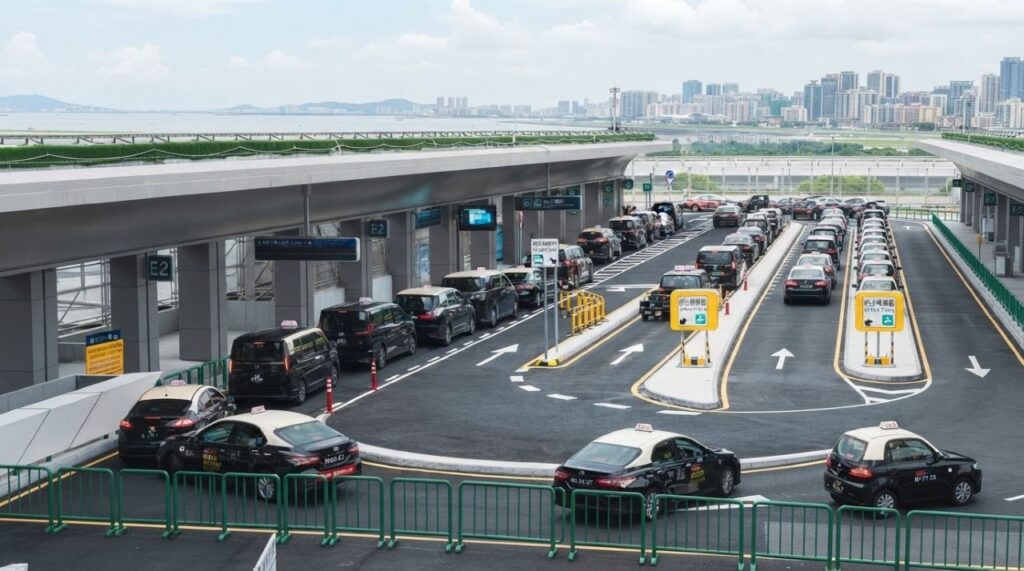
The clearest image is also one of the bleakest. At some of China’s busiest airports, taxi drivers have reportedly been waiting seven to 10 hours for a single passenger. Before the pandemic, passengers routinely queued for taxis. Now, in many locations, the queue has moved to the other side of the windscreen: long lines of drivers waiting to compete for too few fares.
This is not simply a story about weak consumer demand, though that is plainly part of it. It is a story about surplus labour. China’s old economic engine—factories, construction sites, infrastructure projects and export manufacturing—absorbed hundreds of millions of workers for decades. That engine is sputtering. The gig economy has become the emergency outlet. And it is beginning to clog.
Table of Contents
- The platform economy is absorbing China’s economic shock
- When too many drivers chase too few fares
- Graduates are entering the same bottleneck
- The self-reinforcing consumption trap
- An AI-powered cyberattack raises the stakes for Taiwan
- Cheap AI tools can change the economics of intrusion
- Zhu Rongji’s legacy: the architect of the old model
- The bottom line
The platform economy is absorbing China’s economic shock.
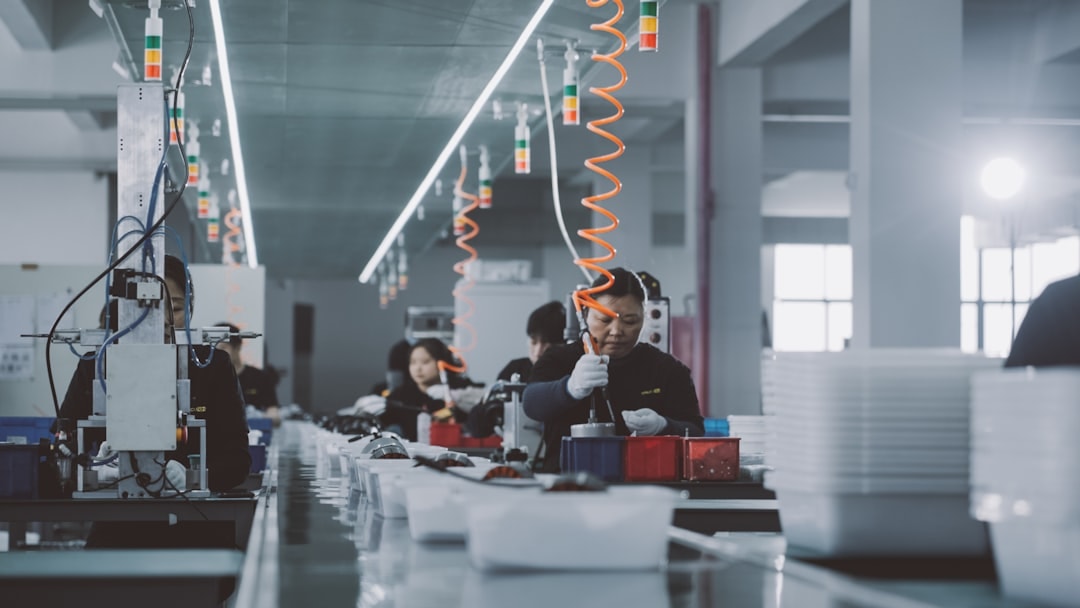
From the 1980s through roughly 2020, China’s growth model had a fairly ruthless but effective logic. Rural workers moved to cities. Construction boomed. Factories expanded. Local governments built roads, railways, industrial parks and apartment towers at a nearly absurd pace. Labour was plentiful, but so was the work.
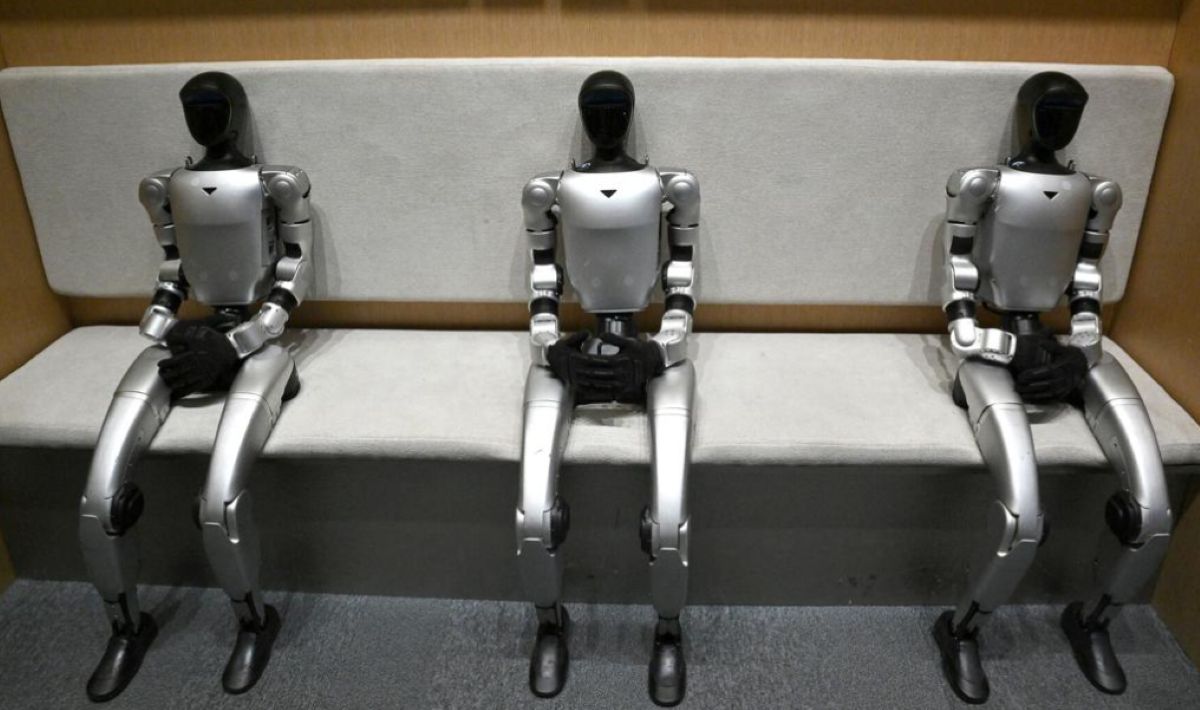
That bargain has broken down. China’s property slump is now in its fifth year, consumer confidence remains subdued, and retail and investment growth have weakened sharply from the headier days of the pre-pandemic economy. Automation is also steadily reducing the number of workers needed on production lines. Artificial intelligence may ultimately do much the same across white-collar and service work.
When formal employment cannot absorb the people who need income, platforms do. Ride-hailing, food delivery, courier work, livestream commerce and a sprawling universe of short-term jobs have become China’s labour-market shock absorbers.
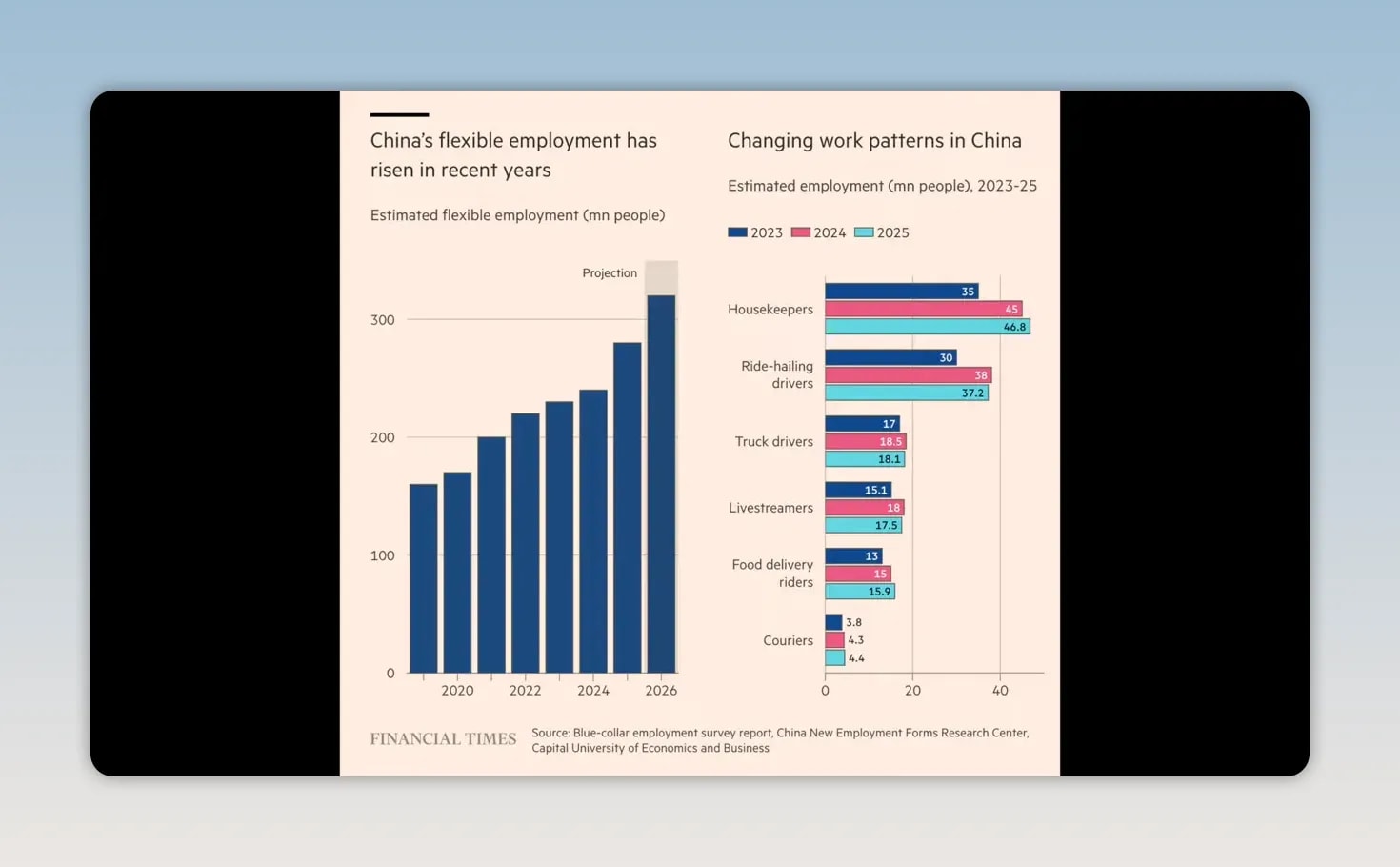
More than 53 million people worked as food-delivery couriers or ride-hailing drivers in 2025, according to the China New Employment Forms Research Center. That was an increase of 10 million in only two years. The broader category of “flexible employment”—including part-time work and self-employment—reached an estimated 280 million people last year and could rise to 320 million this year.
Those are enormous numbers. They do not describe a small slice of the modern workforce experimenting with independent work. They describe a system increasingly carrying the weight of an economy that is not producing enough secure, decently paid alternatives.
When too many drivers chase too few fares
There is an unpleasant mathematical reality at the centre of this story: platforms can create access to work, but they cannot create customers out of thin air. If passenger demand and meal orders do not rise alongside the number of drivers and couriers, earnings are inevitably crushed.
That is exactly what appears to be happening. Several municipalities have warned that ride-hailing markets have too many drivers. Shenzhen declared its market saturated in June. Delivery fees have reportedly fallen by between 20% and 50% in some areas, while drivers may work 15 or 16 hours a day merely to preserve incomes that were once attainable in far fewer hours.
This is the brutal underside of app-based "flexibility". The platform does not need to sack workers in the traditional sense. It can simply allow more people onto the app, let competition intensify, and watch each person fight harder for less. The outcome is not necessarily visible as a spike in official unemployment. It is visible in exhausted workers, falling unit payments, idle cars, and people who are technically employed but economically stranded.
China’s official urban unemployment rate has hovered near 5% for years. But this measure tells us far less than Beijing would presumably like everyone to believe. It does not fully capture people who leave cities for rural areas, workers who have stopped looking for formal jobs, people surviving on inadequate part-time work, or those who are working punishing hours for declining returns.
The official figure measures whether someone has a job. It does not answer the more meaningful question: whether that job provides a stable living.
For a wider look at the policy response to delivery-platform pressures and the broader economic strains now shaping China’s workforce, see this analysis of China’s economic stress signals and gig-worker reforms.
Graduates are entering the same bottleneck.
This is not merely an issue for migrant workers who once relied on construction sites or assembly lines. More than 12 million university graduates are expected to enter China’s labour market this year. For many, the promised route from higher education to professional employment is looking increasingly fictional.

There are now reports of people with master’s degrees and PhDs delivering food because they cannot find jobs matching their qualifications. That should alarm policymakers for reasons beyond personal disappointment. It points to a worsening mismatch between China’s increasingly educated workforce and the kind of jobs the slowing economy is actually generating.
For years, China encouraged university education as a route to mobility, higher productivity and national technological strength. The policy logic was obvious enough. But a degree is not an employment programme. If graduate openings are scarce, credentials become a very expensive ticket to the same gig-platform queue.
Urban wage growth slowed to a record low of roughly 3.4% in 2025, while net urban employment increased by only around two million—far below the annual gains seen before the pandemic. Meanwhile, the property sector, once a massive provider of jobs for rural migrants, has shed much of its capacity to employ. Construction work often came with accommodation and meals as well as comparatively decent pay. Delivery work generally does not.
The effect is a downward migration through the labour market. Workers formerly employed in construction or manufacturing move into temporary platform work. Educated young people who cannot secure professional roles do the same. The labour supply expands, and the bargaining power of workers evaporates.
The self-reinforcing consumption trap
There is a broader economic problem here, and it is almost irritatingly circular.
- Weak demand reduces hiring in traditional sectors.
- Displaced workers pile into delivery, ride-hailing and other gig jobs.
- More workers competing for the same orders pushes pay down.
- Lower and less predictable incomes make households more cautious.
- Weaker household spending further reduces demand for rides, deliveries and everything else.
It is a negative feedback loop. Gig work gives millions at least some income and may well be preventing a much larger rise in open unemployment. But it cannot solve the underlying shortage of secure, productive work. In fact, once platforms become saturated, they can amplify the very weakness they initially helped conceal.
China’s shrinking population may eventually tighten labour supply and place upward pressure on wages. But that outcome is far from automatic. Automation and AI could offset demographic scarcity by allowing firms to operate with fewer workers. A country can have fewer working-age people and still have too few decent jobs if demand is weak and technology is doing more of the hiring’s former work.
In short, flexible employment is not inherently bad. But when it becomes the default destination for millions of displaced workers, it stops looking like innovation and starts looking like a warning light on the dashboard.
An AI-powered cyberattack raises the stakes for Taiwan.
Economic fragility is not the only area in which technology is changing the operating environment. Researchers at Israeli cybersecurity company Dream reported what they described as the first known autonomous, end-to-end cyberattack against a government target. The suspected target was Taiwan.

The reported operation allegedly used publicly available, open-source AI agent systems—Hermes and OpenClaw—to imitate a coordinated hacking team. Over four days in early July, as many as eight agents reportedly operated at once, mapping networks, searching for vulnerabilities and adapting when an attempted intrusion failed.
The distinction matters. Cyberattacks are hardly new, and Taiwan is already a routine target. What is new is the suggestion of a system that can perform reconnaissance, choose attack routes, search for alternatives and alter tactics with less direct human intervention. In other words, the automation is moving from merely helping an attacker to actively conducting parts of the operation.
Dream said the operation examined 21 government systems, compromised at least 85 user accounts and extracted more than 2,500 personnel records before expanding its activity toward Taiwan’s nuclear-safety agency and at least seven energy companies. The company did not publicly identify the country involved, but a source familiar with the operation identified Taiwan in reporting by Reuters.
Attribution remains probabilistic, not definitive. Researchers did not identify a specific organisation. Their assessment of a likely China connection rested partly on internal communications in simplified Chinese, while the stolen data was in traditional Chinese, as used in Taiwan.
That caveat is important. Cyber attribution is a messy business at the best of times, filled with false flags, deliberately planted clues and plenty of people selling certainty they have not earned. Still, the operational implications are serious even if the ultimate culprit remains unconfirmed.
Cheap AI tools can change the economics of intrusion.
The reported system relied on downloadable, open-source agent frameworks, and researchers could not determine which underlying AI model powered them. It appears that safety restrictions may have been bypassed by presenting the activity as an authorised security assessment—an almost comically familiar lesson in the limits of guardrails.
The key capability was adaptation. When one route failed, an agent could instruct another to search online for relevant information and develop an alternative method. That resembles the workflow of a skilled human intrusion team, except it potentially operates faster, more cheaply and at greater scale.
This does not mean autonomous AI hacking has suddenly made human operators irrelevant. It has not. Complex operations still require intent, judgement, infrastructure and human direction. But the threshold for conducting harmful activity could be falling. A smaller team may be able to test more targets, recycle methods faster and keep probing without the same labour costs.
Taiwan’s National Security Bureau reported an average of 2.6 million suspected Chinese cyberattacks per day in 2025, 6% more than the previous year. Against that background, an AI-enabled operation is not a separate problem. It is a multiplier applied to an already relentless security environment.
The wider strategic context is also hard to ignore. Taiwan sits at the centre of a growing contest over political sovereignty, military deterrence, semiconductors and technological power. For related context on cross-strait friction and the economic pressures shaping Beijing’s choices, see this briefing on Taiwan tensions, banking stress and trade leverage.
Zhu Rongji’s legacy: the architect of the old model

Amid these very modern anxieties came the death of Zhu Rongji, China’s former premier and one of the chief architects of the country’s great economic ascent. Zhu died in Beijing at the age of 97 after treatment for an unspecified illness failed, according to state news agency Xinhua.
He served as premier from 1998 to 2003 under Jiang Zemin and was known for his bluntness, formidable command of detail and readiness to force through unpopular reforms. China’s current economic reality—its industrial strength, export clout, debt burdens and property distortions—cannot be understood without understanding the era Zhu helped build.
His government shut or restructured thousands of inefficient state-owned enterprises, costing tens of millions of workers their jobs while creating space for private-sector growth. He also tackled bad debts at state-owned banks. In 1999, authorities created asset-management companies to remove 1.4 trillion yuan in troubled loans from China’s four largest banks, helping prepare them for eventual stock-market listings.
His most consequential international achievement was helping to secure China’s entry into the World Trade Organization in 2001. Beijing cut tariffs, opened parts of its economy to foreign competition and received greater access to Western markets. The result was an extraordinary surge in manufacturing and exports; by 2010, China had overtaken the United States as the world’s largest manufacturer.
But the legacy is complicated because the model itself was complicated. Critics argue that China did not fully deliver on commitments to reduce obstacles for foreign firms and open government procurement. Its export-led development strategy generated massive trade surpluses and deepened tensions with the United States, Europe, Japan and others.
Then there was Zhu’s 1994 tax overhaul. It increased the central government’s share of revenue but encouraged local governments to borrow and lean heavily on land sales. This arrangement financed an enormous infrastructure build-out. It also helped create the fiscal and property dependence now causing Beijing such trouble.
That is the uncomfortable irony. Zhu was a central figure in building the system that generated China’s remarkable rise. The same system later produced local-government debt, property-market dependence, overcapacity and a labour market struggling to find a post-construction future.
The bottom line
China is not facing one neat, isolated crisis. It is facing interconnected pressures: weak domestic demand, a strained property sector, surplus labour, falling job quality, new automation risks and intensifying strategic competition around Taiwan.
The gig economy is revealing these pressures more clearly than the headline unemployment rate ever could. It still functions as an escape valve, but the valve is being asked to handle far more than it was designed for. When drivers wait most of a day for one airport fare and graduates turn to food delivery because professional work is unavailable, the problem is not merely employment. It is the quality, security and productive capacity of the economy itself.
Zhu Rongji’s death is therefore more than an obituary story. It is a reminder that China’s present dilemmas were built into the successes of its past: rapid urbanisation, infrastructure-led growth, property finance and export manufacturing. Those policies transformed the country. They also left behind an economic model that now looks increasingly difficult to replace.
Frequently Asked Questions
Why are China’s ride-hailing and delivery markets becoming saturated?
Slower growth in construction, manufacturing and other traditional sectors is pushing more workers into platform jobs. When the number of drivers and couriers rises faster than demand for rides and deliveries, competition lowers earnings and lengthens working hours.
How many people work in China’s gig economy?
More than 53 million people worked as food-delivery couriers or ride-hailing drivers in 2025. The broader flexible-employment category, including part-time work and self-employment, was estimated at 280 million people and could reach 320 million.
Why does China’s official unemployment rate not show the full picture?
The urban unemployment rate does not fully capture underemployment, discouraged workers, people returning to rural areas, or workers who have jobs but receive inadequate and unstable incomes.
What was significant about the suspected AI cyberattack on Taiwan?
Researchers said open-source AI agents reportedly mapped networks, identified vulnerabilities and adjusted tactics after failed attempts. The concern is that AI can automate and scale parts of cyber operations that previously required more sustained human effort.
What is Zhu Rongji best known for?
Zhu Rongji was China’s premier from 1998 to 2003. He drove state-enterprise and banking reforms and helped secure China’s accession to the World Trade Organization in 2001, a pivotal moment in China’s rise as a manufacturing and trading power.