View the full video analysis by Tony Fiddis at the China Update YouTube channel.
It was a heavy day in Chinese news, with several developments pointing in the same broad direction: more geopolitical instability, more economic caution inside China, and more strain in the environment surrounding foreign businesses and residents.
The biggest headline was Vladimir Putin’s arrival in Beijing for high-level talks with Xi Jinping, a visit that comes at a particularly sensitive moment for Moscow and just days after Xi hosted Donald Trump in the same city. At the same time, new Chinese data showed households cutting debt at a record pace even as the state borrows more aggressively to prop up growth. In Shanghai, a knife attack at a Japanese restaurant injured two Japanese nationals and revived concerns about the social consequences of rising anti-Japanese nationalism. And on the US-China front, the two sides agreed to open a new dialogue on artificial intelligence even as tariffs, sanctions, and legal action continue to push the broader relationship toward prolonged rivalry.
Taken together, these stories are less random than they look. They reflect a China facing mounting external pressure, weak domestic confidence, and a world in which cooperation is becoming narrower, more selective, and harder to separate from confrontation.
Table of Contents
- Putin’s Beijing Visit Comes at a Weak Moment for Moscow
- China’s Households Are Pulling Back Fast
- Knife Attack in Shanghai Raises Fresh Concerns for Japanese Residents
- An AI Dialogue Opens Even as US-China Frictions Deepen
- The Bigger Picture
- FAQ
Putin’s Beijing Visit Comes at a Weak Moment for Moscow
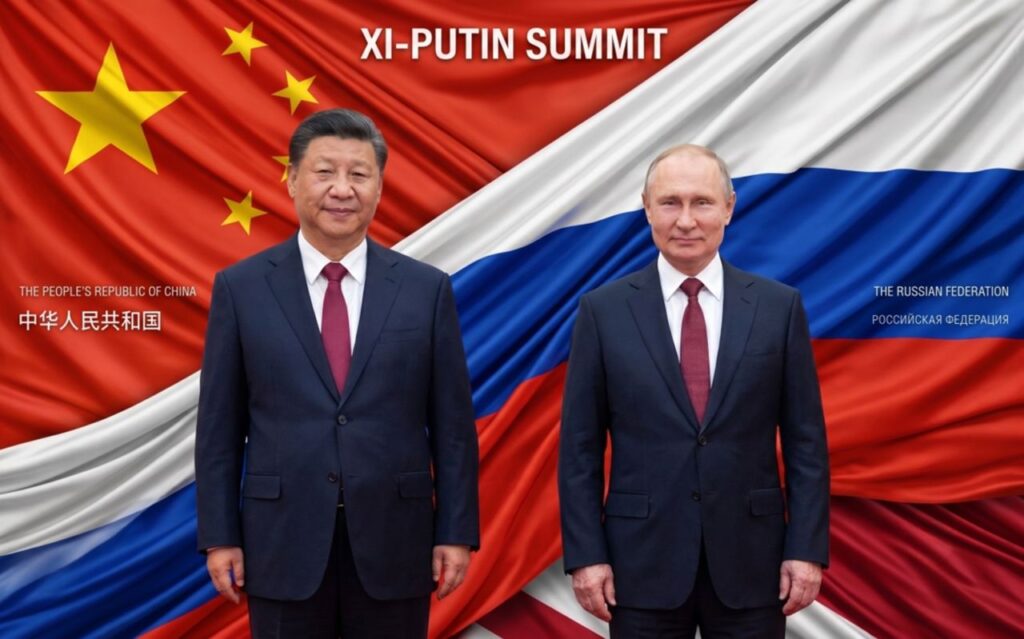
Russian President Vladimir Putin arrived in Beijing late Tuesday for a two-day visit centred on talks with Xi Jinping. The trip formally marks the 25th anniversary of the Russia-China Friendship and Cooperation Treaty, but the real significance is current and strategic, not commemorative.
Moscow and Beijing are trying to deepen coordination at a time of worsening instability across Eurasia, sharpening confrontation with the West and growing uncertainty around energy security. Putin was met at the airport by Chinese Foreign Minister Wang Yi before heading to the Dalian State Guest House, one of the venues China reserves for top-level foreign guests.
The timing matters. Putin arrived in Beijing only days after Xi’s summit with Donald Trump, and the Kremlin made clear that one of Moscow’s key interests is hearing Beijing’s assessment of those talks. In other words, this visit is not just about bilateral ties. It is also about Russia trying to understand how China sees the current balance of power with Washington and what room that leaves for Moscow.
One veteran analyst captured the mood bluntly, describing Putin as meeting Xi at perhaps his weakest moment ever, especially after recent Ukrainian attacks inside Russian territory. That may be overstated, but the broader point stands. Russia needs China more than China needs Russia, and that imbalance shapes nearly every major item on the agenda.
Power of Siberia II Is the Core Economic Question

At the centre of the talks is the long-delayed Power of Siberia II gas pipeline, a proposed route through Mongolia that would send up to 50 billion cubic metres of natural gas per year from Russia to China.
For Russia, this project has become strategically critical. Since the invasion of Ukraine and the collapse of much of Russia’s gas trade with Europe, Moscow has needed a replacement market. China is the obvious candidate, but replacing Europe in volume, pricing power, and infrastructure is not simple.
For China, the calculation has recently shifted as well. Conflict in the Middle East and effective disruption around the Strait of Hormuz have underlined just how exposed China remains to seaborne energy imports. Overland supply from Russia looks attractive for two reasons:
- It is strategically less vulnerable than maritime routes.
- It may be cheaper if Beijing can continue extracting favourable terms.
This energy-security angle has become more important as regional shipping risks rise. For a deeper look at how Hormuz instability is affecting China’s economic thinking, this related analysis is useful: Hormuz turmoil, debt strain, and rising blockade planning.
Russian officials appear to believe that the current energy turmoil improves Moscow’s hand in negotiations. Putin recently said Russia and China were “very close” to making a major step forward in oil and gas cooperation, and he expressed hope that agreements could be finalised during this visit.
That said, caution is warranted. China has spent years using its bargaining power to push for lower gas prices, and the pipeline talks have repeatedly stalled. Russia may be more desperate now, but that typically strengthens China’s leverage, not Russia’s.
Warm Symbolism, Hard Power Signaling
The diplomatic tone around the summit has been notably warm. Chinese state media described the relationship as being at the “best point in history", and Putin referred to Xi as “my long-time good friend” ahead of the meeting.
But this warmth sits alongside unmistakable military signalling. The summit unfolded as Russia launched one of its largest nuclear readiness exercises in recent years, involving more than 64,000 troops, missile launchers, aircraft, warships, and submarines. Russia’s strategic missile forces and long-range aviation command were also involved.
That exercise appears aimed at sending a message as Ukraine expands long-range strikes inside Russian territory and tensions with NATO remain elevated. In recent years, Russia has repeatedly leaned on nuclear signalling, including deploying tactical nuclear weapons to Belarus and preparing to field a new nuclear-capable intercontinental ballistic missile later this year.
So the Beijing summit is not just a trade and diplomacy meeting. It is taking place inside a wider environment of war, deterrence, sanctions, and strategic realignment.
The Most Interesting Unconfirmed Report
One report circulating over the last 24 hours deserves mention, though carefully. The Financial Times, citing unnamed people familiar with the US assessment of Xi’s summit with Trump, reported that Xi told Trump that Putin “might end up regretting his invasion” of Ukraine.
Both Beijing and Moscow strongly denied the report. If it is inaccurate, it is still revealing in the sense that such a remark is imaginable enough to circulate seriously. If it were accurate, then it would be an extraordinary indication that Beijing sees Russia’s invasion not just as costly but as strategically misguided.
Either way, the underlying reality is clear. China and Russia remain closely aligned, but they are not equals in this relationship, and Beijing’s support has always been shaped by Chinese interests first.
China’s Households Are Pulling Back Fast
The next major development came from the Chinese economy, and the signal was stark: Chinese household debt fell by a record 786.9 billion yuan in April.
According to data from the People’s Bank of China, total household debt dropped to 71.61 trillion yuan by the end of the month. Both short-term consumer borrowing and longer-term mortgage debt declined sharply. This was the steepest monthly fall since records began.
property market show limited signs of stabilization.
That matters because it tells us something important about household psychology. Chinese families are not behaving as if recovery is firmly underway. They are acting defensively.
This is happening even though parts of the property market showed limited improvement. In 30 major cities, property sales by floor space rose 3.3 percent year-on-year in April, while second-hand home sales increased 13 percent. But those encouraging numbers need to be read alongside the less encouraging ones, especially continued weakness in housing investment.
The issue is not whether there are isolated signs of stabilisation. The issue is whether households believe the broader outlook is secure enough to borrow, spend, and take risks again. Right now, the answer appears to be no.
Why Households Are Deleveraging
Several forces are driving this retreat from borrowing:
- Weak employment conditions are making income expectations less reliable.
- Sluggish wage growth is limiting confidence about future cash flow.
- Falling home prices reduce the appeal of taking on mortgage debt.
- Low consumer confidence discourages discretionary borrowing and spending.
In short, households are trying to improve their balance sheets rather than expand them. That is rational from the perspective of a family, but it creates a problem for the broader economy, especially one that has long depended on property, credit expansion, and investment to maintain momentum.
There is a deeper structural point here as well. The more the private side of the economy turns defensive, the more pressure falls on the state to compensate. And that is exactly what is happening.
As Families Retrench, the State Borrows More
While households are cutting debt, government borrowing is moving in the opposite direction. Beijing has increased fiscal stimulus in an effort to stabilise growth, support infrastructure, and keep the property downturn from worsening further. Local governments and state-backed entities have continued issuing large volumes of debt, and central authorities have approved additional bond issuance and spending measures.
This divergence is one of the most important macro stories in China right now. The household sector, which should be a dynamic driver of consumption-led growth, is becoming more conservative. Meanwhile, the state sector, which already carries major debt burdens and efficiency problems, is being asked to do more.
That is not a healthy long-term rebalancing. It is a sign of stress.
If this pattern continues, China will remain stuck in a model where weak private demand is answered with more state-led leverage. That may support headline growth for a while, but it does not solve the underlying confidence problem. Related coverage on the mix of soft April data, property weakness, and the AI race can be found here: Property stabilisation hopes, weak April data, and a high-stakes AI race.
Knife Attack in Shanghai Raises Fresh Concerns for Japanese Residents
Another troubling development came from Shanghai, where a knife attack at a Japanese restaurant in the city’s financial district injured three people, including two Japanese nationals.
The attack took place just after noon inside the Shanghai World Financial Center in Pudong, one of the city’s most prominent business locations and home to offices of major international firms. Police said a 59-year-old man surnamed Yang attacked the victims with a fruit knife before being detained.

Authorities stated that the suspect appeared mentally unstable, spoke incoherently, and reportedly had a history of treatment for mental illness. Officially, the motive remains unclear.
That explanation may ultimately be correct, but it also needs to be treated carefully. Chinese authorities have repeatedly described anti-foreign attacks in recent years as isolated acts committed by mentally ill individuals. In this case, the location itself raises obvious questions. A Japanese restaurant in a high-profile international district is a very specific setting.
The Japanese consulate in Shanghai confirmed that two Japanese citizens were injured and hospitalised. It is believed the third victim may be Chinese, though that has not been formally confirmed.
Why This Incident Resonates Beyond Shanghai
The immediate human dimension is obvious, but this incident also matters because it lands in a broader context of rising anxiety among Japanese communities in China.
There have been several disturbing attacks in recent years. In 2024, a Japanese mother and child were attacked on a school bus in Suzhou by a knife-wielding Chinese national. Later that year, a Japanese schoolboy was fatally stabbed near a school. In one of these incidents, a Chinese woman was killed while trying to defend Japanese children.
These are not events that can be dismissed lightly as random background crime. They have had a real effect on perceptions of safety, especially among expatriate communities and Japanese businesses operating in China.
Nationalism and the Social Environment
This latest attack comes during another tense period in Japan-China relations. Frictions have risen after comments by Japan’s prime minister regarding a possible Taiwan contingency, which prompted an aggressive response from Beijing across diplomatic, military, business, and media channels.
There is no evidence at this stage that the Shanghai attack was organised or politically directed. But that is not the only issue. The broader concern is whether years of nationalist propaganda and anti-Japanese messaging have created a more hostile social atmosphere.
Chinese media and nationalist online commentary regularly emphasise historical grievances tied to Japan’s wartime actions during the Second World War. Those themes can become much more intense during periods of diplomatic friction. Even when the state condemns violence in the abstract, a steady diet of grievance-based nationalism can still shape public sentiment in dangerous ways.
That is why the location of this attack matters so much. If it was random, it was a deeply unsettling random event. If it were not random, then it would point to a more serious deterioration in the operating environment for Japanese individuals and companies inside China.
An AI Dialogue Opens Even as US-China Frictions Deepen
The final major development was on the US-China relationship, and it captured the increasingly contradictory nature of that relationship almost perfectly.
After last week’s summit between Donald Trump and Xi Jinping, the United States and China agreed to launch a new intergovernmental dialogue on artificial intelligence. China’s Foreign Ministry said the two leaders had constructive exchanges on AI governance and regulation and agreed to establish formal dialogue mechanisms, though no detailed timeline or scope has yet been released.
On one level, this makes sense. Both countries are racing to dominate AI, and both are increasingly aware that unchecked development also creates safety, regulatory, and national security risks. AI is one of the few areas where communication is useful even when competition is fierce.
But it would be a mistake to read this as a broader thaw. Outside the narrow AI channel, tensions continue to build.
Trade Pressure Is Still Very Much Alive
US Treasury Secretary Scott Bessent said the Trump administration is “not in a rush” to extend the current tariff and critical minerals trade truce with China, which expires in November. His remarks suggest Washington believes Beijing may ultimately accept the restoration of previous Section 301 tariff levels, so long as tariffs do not rise further.
That is a fairly clear signal that the White House is prepared to keep economic pressure on China even after the Beijing summit. It also reinforces the idea that dialogue and pressure are no longer opposites in US-China policy. They now coexist.
Sanctions on Iran-Linked Networks Include China-Based Entities
The US Treasury Department also unveiled sweeping new sanctions tied to Iran’s energy sector, targeting 50 entities and 19 vessels allegedly linked to Tehran’s shadow oil fleet. Several of the companies were reportedly based in China, Hong Kong, and the United Arab Emirates.
This matters because it shows how China’s relationships with sanctioned states, especially in the energy space, are becoming a more direct point of contention with Washington. The issue is no longer abstract geopolitical disagreement. It is now increasingly operational, involving shipping networks, corporate structures, and enforcement actions.
A Major US Antitrust Case Targets Chinese Container Manufacturers
The US Justice Department also announced a major antitrust case against four of the world’s largest shipping container manufacturers, all Chinese, along with seven executives. Prosecutors allege the companies ran a global price-fixing cartel during the COVID-19 period.
The companies named include the following:
- SeaCube Container Holdings
- China International Marine Containers
- Shanghai Universal Logistics Equipment
- CXIC Group Containers
According to the allegations, the firms conspired between 2019 and 2024 to restrict output and manipulate prices for standard shipping containers, effectively doubling container prices during the global supply chain crisis. Prosecutors say the arrangement generated dramatic profit increases while worsening costs and shortages for businesses and consumers around the world.
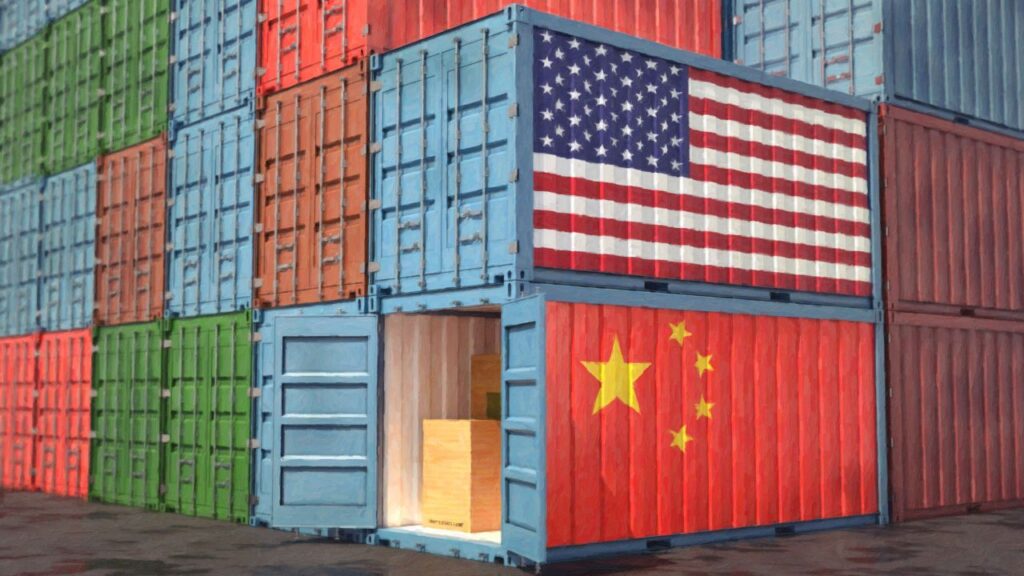
The Justice Department further claims the firms coordinated production cuts, monitored compliance through surveillance cameras, and agreed not to build new manufacturing facilities. Several executives, including top leadership figures, were indicted, and one executive arrested in France is now facing extradition to the United States.
One especially telling detail is that Trump administration officials reportedly sought to delay public disclosure of the case until after the Beijing summit. That speaks volumes about the balancing act underway. Both governments want enough stability to keep channels open, but neither side is stepping back from strategic, legal, and economic conflict.
For a broader sense of how trade pressure, geopolitical instability, and weakening momentum are interacting, see this related piece: Xi warns of global disarray as China’s trade engine loses momentum.
The Bigger Picture
If there is a single thread running through this China News Update, it is that almost every major relationship is becoming more conditional.
China’s relationship with Russia is warm but shaped by asymmetry and hard bargaining. China’s relationship with its own households is increasingly strained by weak confidence and falling willingness to borrow. China’s environment for foreign residents can no longer be discussed purely in commercial terms when nationalist politics are bleeding into everyday security concerns. And China’s relationship with the United States now combines selective cooperation with sustained strategic contest across trade, technology, sanctions, logistics, and global influence.
That does not mean crisis is inevitable in every domain. But it does mean the old assumption that economics would steadily soften politics looks less convincing than ever.
What we are seeing instead is compartmentalised coexistence: cooperation where useful, confrontation where necessary, and persistent mistrust almost everywhere else.
FAQ
Why is Putin’s visit to Beijing so important right now?
Because it comes at a sensitive moment for both sides. Russia is under pressure from the war in Ukraine, sanctions, and lost gas markets in Europe. China is reassessing energy security amid Middle East instability and wants to understand how to balance its ties with Moscow and Washington. The visit is about far more than symbolism.
What is the Power of Siberia II, and why does it matter?
It is a proposed gas pipeline that would send up to 50 billion cubic meters of Russian natural gas annually to China via Mongolia. For Russia, it could help replace lost European demand. For China, it offers a more secure overland energy supply at a time when maritime routes look more vulnerable.
Why is record household debt reduction in China a concern?
Because it signals weak confidence. Households are paying down debt instead of borrowing to spend or buy homes. That usually reflects anxiety about jobs, income, and asset values. It also makes China more dependent on state-led borrowing and stimulus to support growth.
Does the Shanghai knife attack appear politically motivated?
There is no confirmed evidence of an organised political motive. Chinese authorities said the suspect appeared mentally unstable. However, the choice of a Japanese restaurant as the location has prompted concern, especially given recent anti-Japanese incidents and a tense political atmosphere between China and Japan.
Is the new US-China AI dialogue a sign of improving relations?
Only in a limited sense. It shows both governments see value in discussing AI governance and safety. But beyond that narrow area, the relationship remains tense, with ongoing tariff pressure, sanctions enforcement, and legal action targeting Chinese-linked firms and networks.
What is the main takeaway from this China news update?
China is operating in a more volatile environment on several fronts at once: geopolitically with Russia and the US, economically with weak household confidence, and socially with rising concerns around nationalism and foreigner safety. The pattern is not one of broad stabilisation. It is one of selective cooperation inside a wider climate of competition and uncertainty.