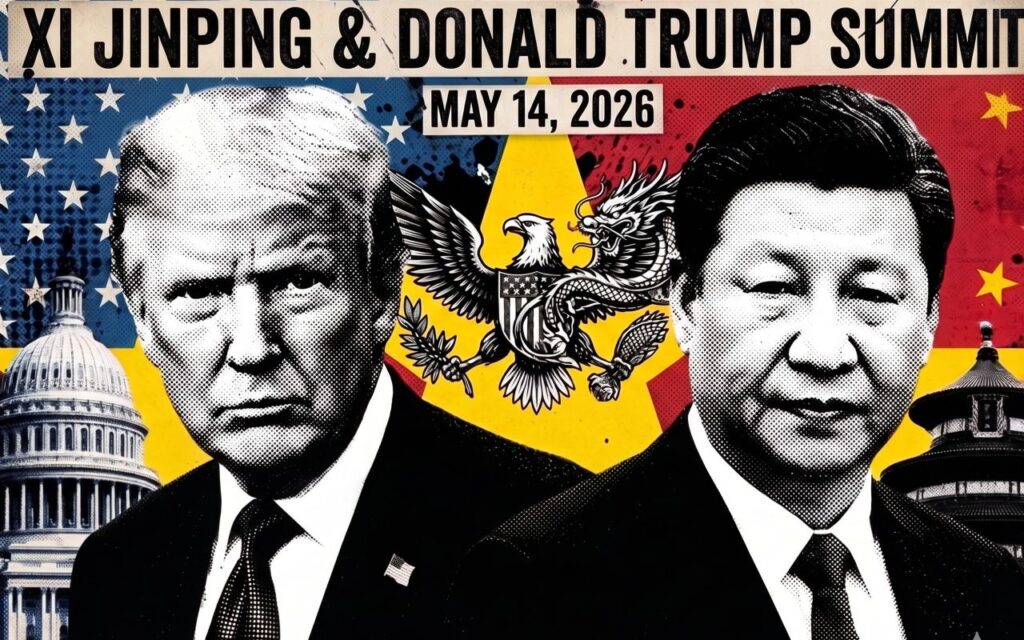
The Xi-Trump summit now underway in Beijing is one of those moments that matters even before any formal agreement is announced. The symbolism is obvious: a sitting U.S. president in Beijing for the first state visit of its kind in years, full ceremonial honours, a carefully staged welcome, and two leaders trying to define the boundaries of the world’s most consequential bilateral relationship.
But the real significance of the Xi-Trump summit is not just in the pageantry. It is in the mix of issues on the table: tariffs, AI chips, rare earths, Taiwan, agriculture, Boeing orders, Iran, and the wider question of whether Washington and Beijing are looking for stabilisation or simply a more manageable rivalry.
At the same time, the summit is unfolding against a complicated backdrop inside China itself. Beijing projects confidence abroad, and in many ways that confidence is real. China is technologically formidable, militarily stronger than ever, and deeply embedded in global manufacturing. Yet under the surface, the domestic economy remains under strain from a property collapse, weak confidence, debt pressure, and deteriorating job prospects. That contradiction is central to understanding both the tone and the stakes of this Xi-Trump summit.
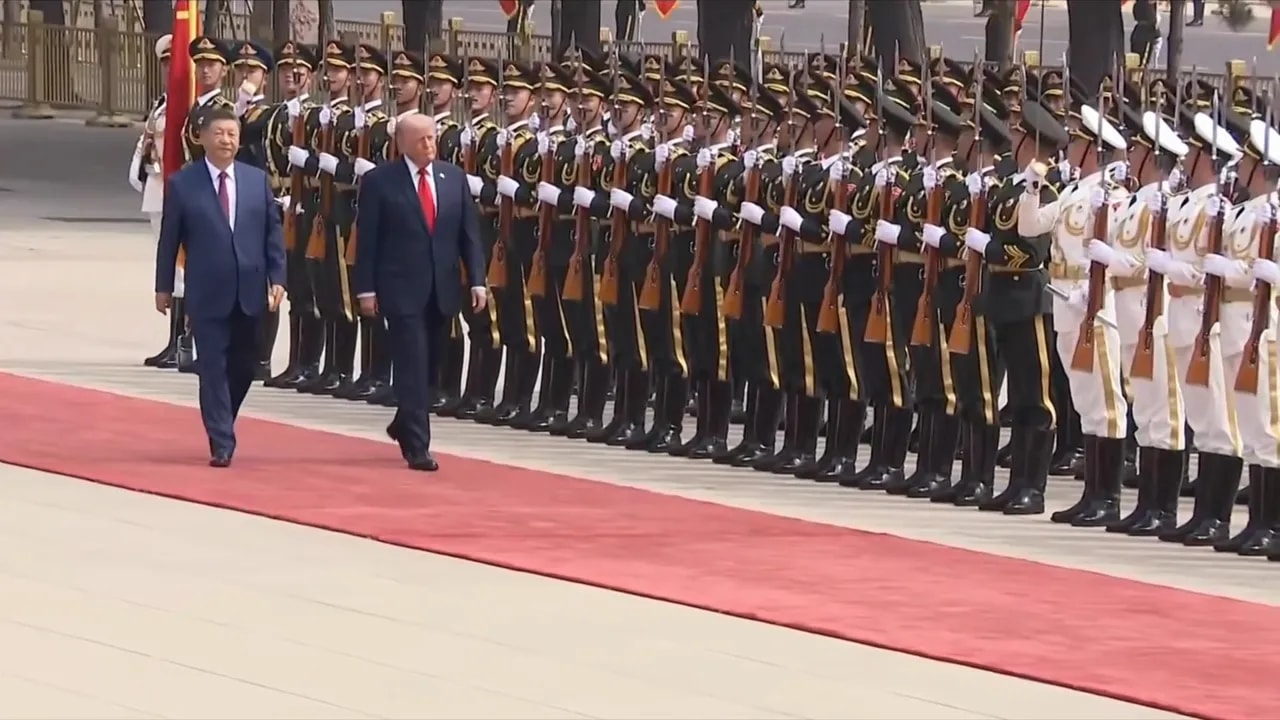
Table of Contents
- Beijing’s message: stability, ceremony, and great power framing
- Why expectations are modest despite the importance of the Xi-Trump Summit
- The business delegation is one of the biggest stories of the trip
- Nvidia and AI chips: the most intriguing subplot
- Trade, tariffs, and the return of transactional politics
- China’s leverage has not disappeared
- Iran and the Middle East add another layer of friction
- Taiwan remains the most dangerous issue
- Even the Rubio workaround reveals the character of the relationship
- Behind the summit optics, Xi’s China faces an economic contradiction
- The property sector collapse is still at the center of the problem
- Beijing is still betting on strategic industry over household support
- The labor market is growing more difficult
- Debt, demographics, and diminishing returns
- Why Beijing still sees its strategy as necessary
- What to watch after the Xi-Trump Summit
- Bottom line
- FAQ
Beijing’s message: stability, ceremony, and great power framing
Donald Trump arrived in Beijing to a high-level reception led by Vice President Han Zheng before meeting Xi Jinping at the Great Hall of the People in the sort of elaborate diplomatic setting Beijing reserves for moments it wants the world to notice.
That staging was not incidental. It signalled that China wants this Xi-Trump summit to be seen as an encounter between two major powers whose relationship will shape much more than bilateral trade. In his opening remarks, Trump praised Xi in highly personal terms, emphasising direct communication and the ability to work through problems quickly. Xi, for his part, invoked the idea of the “Thucydides Trap", the well-known argument that rising and established powers can drift into conflict unless they actively avoid it.
That framing matters because it tells us what Beijing wants to highlight. China is presenting the relationship as one that must be managed strategically, not reduced to a tariff dispute or a sequence of tactical quarrels. Washington, meanwhile, appears to be approaching the Xi-Trump summit more transactionally, with a heavy business presence and a focus on market access, purchases, and selective de-escalation.
The result is a summit with relatively low expectations for a dramatic breakthrough but very high stakes for tone, direction, and signalling.
Why expectations are modest despite the importance of the Xi-Trump Summit
There are simply too many points of friction for anyone to expect a grand reset.
- Tariffs remain unresolved.
- Semiconductor restrictions continue to define the technology contest.
- Taiwan remains the most politically sensitive issue.
- Rare earth supply chains are still a source of strategic leverage.
- Artificial intelligence has become a national security issue on both sides.
- Middle East tensions are adding fresh pressure to the relationship.
So the practical question is not whether the Xi-Trump summit produces a historic grand bargain. The more realistic question is whether it creates a framework for limited cooperation and controlled competition.
That distinction is important. Even modest movement on tariffs, chip licensing, agricultural purchases, or crisis communications could be meaningful if it reduces the chance of a sharper deterioration later on.
See my full videos on YouTube: https://www.youtube.com/@ChinaUpdate
The business delegation is one of the biggest stories of the trip
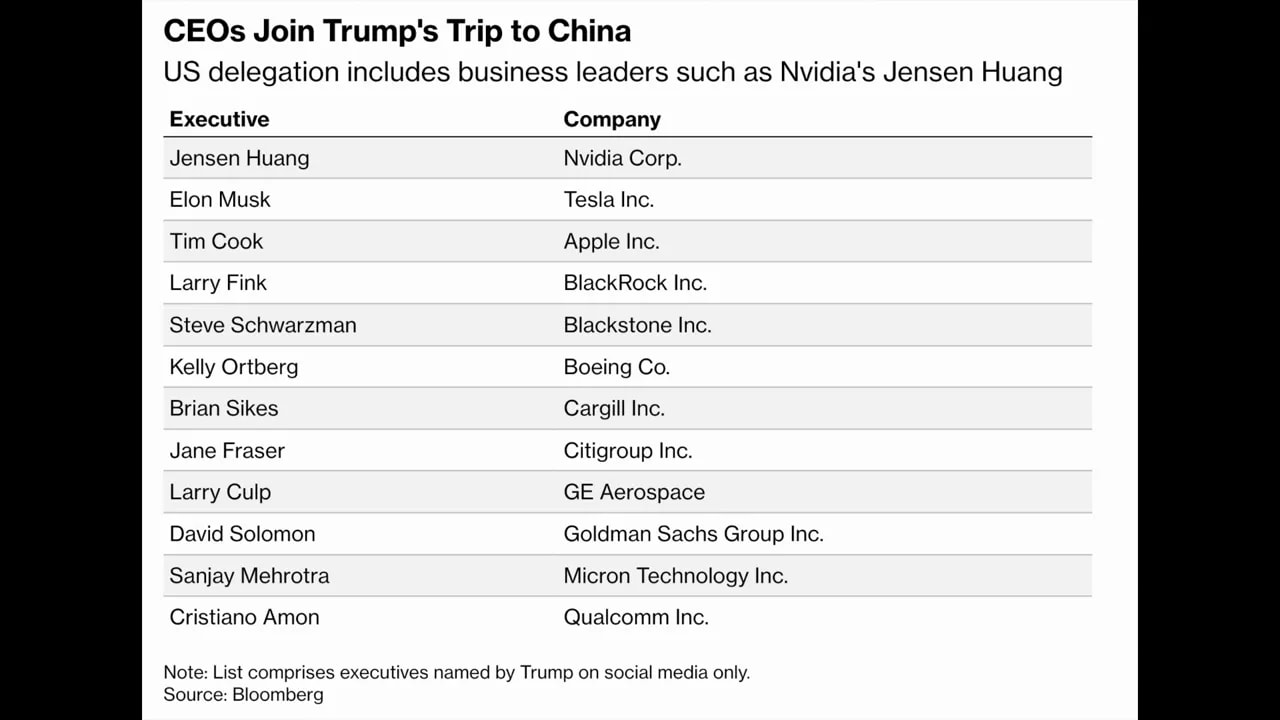
One of the most closely watched elements of the Xi-Trump Summit is the unusually prominent delegation of U.S. corporate leaders accompanying the president.
Tesla’s Elon Musk, Apple’s Tim Cook, and the CEOs of Boeing, Goldman Sachs, and other major firms are part of the entourage. Taken together, the wealth and corporate market capitalisation represented on the trip are enormous. That alone tells you how much this visit is tied to commerce, technology, and access.
Trump made his own priorities clear before landing, saying he wanted Xi to “open up” China to American business interests. That phrasing fits a long-running U.S. complaint: China remains critically important as a market, but foreign firms continue to face political constraints, regulatory uncertainty, and strategic favouritism toward domestic champions.
For American executives, this summit is not just about bilateral politics. It is about licenses, approvals, market share, and whether China will make space for foreign firms in sectors Beijing increasingly treats as strategic.
Nvidia and AI chips: the most intriguing subplot
If one person’s presence generated outsized speculation ahead of the Xi-Trump summit, it was Nvidia CEO Jensen Huang.
His attendance appeared uncertain until very late, with reports shifting back and forth before final confirmation. That immediately set off a wave of market speculation because Nvidia sits at the centre of one of the most contentious issues in the U.S.-China relationship: advanced AI chips.
The key focus is Nvidia’s H200 accelerators, the kind of chips used to train and run large AI models. Washington has previously allowed limited exports to China under strict licensing arrangements. But Beijing, according to reports, has slowed or blocked some purchases as it tries to support domestic semiconductor players such as Huawei.
Markets reacted quickly to Huang’s inclusion in the delegation. Nvidia rose, and Chinese AI-related firms rallied in Hong Kong on hopes that expanded access to advanced American chips could be under discussion.
That reaction makes sense. AI has become one of the defining fronts in strategic competition between Washington and Beijing. The United States sees advanced AI as central to future economic and military power. China sees export controls as an effort to slow its technological rise. And yet both governments also seem to recognise a basic truth: an unconstrained AI arms race carries risks neither side fully controls.
That is why reports that US officials may be exploring dedicated communication channels with Beijing on AI governance and security are so significant. This does not mean trust exists. It does suggest both sides may want guardrails.
Questions about AI "distillation", where Chinese developers are accused of using outputs from advanced American systems to train rival models more cheaply, have only sharpened Washington’s concerns. For more on that broader AI competition and the distillation issue, this China update news briefing provides useful additional context.
Trade, tariffs, and the return of transactional politics
Trade is still central to the Xi-Trump summit, even if it no longer dominates the relationship the way it once did.
Reports suggest both sides are considering a framework that could ease tariffs on around $30 billion worth of goods deemed non-sensitive from a national security standpoint. That would be modest in substance, but politically and symbolically it would matter. It would show that de-escalation is still possible, at least in narrowly defined areas.
The Trump side is also reportedly seeking larger Chinese purchases of American agricultural products, aerospace goods, and energy exports. One particularly eye-catching possibility is a major Boeing order, reportedly around 500 aircraft.
Some analysts have described the summit’s commercial agenda with the shorthand of the “five Bs":
- Boeing
- beans
- beef
- the Board of Trade
- the Board of Investment
That captures the mood rather well. Beneath the great power language, there is still a hard core of classic transactional bargaining. Agriculture matters politically in the United States, especially after years of trade disruption that hit farmers hard. Boeing matters because big aircraft orders are commercially substantial and politically visible. Investment access matters because capital, like technology, has become another battleground.
China’s leverage has not disappeared
It is easy to focus only on US military superiority and market size, but the Xi-Trump summit is also taking place in a world where China still retains important economic leverage.
The clearest example is rare earth processing. China’s dominance in this area remains a serious strategic asset because these materials are essential to semiconductors, advanced electronics, missiles, and jet engines. Beijing has recently allowed some shipments to the United States, but analysts are divided on whether this reflects genuine easing or a tactical adjustment ahead of the summit.
Either way, the message is straightforward: even if the United States has broad structural advantages, China still controls critical choke points that matter in any prolonged economic confrontation.
That dynamic has become more important as governments rethink supply chains and strategic dependencies. It is also part of a wider debate about whether China is increasingly using export controls and commodity access as policy tools, a topic explored in another China update news analysis here.
Iran and the Middle East add another layer of friction
The Xi-Trump summit is not just about bilateral disputes. The wider geopolitical backdrop is becoming harder to ignore, especially tensions involving Iran.
China remains Iran’s largest oil customer and has criticised US sanctions targeting Chinese firms accused of assisting Tehran. Before the summit, US officials indicated they would press Beijing to take a more active role in restraining Iran, warning that instability in the Persian Gulf threatens global energy markets and heavily oil-dependent Asian economies.
This matters because Middle East instability collides directly with China’s economic interests. China wants stable energy flows, predictable shipping routes, and minimal disruption to regional trade. At the same time, Beijing does not want to be seen aligning with Washington’s sanctions architecture.
That leaves China in an awkward position. It benefits from access to Iranian oil and from maintaining ties across the region, but escalating conflict raises costs and strategic risk. For a deeper look at how Hormuz tensions and Iran-related instability affect China’s economy and diplomacy, this China update news piece is relevant background.
Taiwan remains the most dangerous issue
No matter how much attention goes to chips or tariffs, Taiwan remains the most sensitive issue in the Xi-Trump summit.
Trump has indicated he may discuss a proposed $14 billion US weapons sale to Taipei with Xi. Beijing continues to pressure Washington to oppose Taiwanese independence more explicitly. Taiwan, for its part, has reason to worry about becoming a bargaining chip in broader US-China negotiations.
This is what makes Taiwan fundamentally different from trade. Tariffs can be adjusted. Export licences can be negotiated. Agricultural purchases can be increased or reduced. Taiwan touches on sovereignty, military signalling, alliance credibility, and national identity. That makes it far harder to compartmentalise.
Even if the Xi-Trump summit produces a smoother tone elsewhere, Taiwan will remain the issue most capable of derailing any temporary stabilisation.
Even the Rubio workaround reveals the character of the relationship
One of the more surreal details surrounding the summit involved Marco Rubio, who had previously been sanctioned by China for criticism of Beijing’s human rights policies.
Reports indicated Chinese officials may have used an altered Chinese transliteration of Rubio’s surname to work around technical issues created by those sanctions and permit his entry.
As odd as that sounds, it is almost a perfect metaphor for the current relationship. Washington and Beijing are deeply distrustful, strategically competitive, and divided on major issues. Yet both sides still need enough practical flexibility to keep diplomacy functioning.
That may ultimately be the most realistic way to read the Xi-Trump summit. Not as a breakthrough moment, but as an exercise in managing rivalry without pretending the rivalry does not exist.
Behind the summit optics, Xi’s China faces an economic contradiction
While the world focuses on handshakes and summit language, there is a deeper story running underneath all of this: China today is both exceptionally strong and increasingly strained.
More than a decade into Xi Jinping’s rule, China has become one of the world’s most technologically advanced and militarily powerful states. Its factories still dominate global manufacturing. Its electric vehicle firms are reshaping the auto industry. Its progress in AI, robotics, drones, and semiconductors is increasingly challenging Western incumbents.
But the domestic economy is under real pressure.
Beijing has increasingly prioritised national security, industrial policy, technological self-sufficiency, and military strength over the older style of reform-led growth model that powered China’s earlier rise. That strategy has delivered clear gains in strategic sectors. It has not solved the structural problems now weighing on the wider economy.

The property sector collapse is still at the center of the problem
The clearest expression of China’s domestic stress is the ongoing property crisis.
For years, real estate was not just another industry. It was central to the entire growth model. It drove construction, steel, cement, appliances, furniture, and local government revenue. It also became the main store of wealth for many Chinese households.
Now that model is breaking down. The property and residential construction sector has shrunk dramatically as a share of GDP. Falling home prices have destroyed household wealth. Unfinished projects have shaken public confidence. Families that once saw property as a one-way bet now face uncertainty and, in many cases, financial loss.
The effects spread far beyond developers.
- Local governments that relied on land sales are under severe pressure.
- Factories linked to construction are struggling.
- Small businesses are closing.
- Households are spending less because they feel poorer and less secure.
That confidence shock may be one of the most serious economic problems China faces. The property downturn is not just about balance sheets. It is about expectations. When people lose confidence in future income and asset values, they pull back.
Beijing is still betting on strategic industry over household support
Rather than launching a massive consumer rescue package or significantly expanding the social safety net, Beijing has continued channelling vast resources into sectors tied to strategic competition.
That means enormous investment in:
- artificial intelligence
- semiconductors
- electric vehicles and batteries
- aerospace
- robotics
- military modernization
Research and development spending has surged. Military spending has more than doubled under Xi. From the perspective of national power, this is a coherent strategy. From the perspective of broad-based employment and household confidence, the trade-offs are becoming clearer.
These sectors are technologically impressive, but they do not create enough jobs to replace what is being lost elsewhere, particularly in property-related industries and lower-end manufacturing.
The labor market is growing more difficult
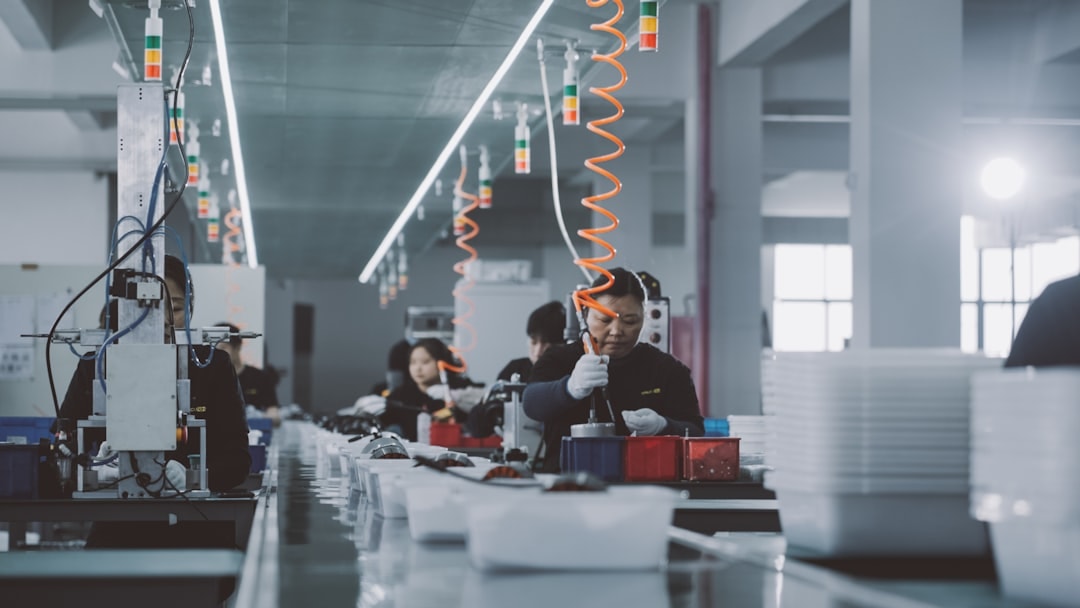
In places like Foshan, a city long associated with manufacturing success, the slowdown is becoming visible in empty factories and “for rent” signs.
Officials hope robotics and automation will eventually create a new industrial base. The problem is scale. Those industries are still too small to absorb the millions of workers affected by weakness in construction, exports, and older manufacturing lines.
The labour market pressure is hitting multiple groups at once.
- Younger graduates face intense competition for white-collar roles.
- Factory workers are increasingly pushed into temporary or part-time work.
- Older workers face shrinking opportunities and weaker wage bargaining power.
Some workers are reportedly willing to accept pay cuts of 50 per cent compared with earnings during the boom years. Even educated professionals are lowering expectations sharply just to find work.
This matters politically as well as economically. A country can be globally impressive in AI and shipbuilding while still producing deep anxiety among ordinary households. That gap between national strength and household insecurity is one of the defining features of Xi’s China today.
Debt, demographics, and diminishing returns
China’s structural problems do not stop at property and employment.
The population is ageing rapidly. Birth rates continue to fall. The workforce is beginning to shrink. That creates long-term pressure on productivity, pensions, healthcare systems, and potential growth.
Meanwhile, debt burdens continue to rise, especially at the local government level. Economists increasingly warn that the familiar model of debt-fuelled, state-directed investment is generating weaker returns. Estimates from international institutions suggest that distortions linked to state aid and government intervention may already be reducing GDP growth meaningfully.
None of this means China is on the verge of collapse. It does mean the old growth model is under severe strain, and the new one is not yet capable of delivering broad prosperity in the same way.
Why Beijing still sees its strategy as necessary
From Beijing’s perspective, these sacrifices are not irrational. Chinese leaders look at U.S. export controls, sanctions, tensions over Taiwan, and instability in the Middle East and conclude that China must be able to survive a harsher external environment.
On that front, the strategy has had real successes. China is more self-reliant in key sectors than it was a decade ago. It is more capable militarily. It has greater industrial depth. It carries more geopolitical weight than at any point in modern history.
But the costs are rising. The contradiction is becoming harder to ignore: a state capable of building aircraft carriers, advanced drones, and sophisticated AI systems while millions of households worry about unemployment, shrinking incomes, and falling property values.
That contradiction is the domestic backdrop to the Xi-Trump summit. China comes to the table strong, but not without vulnerabilities.
What to watch after the Xi-Trump Summit
The most likely outcome is not a sweeping reset. It is a limited stabilisation with a few concrete points to monitor.
- Tariff relief on a defined set of non-sensitive goods.
- Major purchase announcements involving agriculture, energy, or Boeing aircraft.
- Signals on Nvidia and chip licensing, even if no formal breakthrough is announced.
- Movement toward AI communication channels to reduce escalation risks.
- Carefully worded language on Taiwan that avoids immediate confrontation without resolving anything.
- Any reference to rare earths or supply chain stability, which would be economically meaningful.
In other words, the Xi-Trump summit will probably be judged less by one headline deal than by whether it reduces uncertainty or merely pauses the downward drift.
Bottom line
The Xi-Trump summit matters because it sits at the intersection of two realities.
The first is geopolitical: the United States and China are in a long-term strategic competition that now spans trade, technology, military power, energy security, and regional order.
The second is domestic: China enters this phase of competition with impressive strengths but also serious internal economic strains.
That is what makes this moment consequential. Beijing cannot afford full disengagement. Washington does not appear to want it either. But neither side trusts the other enough for easy cooperation.
So the likely path forward is narrower and more fragile: selective deals, tactical pauses, guarded communication, and continued rivalry in the sectors that matter most. That may not look dramatic. But in the current environment, even a temporary stabilisation would be meaningful.
FAQ
Why is the Xi-Trump summit so important?
Because it involves the world’s two most important powers trying to manage a relationship that affects trade, technology, security, supply chains, and regional stability. Even without a major breakthrough, the summit can shape the tone of U.S.-China relations for the rest of Trump’s presidency.
What are the main issues on the Xi-Trump summit agenda?
The biggest issues include tariffs, semiconductor exports, artificial intelligence, rare earth minerals, agricultural purchases, Boeing aircraft sales, Iran-related tensions, and Taiwan.
Why is Jensen Huang’s presence getting so much attention?
Because Nvidia is central to the AI chip competition between the United States and China. His attendance raised speculation that expanded chip access, licensing, or broader AI-related arrangements could be under discussion.
Could the Xi-Trump summit lead to lower tariffs?
Possibly in a limited way. Reports suggest both sides may be considering tariff relief on a relatively small set of goods considered non-sensitive to national security. That would be modest, but symbolically important.
Why does Taiwan remain the most sensitive issue?
Because Taiwan is tied to sovereignty, military balance, and alliance credibility. Unlike trade disputes, it cannot be easily negotiated away without major political consequences for both Beijing and Washington.
How do China’s domestic economic problems affect the summit?
China enters the summit with major strengths in manufacturing, technology, and military power but also with serious domestic weaknesses, especially in property, household confidence, employment, debt, and demographics. That gives Beijing reasons both to project confidence and to avoid further instability in relations with the United States.