
 Blood in the Water: Why the Second Thomas Shoal Clash Is a Turning Point in the South China Sea
By Tony Fiddis: China Analyst
For over a year, a fragile, unspoken truce held the peace around one of the most volatile geopolitical flashpoints on Earth. That temporary reprieve is officially over.
A sharp, violent confrontation between the China Coast Guard and Philippine naval personnel near the Second Thomas Shoal has shattered the quiet. While no missiles were launched and no heavy artillery was fired, the escalation from aggressive manoeuvrings to physical combat represents an alarming shift in how Beijing is enforcing its maritime ambitions.
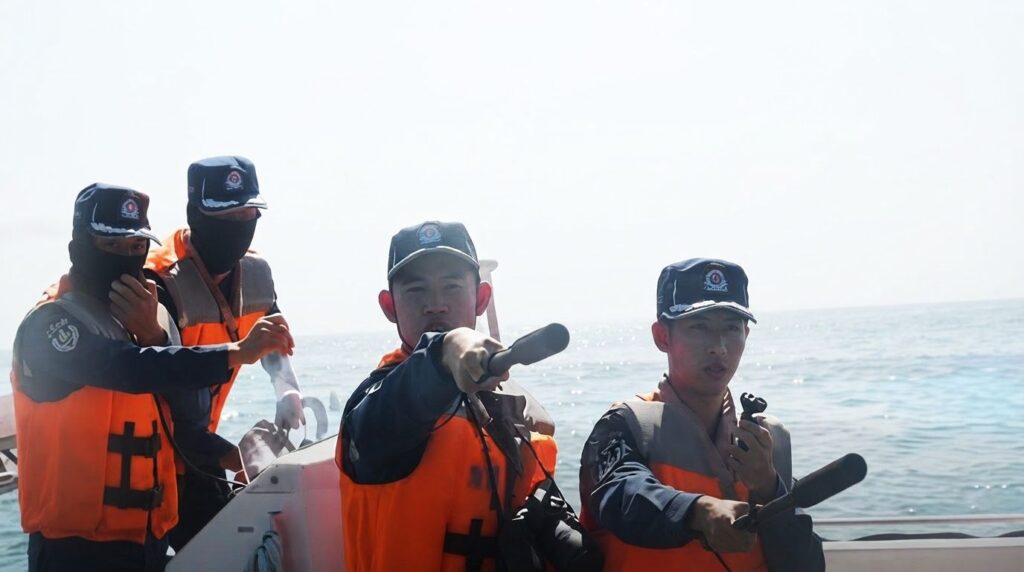
This was not a simple misunderstanding or a routine naval interaction. It was a direct, hand-to-hand clash featuring wooden batons, damaged hulls, and injured sailors right on the doorstep of an outpost that sits at the centre of a massive geopolitical tug-of-war.
The Anatomy of the Incident: Batons, Hulls, and Conflicting Truths
The dispute centres on the Sierra Madre, a decaying, WWII-era Philippine Navy tank landing ship deliberately grounded on the Second Thomas Shoal in 1999. Serving as a rusted, makeshift military outpost, the ship is Manila’s primary tool for asserting sovereignty over an area lying well within its Exclusive Economic Zone (EEZ).
According to accounts from the Philippine military, the encounter began when a Chinese rigid-hull inflatable boat carrying eight personnel approached the Sierra Madre to take surveillance photographs. When two Philippine rubber boats deployed to intercept and turn them back, China Coast Guard personnel escalated the situation, reportedly striking a Filipino sailor in the head with a wooden baton and damaging a Philippine vessel.
+-------------------------------------------------------------------------+
|                        THE SECOND THOMAS SHOAL                          |
|                                                                         |
|  [ Sierra Madre ] <--- (2 Philippine Boats)                             |
|   (Rusted Outpost)         ^                                            |
|                            |  PHYSICAL CLASH                            |
|                            v  (Batons & Ramming)                        |
|                     (1 Chinese RIB / 8 Personnel)                       |
+-------------------------------------------------------------------------+
Beijing, predictably, presented a fundamentally opposing narrative. The China Coast Guard claimed its officers were conducting "routine patrols" near Ren’ai Jiao (China’s name for the shoal) when Philippine vessels acted aggressively, surrounded their patrol boat, and rammed it. Chinese state media asserted that Philippine troops initiated the conflict using paddles and long poles, forcing Chinese personnel to execute "reciprocal countermeasures".
Both nations promptly released selected video footage designed to validate their stances. But beneath the competing PR campaigns lies a stark reality: physical violence has officially re-entered the equation.
Why the Sierra Madre Remains the Ultimate Flashpoint
To understand why a crumbling, rust-eaten warship matters so much, one must look at the legal and strategic map of the South China Sea.
                               SOUTH CHINA SEA
                                      │
           ┌──────────────────────────┴──────────────────────────┐
           ▼                                                     ▼
  THE PHILIPPINE CLAIM                                  THE CHINESE CLAIM
  • Located within 200nm EEZ                            • Sweeping "Nine-Dash Line"
  • Backed by 2016 Hague Ruling                         • Rejected 2016 Ruling
  • Anchored by BRP Sierra Madre                        • Enforced via Coast Guard
The Second Thomas Shoal sits comfortably within the 200-nautical-mile EEZ granted to the Philippines under international law. In 2016, the Permanent Court of Arbitration in The Hague delivered a landmark ruling that invalidated China’s sweeping historical claims across the South China Sea. Beijing flatly rejected the tribunal's authority and has ignored the verdict ever since.
For years, China has used "grey-zone" tactics—actions designed to achieve strategic goals without crossing the threshold into outright war—to squeeze Manila out of the shoal. Resupply missions to the marooned soldiers on the Sierra Madre have routinely turned into gauntlets of the following:
-
High-powered water cannons aimed at wooden supply vessels.
-
Dangerous blockades and intentional ramming manoeuvres.
-
Acoustic weapons, military-grade lasers, and forced boardings.
A particularly severe clash in June 2024 resulted in a Filipino sailor losing a thumb, sparking intense international outrage. While a temporary, provisional resupply arrangement was negotiated shortly after to lower the temperature, this latest physical brawl proves those diplomatic band-aids are failing to stop the bleeding.
Awkward Diplomatic Timing and the Risk of Miscalculation
The timing of this fresh flare-up could not be more inconvenient for Beijing’s diplomatic apparatus. The confrontation occurred just days before Chinese Foreign Minister Wang Yi was scheduled to arrive in Manila for a major China-ASEAN foreign ministers' meeting.
While Chinese diplomats actively preach regional harmony, trade cooperation, and stability to Southeast Asian partners, its maritime forces are wielding batons against neighbour states at sea. This disconnect undermines Beijing's soft-power push in ASEAN and accelerates a trend China desperately wants to avoid: forcing neighbouring nations deeper into security alliances with Washington.
The Real Threat: The danger in the South China Sea isn't necessarily a premeditated declaration of war; it is the probability of an unscripted miscalculation.
The Philippines operates under a robust mutual defence treaty with the United States. A single skirmish that results in a fatality or the destruction of an active naval vessel could trigger treaty obligations, converting a localised fight over a reef into a direct military confrontation between two nuclear-armed superpowers.
       LOCAL INCIDENT                      REGIONAL TRIGGER                    GLOBAL ESCALATION
[ Close-Range Clash at Sea ] ──► [ Fatal / Severe Escalation ] ──► [ U.S.-Philippines Treaty Call ]
The Bigger Picture: Security Over Everything
This clash at the Second Thomas Shoal cannot be viewed in isolation. It is a direct symptom of Beijing’s broader, security-centric doctrine. Under its current leadership, China has systematically prioritised national security over economic flexibility and diplomatic goodwill.
Whether it is tightening control over domestic financial markets, asserting dominance over key technology sectors, or enforcing expansive territorial claims, Beijing’s playbooks across every domain are increasingly driven by a posture of friction, defence, and control.
As physical weapons short of firearms become standardised tools of maritime enforcement, the margin for error narrows every day. The Sierra Madre may be slowly rusting into the ocean, but the geopolitical powder keg beneath it has rarely been more unstable.
Key Takeaways
-
Broken Truce: Physical violence has returned to the Second Thomas Shoal, proving that temporary resupply agreements between Manila and Beijing are fundamentally fragile.
-
Competing Claims: Manila relies on its legally recognised EEZ and the 2016 Hague ruling, while Beijing enforces its disputed territorial ambitions through grey-zone maritime tactics.
-
Escalation Danger: With the Philippines tied to the U.S. via a mutual defence treaty, small-scale physical confrontations carry an ever-present risk of global military escalation due to miscalculation.